Should You Charge Your EV to 100%? What Carmakers Actually Recommend
Charging to 100% is fine before a road trip, but most EVs with nickel-based batteries last longer if you charge to around 80–90% day to day. LFP batteries are different. Here is what carmakers recommend and why.
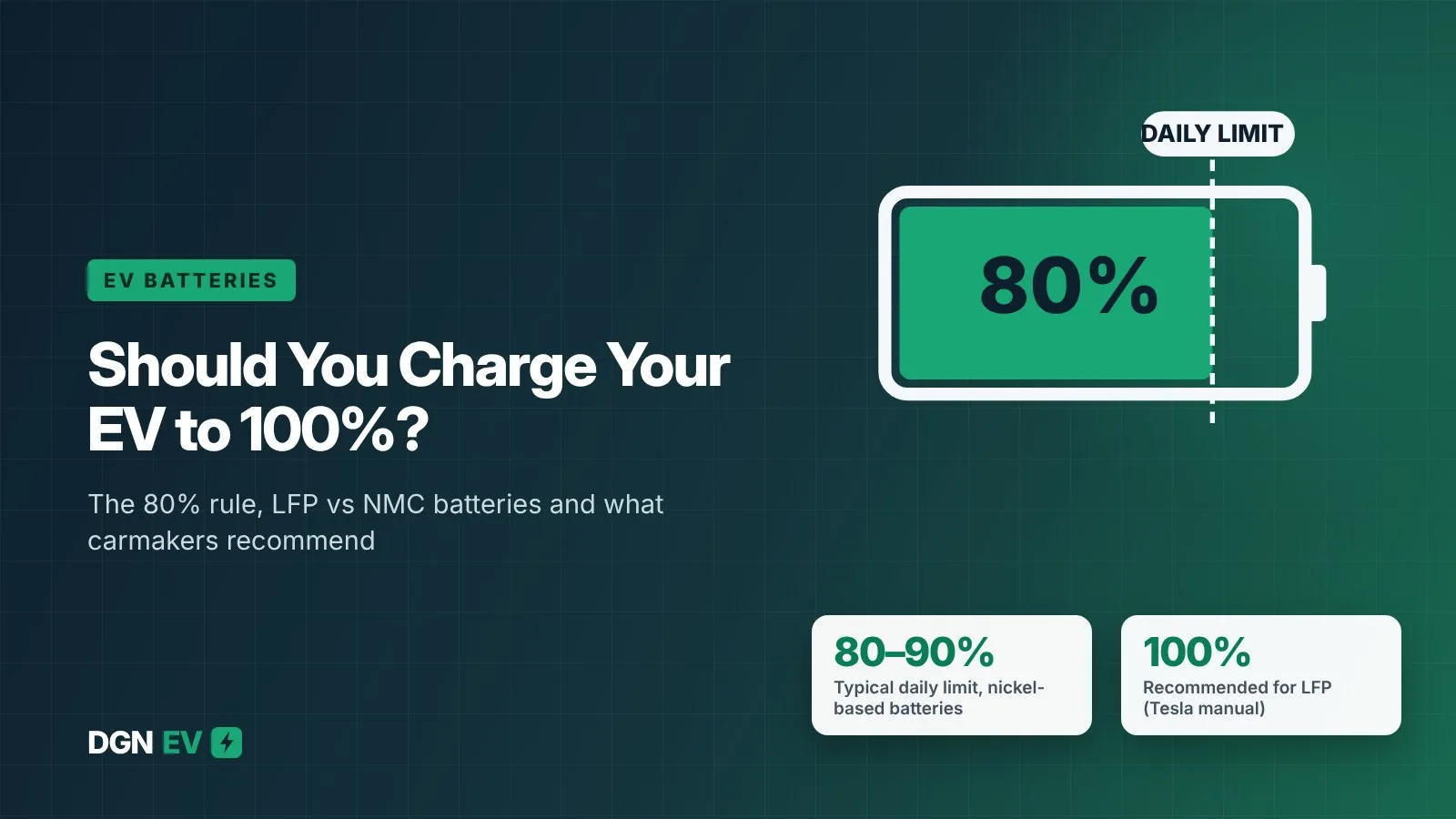
For most electric cars, you should not charge to 100% every day. If your EV uses a nickel-based battery (NMC or NCA), setting a daily limit of about 80–90% and charging to 100% only before long trips is the safest habit for long-term battery health. The big exception is cars with LFP (lithium iron phosphate) batteries: carmakers such as Tesla tell owners of LFP cars to charge to 100% regularly.
The rest of this guide explains why the two battery types are treated differently, how to find out which one you have, and when a full charge makes sense.
Why a full battery ages faster
A lithium-ion cell is under the most chemical stress when it is completely full. At a high state of charge, the voltage is at its highest, and side reactions inside the cell that slowly consume lithium and damage the electrodes speed up. Heat makes this worse. That is why the main risk is not charging to 100% itself, but leaving the car sitting at 100% for hours or days, especially in hot weather.
Every EV also keeps a hidden buffer at the top and bottom of the battery, so "100%" on your screen is not the battery's true chemical maximum. This buffer is one reason modern EV batteries hold up so well. Large fleet studies, such as Geotab's 2026 analysis of more than 22,700 vehicles, found average capacity loss of only about 2.3% per year. You can read more in our guide to how long EV batteries last.
NMC/NCA vs LFP: why the advice is different
| NMC / NCA (nickel-based) | LFP (lithium iron phosphate) | |
|---|---|---|
| Common in | Most long-range EVs | Many standard-range EVs, BYD models |
| Typical daily limit advice | About 80–90% | 100% is fine; often recommended |
| Why | Ages faster when held full | More tolerant of high charge |
| Full charge needed for accurate range estimate? | Not usually | Yes, periodically |
LFP chemistry is much more tolerant of high states of charge and long cycle counts. It also has a very flat voltage curve, which makes it hard for the car's computer to estimate exactly how much energy is left. Charging to 100% from time to time lets the battery management system recalibrate. That is why Tesla's owner's manual for LFP-equipped cars recommends keeping the charge limit at 100% and charging fully at least once a week, while for its nickel-based batteries Tesla suggests a lower daily limit and full charges only when you need the range.
How to find out which battery your EV has
- Check the charge screen. Many cars show the recommended daily range on the charging slider. Teslas with LFP batteries, for example, show "Daily" all the way to 100%.
- Read the owner's manual. Search for "charge limit" or "battery type".
- Look up the exact version. Battery chemistry often differs between standard-range and long-range versions of the same model, and even between factories.
Not sure what LFP and NMC mean? Our guide to how electric cars work covers the basics.
When charging to 100% makes sense (for any EV)
- Before a road trip. Charge to 100% and leave soon after the charge finishes. Many cars let you schedule charging to end right before departure.
- When you need the full range that day. Using your battery is what it is for; an occasional full charge does no meaningful harm.
- When your manual says so. LFP batteries and some others need regular full charges to keep the range estimate accurate.
Good everyday charging habits
- Set a daily limit (usually 80–90% for nickel-based batteries) in the car or app.
- Avoid leaving the car at 100% or near 0% for long periods, especially in heat.
- Plug in when convenient. Small, frequent top-ups are fine; you do not need to run the battery down first.
- Use slower charging when you can. Geotab's data suggests vehicles that rely heavily on high-power DC fast charging degrade somewhat faster than those charged mainly on AC at home.
- Park in the shade or a garage in very hot climates and use scheduled charging so the battery is not full and hot at the same time.
Charging to 100% at a fast charger
There is another reason not to fill up to 100% at a DC fast charger: it is slow. Charging speed drops sharply above about 80%, so the last 20% can take almost as long as the first 70%. On a road trip, it is usually quicker to charge to 70–80%, drive on and stop again. Our guide on how long it takes to charge an EV explains this charging curve.
FAQ
Is it bad to charge my EV to 100% once in a while?
No. Occasional full charges before long trips are normal. The concern is keeping a nickel-based battery at 100% for long periods.
Should I charge an LFP battery to 100% every day?
If your carmaker recommends it, yes. Tesla, for example, tells owners of LFP-equipped cars to keep the limit at 100% and fully charge at least once a week.
What is the 80% rule for EVs?
It is a common rule of thumb for nickel-based batteries: charge to about 80% for daily use to reduce stress on the cells, and save 100% for trips. Always follow your owner's manual first.
Does charging to 80% make my battery last much longer?
It helps, but modern battery buffers and management systems already protect the cells. The difference is usually a few percentage points of capacity over many years, not a dramatic change.
The bottom line
Check which battery your EV has and follow the manual. For nickel-based batteries, set a daily limit around 80–90% and charge to 100% only when you need it, ideally right before you leave. For LFP batteries, regular full charges are not just allowed but recommended.
Work out your own numbers
Note: This guide is for general information only. Prices, specifications and regulations change over time and vary by country, so always check with the manufacturer or a qualified professional before making decisions. Read our disclaimer.
Keep reading
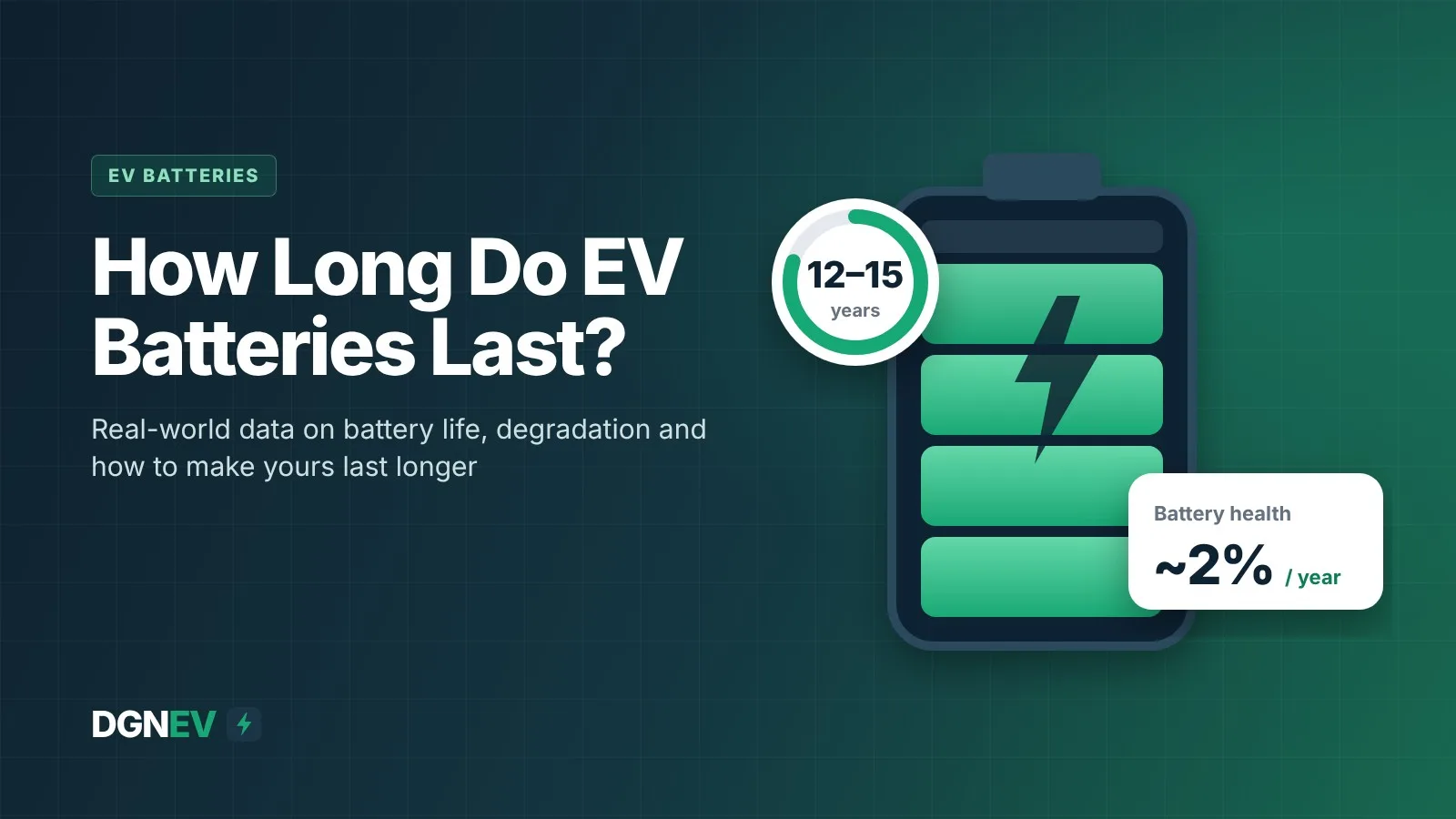
How Long Do EV Batteries Last? Real-World Data Explained
Most electric car batteries last well over a decade and lose only about 2% of their capacity per year. Here is what real-world data says about EV…

Electric Cars: Pros and Cons You Should Know
Electric cars are cheaper to run and maintain, but they cost more to buy and need more planning on long trips. Here are the real advantages and…
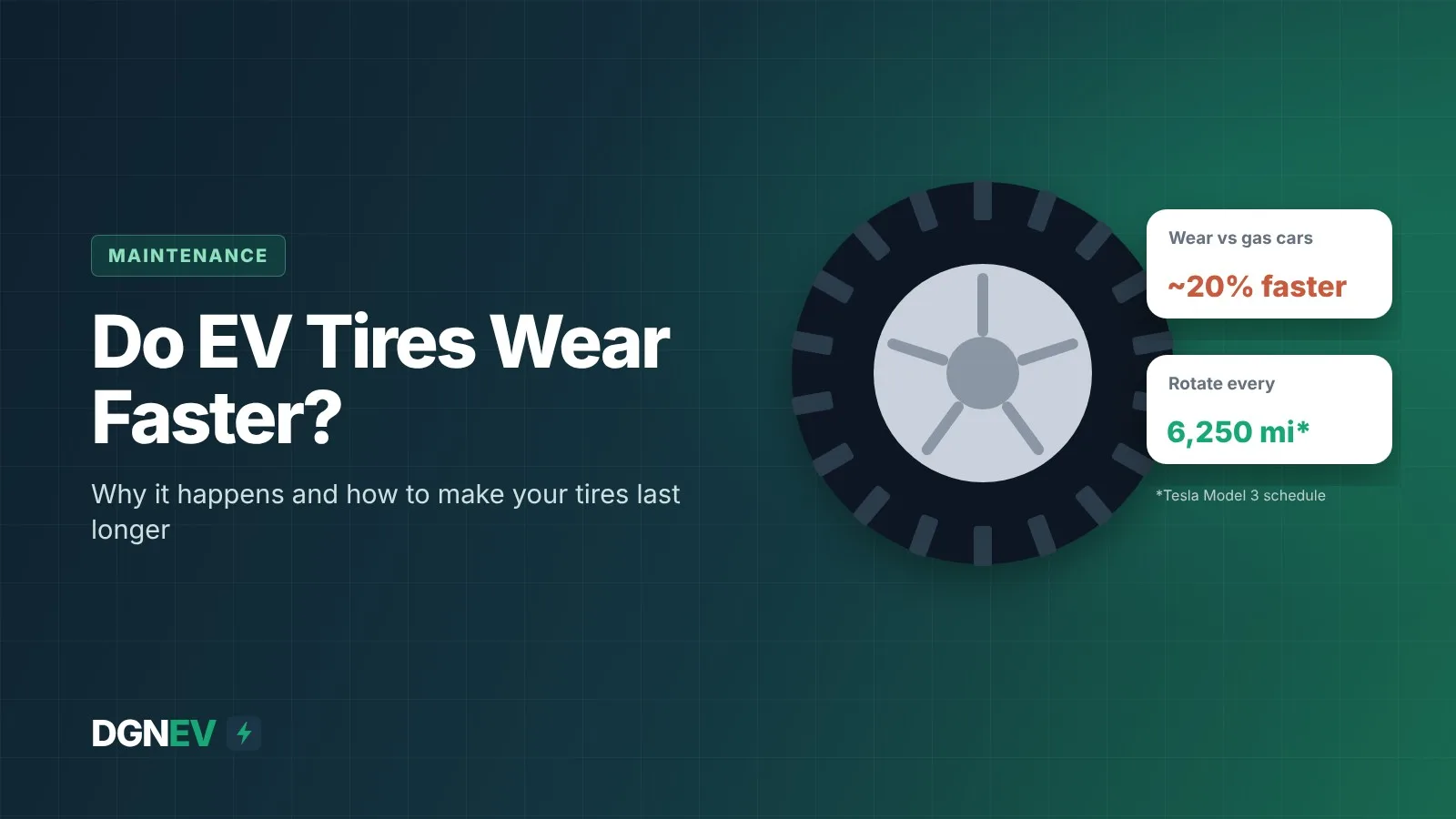
Do EV Tires Wear Faster? How to Make Them Last Longer
Tires are often the biggest regular maintenance cost of an electric car – and they can wear out faster than on a gas car. Learn why, what makes EV…
Comments
Be the first to comment
Questions and experiences are welcome. Comments are reviewed before publishing; links are not allowed. Your email is optional and never shown.