What Are Sodium-Ion Batteries? The Cheaper EV Battery Explained
Sodium-ion batteries replace lithium with sodium, a cheap and abundant element. They store less energy than the best lithium batteries but work far better in the cold. CATL is now putting them into production cars. Here is what that means.
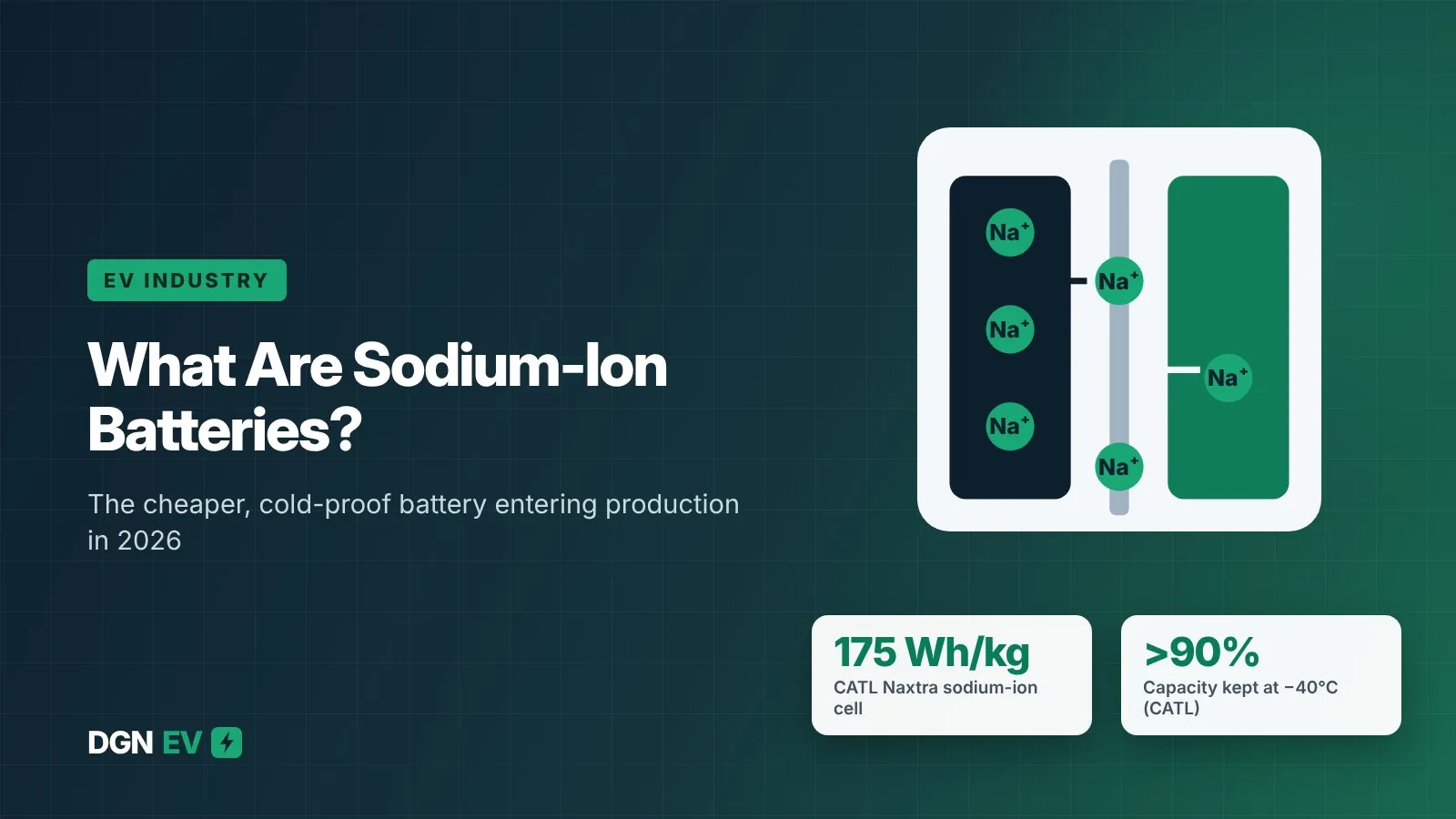
A sodium-ion battery works much like the lithium-ion battery in your phone or EV, but it moves sodium ions instead of lithium ions between its electrodes. Sodium is one of the most abundant elements on Earth (it is in ordinary table salt), so these batteries promise lower and more stable costs and much better cold-weather performance. The trade-off is lower energy density, which means less range for the same battery weight. In 2026, the world's largest battery maker, CATL, began supplying sodium-ion batteries for passenger cars.
How sodium-ion batteries work
Every rechargeable battery cell has two electrodes (an anode and a cathode), a separator and a liquid electrolyte. When you charge it, ions move from the cathode to the anode; when you drive, they move back and release energy. Sodium-ion cells follow the same principle:
- Cathode: usually a layered metal oxide or a "Prussian blue" type material, rather than the nickel- or iron-based materials used in lithium cells.
- Anode: typically hard carbon, because sodium ions are too large to fit well into the graphite used in lithium-ion anodes.
- Current collectors: both sides can use aluminum foil, which is cheaper than the copper foil lithium-ion cells need on the anode side.
Because the design is so similar, sodium-ion cells can be made on lines similar to today's lithium-ion factories, which is a big reason the technology is moving quickly. For a refresher on how an EV battery powers the car, see how electric cars work.
Sodium-ion vs lithium-ion: the key differences
| Sodium-ion | LFP (lithium iron phosphate) | NMC (nickel-based lithium) | |
|---|---|---|---|
| Typical cell energy density | About 175 Wh/kg (best current cells) | About 205 Wh/kg | About 265 Wh/kg |
| Cold-weather performance | Very good | Weaker | Moderate |
| Raw materials | Sodium, no lithium, nickel or cobalt | Lithium, iron, phosphate | Lithium, nickel, manganese, cobalt |
| Best suited to | Small city cars, hybrids, energy storage | Standard-range EVs | Long-range and performance EVs |
Energy density figures for LFP and NMC are averages reported by the International Energy Agency (IEA). The 175 Wh/kg sodium-ion figure is CATL's rating for its Naxtra cells.
The advantages
1. Cheaper, more abundant materials
Lithium prices have swung wildly in the past few years, and most lithium, nickel and cobalt refining is concentrated in a few countries. Sodium can be sourced almost anywhere. That makes sodium-ion batteries attractive both for cost and for supply security, even though, at today's early production volumes, they are not yet dramatically cheaper than LFP.
2. Excellent cold-weather performance
This is the standout benefit. CATL says its sodium-ion cells keep more than 90% of their capacity at −40°C (−40°F) and deliver about three times the discharge power of LFP at −30°C. Lithium-ion batteries lose noticeable range and charging speed in the cold, so this could be a major advantage in places like Canada, Scandinavia and northern China.
3. Safety
Sodium-ion cells are generally considered less prone to thermal runaway than nickel-rich lithium cells, and they can be stored and shipped at very low charge, which simplifies transport.
The disadvantages
- Lower energy density: a sodium-ion pack of the same weight stores less energy, so range is lower, which matters most in larger cars.
- Early-stage supply chain: hard-carbon anodes and cathode materials are not yet made at huge scale, which limits volumes and keeps costs from falling as fast as hoped.
- Limited real-world track record in cars, compared with decades of lithium-ion experience.
Which EVs use sodium-ion batteries?
CATL launched its Naxtra sodium-ion brand in April 2025. In February 2026, CATL and Chinese carmaker Changan unveiled what they described as the world's first mass-produced passenger car with sodium-ion batteries, a version of the Changan Nevo A06 sedan, with a range of about 400 km (about 250 miles) on China's CLTC test cycle. The car was expected to reach the market in mid-2026, with the battery set to spread to other Changan brands afterward.
CATL told CnEVPost in June 2026 that it expected 10,000 to 20,000 EVs to use its sodium-ion batteries during 2026, and that range could rise to 500–600 km as the technology matures. That is still a tiny share of the more than 20 million EVs sold worldwide in 2025, according to the IEA. BYD and several other Chinese battery makers are also developing sodium-ion cells, with energy storage and small vehicles as early targets.
Outside China, there are no sodium-ion passenger EVs on sale in the U.S. or Europe as of late 2026.
Will sodium-ion replace lithium-ion?
Probably not completely, but it is likely to take a meaningful share. CATL chairman Robin Zeng has said sodium-ion could eventually replace 30% to 40% of the battery market over the long term. The most likely pattern is a mix of chemistries:
- Sodium-ion for small, affordable city cars, cold climates, hybrids and stationary storage
- LFP for mainstream standard-range EVs
- NMC and, later, solid-state batteries for long-range and premium models
Some carmakers are also combining sodium-ion and LFP cells in the same pack, using the sodium cells to improve cold-weather performance.
What it means for EV buyers
For now, very little if you live in the U.S. or Europe. Over the next few years, sodium-ion batteries could help bring down the price of small EVs and make them more reliable in harsh winters. Battery technology keeps improving, but today's lithium-ion batteries already last a long time, as our guide to EV battery life shows, so there is no reason to wait for a new chemistry before buying.
FAQ
Are sodium-ion batteries better than lithium-ion?
They are better in cold weather and use cheaper, more abundant materials, but they store less energy per kilogram. Which is "better" depends on the vehicle.
Do sodium-ion batteries need lithium?
No. They use sodium instead of lithium and avoid nickel and cobalt as well.
Can I buy a sodium-ion EV in the U.S. or UK?
Not as of late 2026. The first models are being sold in China.
Can you charge a sodium-ion EV to 100%?
Follow the carmaker's guidance. Like LFP, sodium-ion chemistry is generally tolerant of full charges. Read more in should you charge your EV to 100%?
The bottom line
Sodium-ion batteries trade some energy density for cheaper materials, strong cold-weather performance and good safety. They are now entering production in China, starting with small cars. They will not replace lithium-ion overnight, but they are likely to become an important part of making EVs more affordable. This field moves fast; we will update this guide as new models launch.
Work out your own numbers
Note: This guide is for general information only. Prices, specifications and regulations change over time and vary by country, so always check with the manufacturer or a qualified professional before making decisions. Read our disclaimer.
Keep reading
Electric Car Sales by Country: Who Leads the EV Transition in 2026?
More than 20 million electric cars were sold worldwide in 2025 – one in four new cars. See which countries lead in EV sales and market share, from…
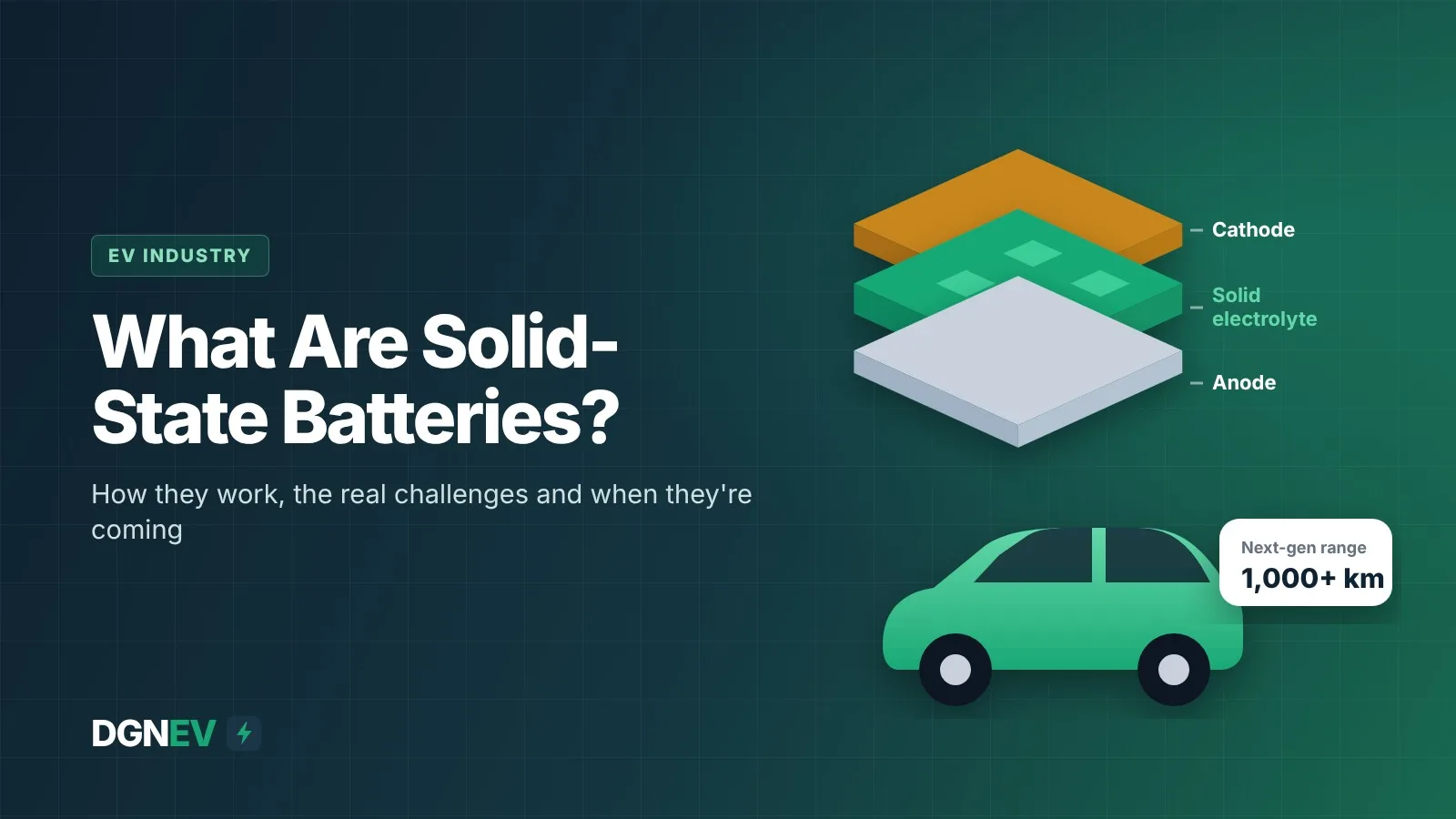
What Are Solid-State Batteries? How They Work and When They're Coming
Solid-state batteries promise EVs with more range, faster charging and better safety. Here is how they differ from today's lithium-ion batteries…

Electric Cars: Pros and Cons You Should Know
Electric cars are cheaper to run and maintain, but they cost more to buy and need more planning on long trips. Here are the real advantages and…
Comments
Be the first to comment
Questions and experiences are welcome. Comments are reviewed before publishing; links are not allowed. Your email is optional and never shown.