How this calculator works
The calculator uses average yearly capacity loss measured in real-world vehicles. In a January 2026 study of more than 22,700 EVs, Geotab found average degradation of 2.3% per year: around 1.5% per year for vehicles that mainly used AC or lower-power charging and up to 3.0% per year for vehicles relying heavily on DC fast charging above 100 kW. Vehicles in hot climates lost about 0.4% more per year.
Remaining capacity is estimated as 100% − (yearly loss × years). Many batteries lose slightly more in the first year or two and then level off, so long-term results are often a little better than a straight line.
The result is compared with the typical warranty threshold of 70% capacity within 8 years or 100,000 miles in the U.S.
Frequently asked questions
How much battery capacity do EVs lose per year?
On average around 2–3% per year in recent real-world data, depending mainly on how often the car uses high-power DC fast charging and on climate.
When should an EV battery be replaced?
Most warranties cover a battery that falls below about 70% of its original capacity within 8 years or 100,000 miles in the U.S. Many batteries stay well above this level for much longer.
How can I slow down battery degradation?
Use AC charging for everyday needs, avoid leaving the car at 100% or near 0% for long periods, keep it cool in hot weather and follow the charging advice in your owner's manual.
Related guides
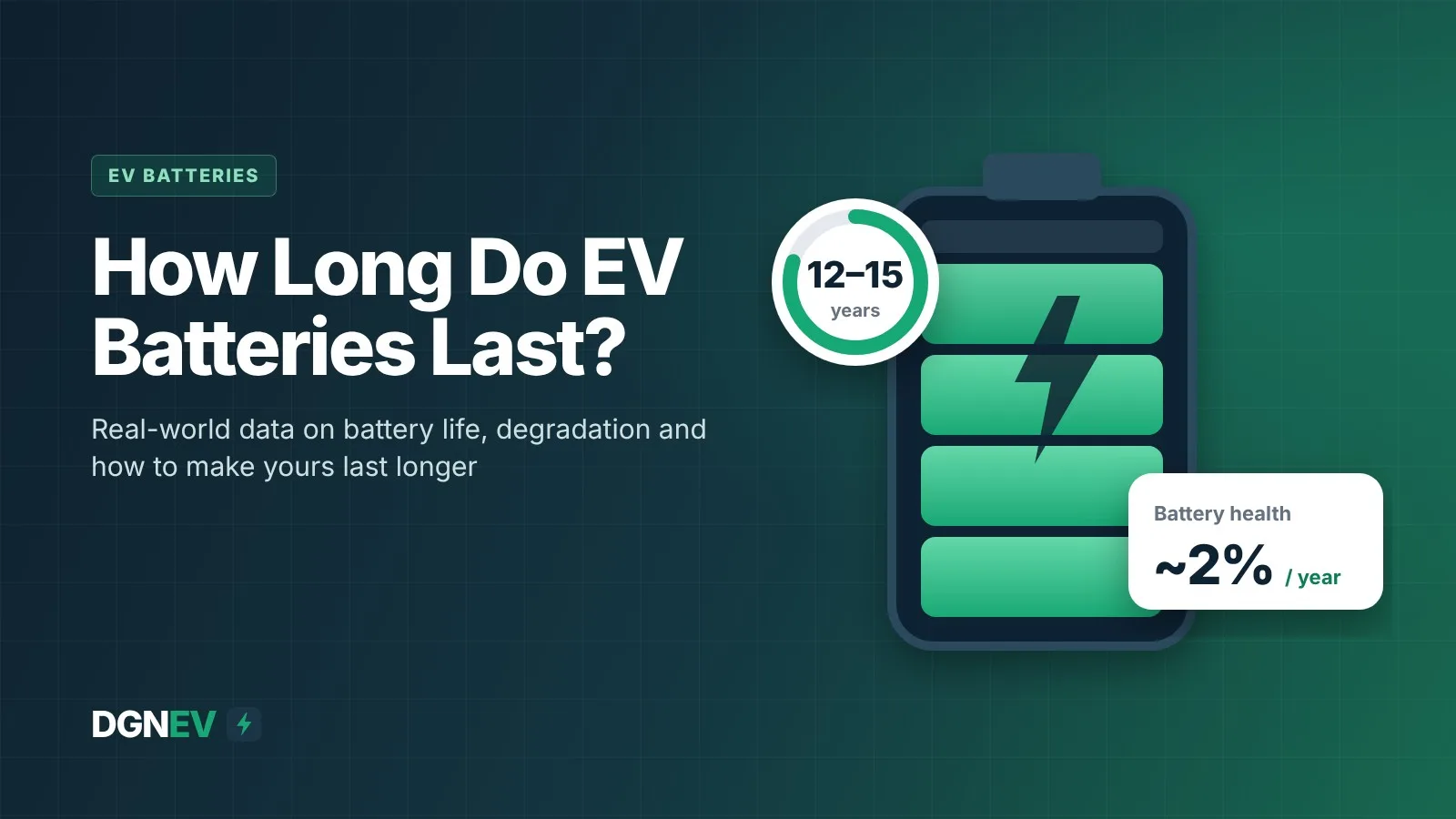
How Long Do EV Batteries Last? Real-World Data Explained
Most electric car batteries last well over a decade and lose only about 2% of their capacity per year. Here is what real-world data says about EV…
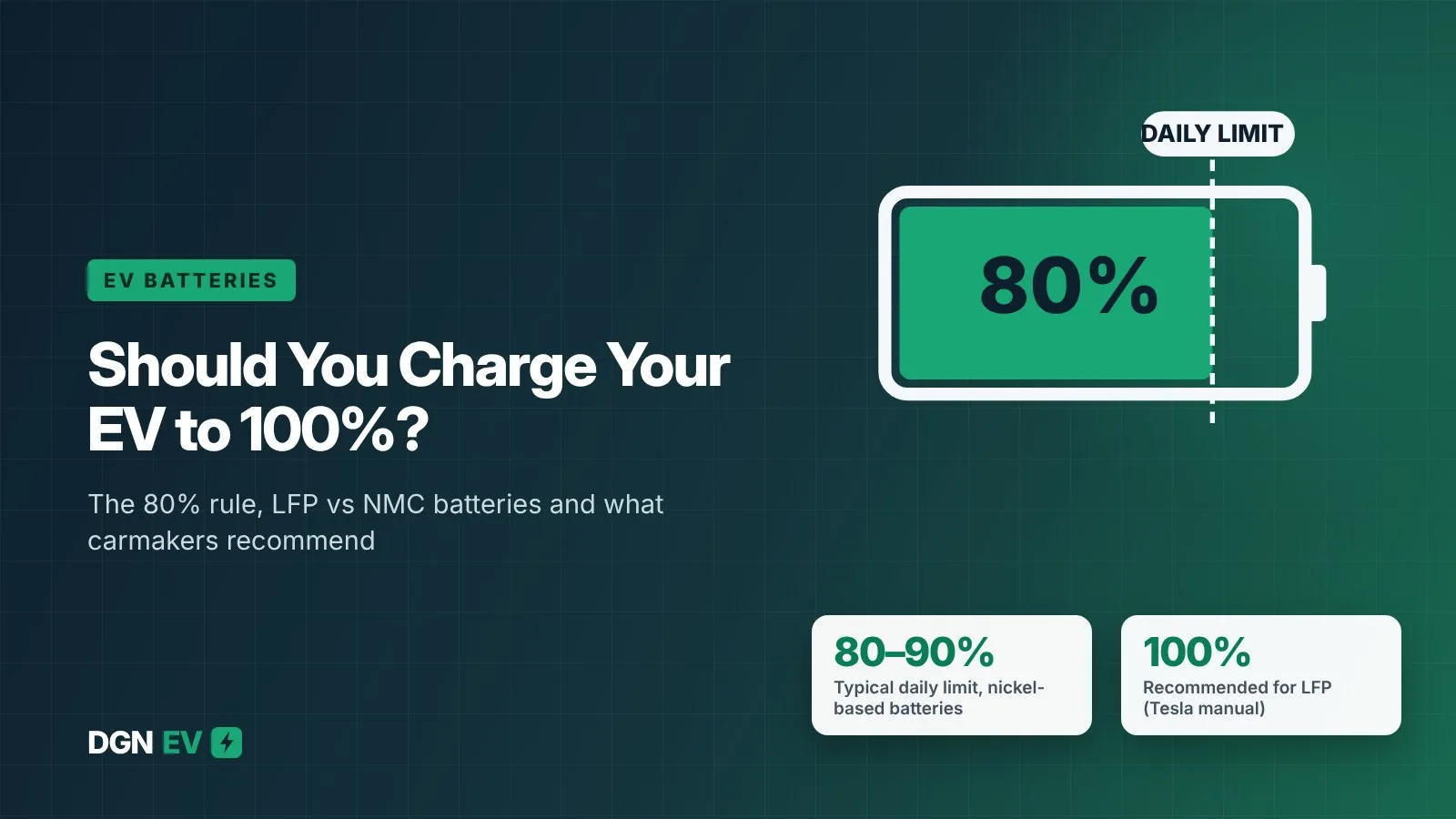
Should You Charge Your EV to 100%? What Carmakers Actually Recommend
Charging to 100% is fine before a road trip, but most EVs with nickel-based batteries last longer if you charge to around 80–90% day to day. LFP…
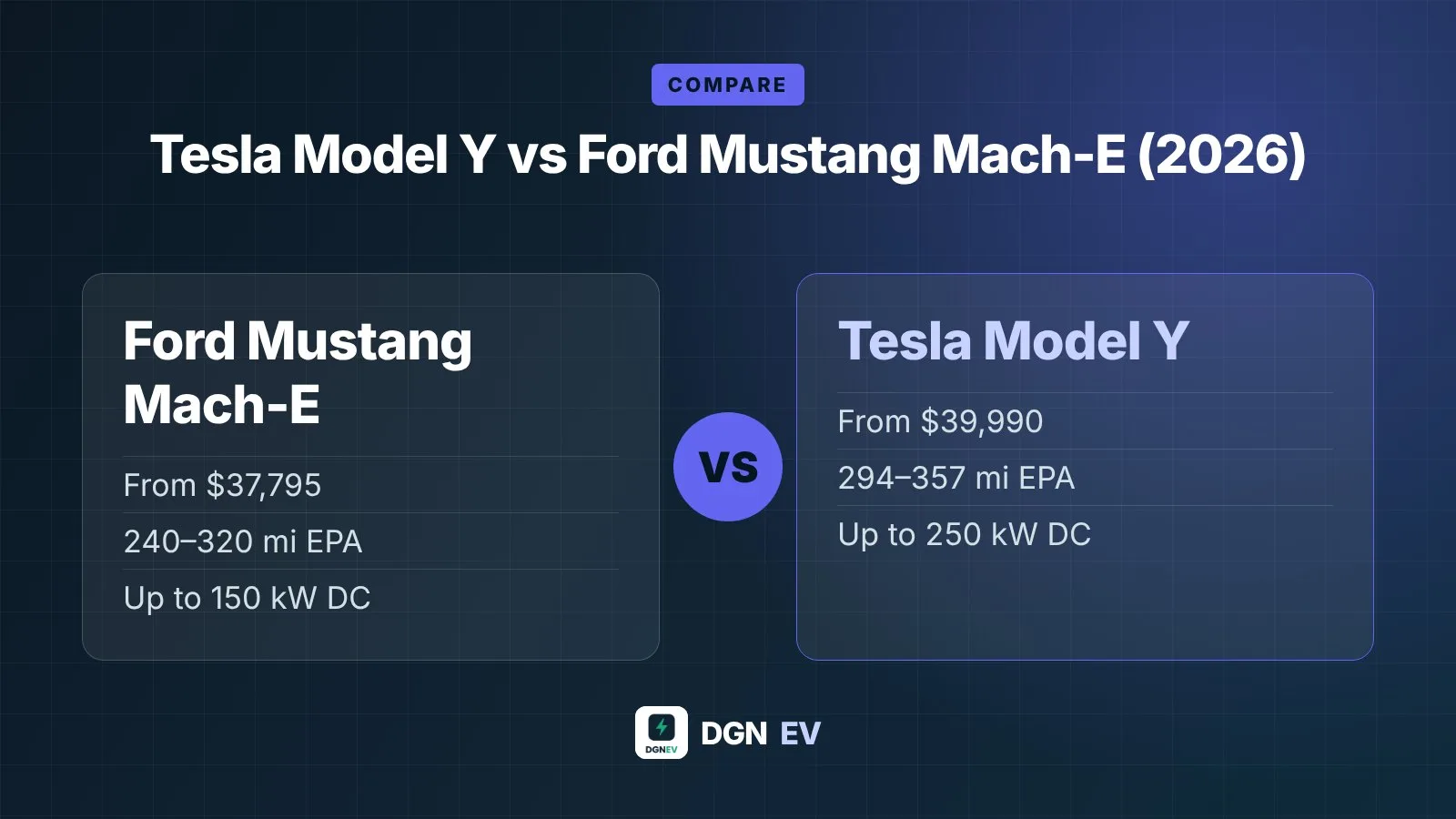
Tesla Model Y vs Ford Mustang Mach-E (2026): Price, Range and Charging Compared
The Mach-E costs less to start, but the Model Y goes farther, charges faster and costs less to run. Here is how the 2026 Tesla Model Y and Ford…