Electric Cars: Pros and Cons You Should Know
Electric cars are cheaper to run and maintain, but they cost more to buy and need more planning on long trips. Here are the real advantages and disadvantages, with up-to-date numbers, so you can decide if an EV fits your life.

Electric cars have clear strengths: they are cheaper to run, need less maintenance, feel quick and quiet, and produce no tailpipe emissions. But they also have real drawbacks: a higher purchase price, longer refueling stops on road trips, reduced range in cold weather and a public charging network that is still growing.
Whether an EV is the right choice depends less on the technology and more on how you drive, where you live and whether you can charge at home. This guide gives you an honest look at both sides, with current numbers, so you can make up your own mind.
New to electric cars? Start with our guide on how electric cars work.
Electric cars at a glance
| Pros | Cons |
|---|---|
| Lower cost per mile than gasoline in most areas | Higher average purchase price |
| Less maintenance – no oil changes, fewer moving parts | Charging takes longer than filling a tank |
| Convenient charging at home overnight | Harder if you can't charge where you live |
| Instant acceleration, quiet and smooth to drive | Range drops noticeably in very cold weather |
| No tailpipe emissions, lower lifetime emissions | Public charging can be patchy in rural areas |
| Software updates can add features over time | Repairs, insurance and tires can cost more |
The advantages of electric cars
1. Lower running costs
Electric motors are far more efficient than gasoline engines. According to the U.S. Department of Energy, a typical EV turns 87–91% of its energy into movement, compared with about 30% for a gasoline car. In practice, that usually means a lower cost per mile – especially if you charge at home, where electricity is normally much cheaper than at public fast chargers.
How much you save depends on your local electricity rate, gasoline prices and how efficient your car is. Charging at home overnight on an off-peak tariff gives the biggest savings; relying only on DC fast chargers can make an EV cost about the same per mile as a gasoline car, or more.
2. Less maintenance
An electric car has no engine oil, spark plugs, timing belt, exhaust system or multi-speed gearbox to service. Regenerative braking also does much of the slowing down, so brake pads and discs usually last longer. A study by the U.S. Department of Energy's Argonne National Laboratory estimated maintenance costs of around 6 cents per mile for battery-electric cars, compared with around 10 cents per mile for gasoline cars – roughly 40% less.
EVs still need tire rotations, brake fluid checks, cabin air filter changes, coolant checks and washer fluid. But there are fewer items on the list, and fewer things that can wear out.
3. Convenient charging at home
If you have a driveway or garage, you can plug in when you get home and leave every morning with a "full tank." Most people drive far less in a day than an EV's range, so they rarely need public chargers at all. A Level 2 home charger (240-volt in North America, or a 7–11 kW wall box in Europe and the UK) can refill most EVs overnight.
4. A better driving experience
Electric motors deliver full torque instantly, so even affordable EVs feel quick when pulling away from traffic lights or merging onto a highway. There are no gear changes and very little noise or vibration. Because the heavy battery sits low in the floor, many EVs also feel stable and planted in corners. One-pedal driving, where the car slows down as soon as you lift off the accelerator, makes stop-and-go traffic more relaxing.
5. Lower emissions
EVs produce no tailpipe emissions, which improves air quality in cities. Building the battery does create extra emissions at the factory, but the International Energy Agency (IEA) found that a battery electric car sold in 2023 will emit around half as much as a comparable gasoline car over its lifetime on a global average – and around 65% less in the United States. The cleaner your local electricity grid, the bigger the benefit.
6. They keep improving after you buy them
Many EVs receive over-the-air software updates that can improve charging speed, efficiency, navigation and entertainment features without a trip to the dealer.
The disadvantages of electric cars
1. Higher purchase price
EVs still cost more up front on average. According to Kelley Blue Book, the average transaction price of a new EV in the U.S. was $56,238 in June 2026, compared with $49,758 for the average new vehicle overall. The gap has been narrowing, and more affordable models are arriving, but it is still there.
In the U.S., the federal EV tax credit of up to $7,500 ended on September 30, 2025 under the One Big Beautiful Bill Act, so it no longer reduces the price of new purchases. Some states, utilities and other countries still offer their own incentives, so check what is available where you live.
2. Charging takes longer
Filling a gas tank takes about five minutes. Charging an EV at a DC fast charger from around 10% to 80% typically takes 20 to 40 minutes, depending on the car and the charger, and a full charge on a Level 2 charger takes several hours. For daily driving with home charging this rarely matters, but on long road trips you will need to plan stops – ideally combining them with meals or breaks.
3. Public charging is still growing
The U.S. public charging network is expanding quickly: the Department of Energy's Alternative Fuels Data Center
Work out your own numbers
Note: This guide is for general information only. Prices, specifications and regulations change over time and vary by country, so always check with the manufacturer or a qualified professional before making decisions. Read our disclaimer.
Keep reading
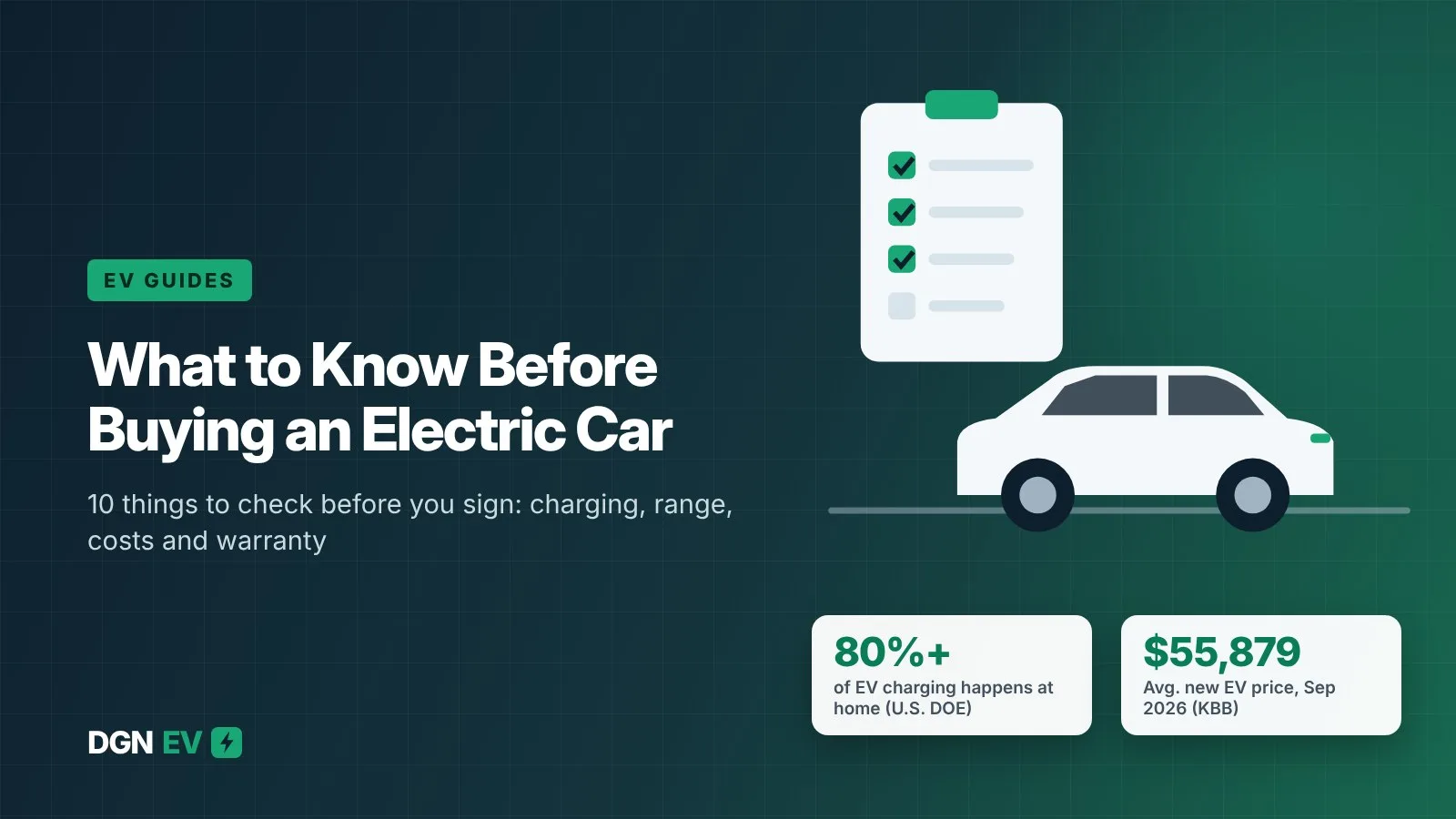
What to Know Before Buying an Electric Car: 10 Things to Check
Thinking about an EV? Check these 10 things first: where you will charge, how much range you really need, what charging costs, battery warranty…

BEV vs PHEV vs HEV: Types of Electric Cars Explained
BEV, PHEV, HEV, MHEV, EREV – electrified cars come in several types. Learn how each one works, how far it can drive on electricity, whether you need…
How Do Electric Cars Work? A Simple Guide
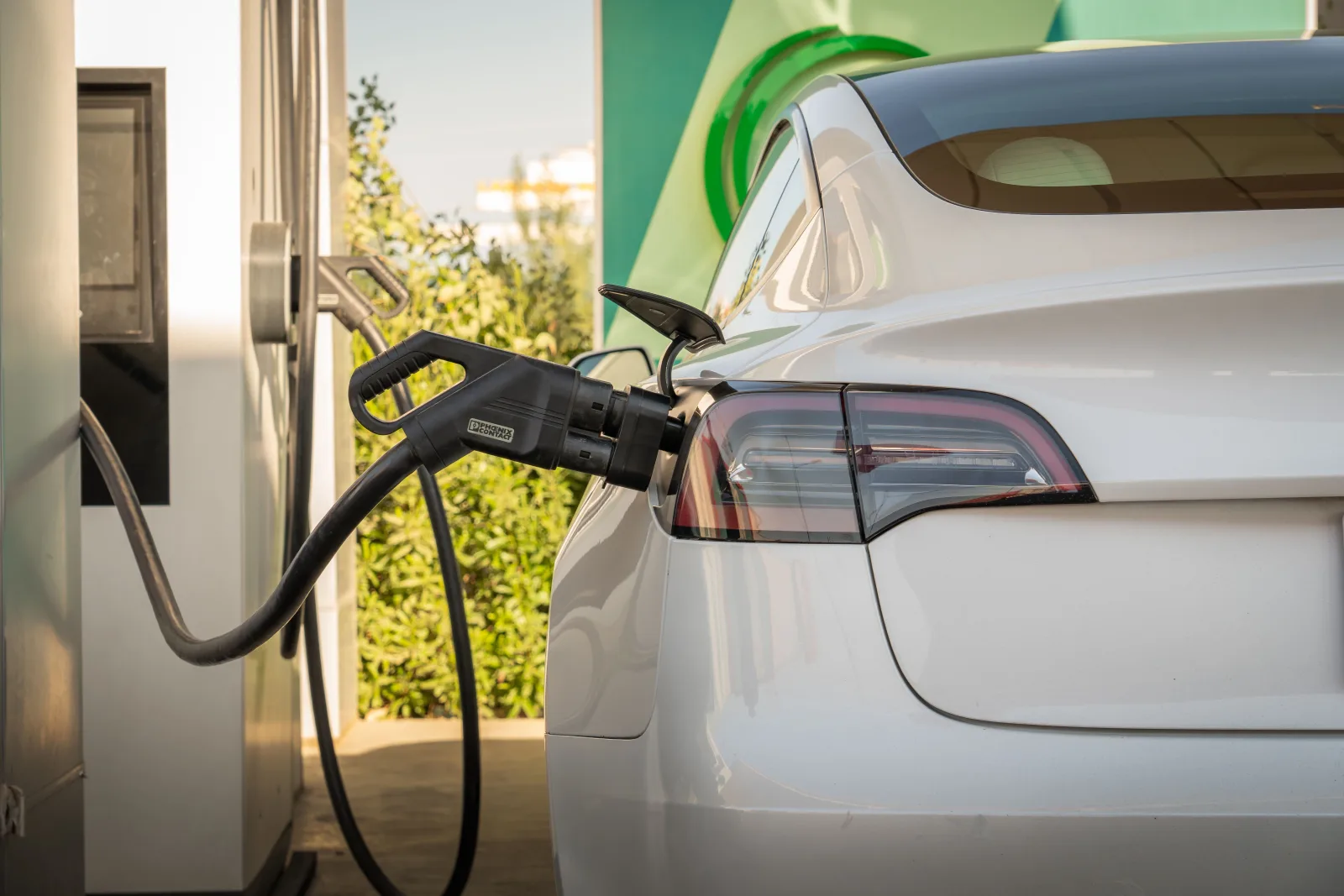
Electric cars replace the engine and fuel tank with a battery, an inverter and an electric motor. Here is how each part works, how energy flows from…
Comments
Be the first to comment
Questions and experiences are welcome. Comments are reviewed before publishing; links are not allowed. Your email is optional and never shown.