Do EV Tires Wear Faster? How to Make Them Last Longer
Tires are often the biggest regular maintenance cost of an electric car – and they can wear out faster than on a gas car. Learn why, what makes EV tires different and simple ways to make your tires last longer.
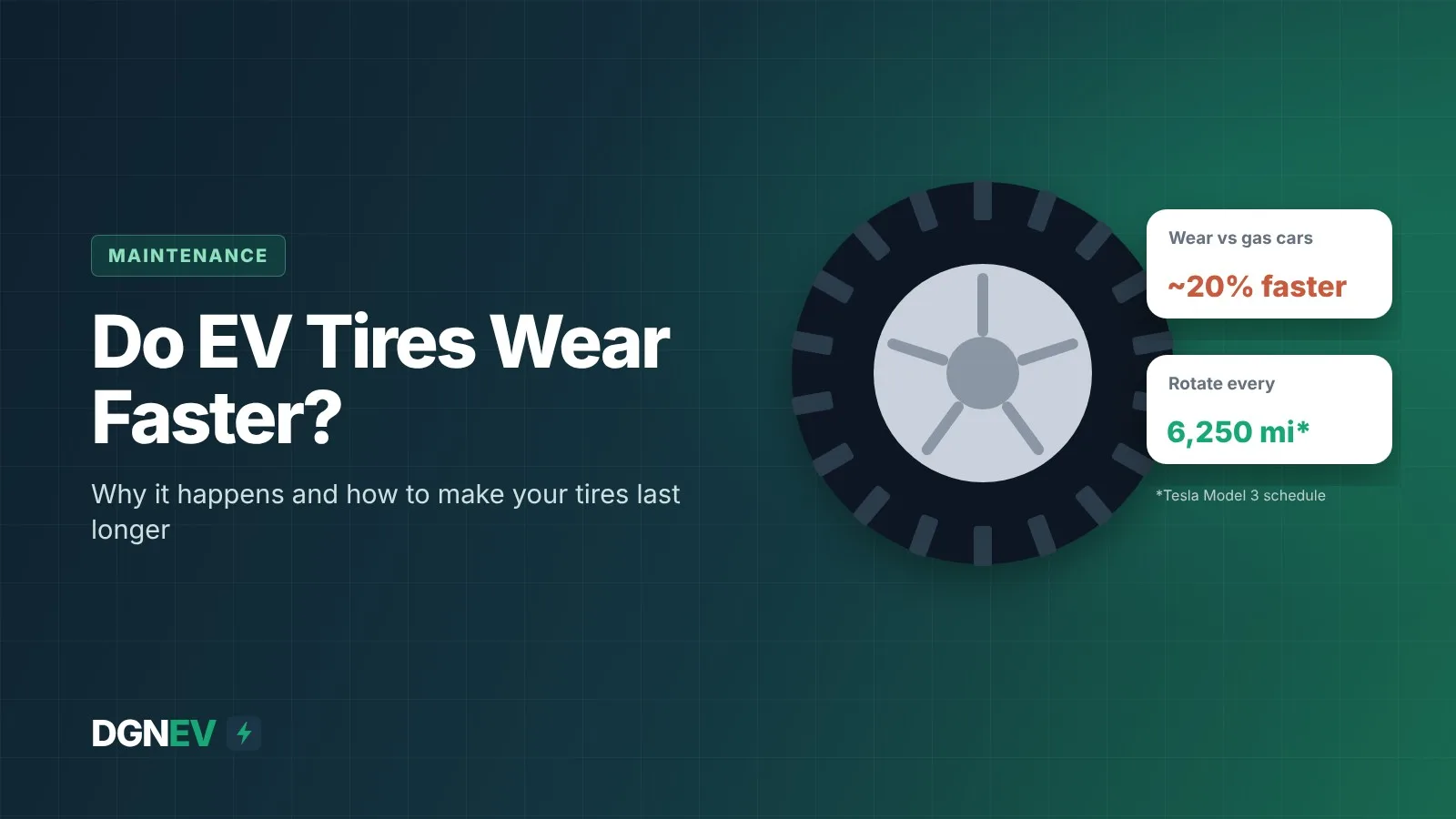
Yes – tires on electric cars often wear out faster than on comparable gas cars, commonly by around 20%, according to tire experts at Consumer Reports and AAA. The main reasons are the extra weight of the battery and the instant torque of electric motors. How much faster depends heavily on the car, the tires fitted and your driving style.
The good news is that tires are one of the few regular maintenance items an EV has, and simple habits can make them last much longer. This guide explains why EV tires wear, what makes EV-specific tires different and how to get the most miles from yours.
For the full picture of what an EV needs, see our guide on EV maintenance and oil changes.
Why EV tires wear faster
1. Extra weight
Battery packs are heavy. AAA notes that EVs are often 25–50% heavier than comparable gas vehicles. More weight presses the tires harder into the road, especially when cornering and braking, which wears the tread faster.
2. Instant torque
Electric motors deliver full torque from a standstill. Even without wheel spin, strong acceleration scrubs rubber off the tread. Quick launches from traffic lights are one of the biggest causes of rapid tire wear on EVs.
3. Regenerative braking
When the motor slows the car to recover energy, that braking force also goes through the tires – often on the driven wheels only. This can make wear uneven between the front and rear axle.
4. Soft, grippy or low-resistance compounds
Many EVs come with performance tires with soft rubber, which grip well but wear quickly. Others use low-rolling-resistance tires to maximize range, which can involve trade-offs in tread life.
What makes EV-specific tires different?
Many tire makers now sell tires designed for electric cars, often marked with an EV symbol or name on the sidewall. Compared with standard tires, they typically offer:
- Higher load capacity: stronger construction to carry the extra weight. Some carry an "HL" (high load) marking, which means a higher load index at the same size.
- Low rolling resistance: less energy lost as the tire flexes, which helps range. Tires have a bigger effect on an EV's efficiency than on a gas car's.
- Noise reduction: without engine noise, tire roar is easy to hear, so many EV tires have foam inside or special tread patterns to cut noise.
- Tread designed for torque: stiffer tread blocks and compounds that resist wear from instant torque.
You do not have to use EV-specific tires, but any replacement must meet the load index and speed rating on your car's tire placard (usually inside the driver's door). Choosing a tire not suited to an EV's weight can reduce range, raise noise or wear out quickly.
How long do EV tires last?
There is no single answer. Many EV owners get a similar life to gas cars with careful driving, while others need new tires much sooner. AAA reports that some EV tires may last only 10,000–20,000 miles, particularly on heavy or high-performance models driven hard. Mainstream EVs on all-season tires with gentle driving often do much better.
Check the tread depth regularly. In the U.S., tires are legally worn out at 2/32 inch (1.6 mm), but many experts recommend replacing them at 4/32 inch for good wet-weather grip. In the UK and EU, the legal minimum is 1.6 mm.
How much do EV tires cost?
Prices vary widely by size and brand. EV-specific tires usually cost more than standard tires of the same size. In one AAA comparison, a set of regular tires for a Ford F-150 cost $900–$1,300, while dedicated EV tires for the electric F-150 Lightning cost $1,700–$1,900. Even so, the savings from no oil changes and less brake wear usually keep EV maintenance costs lower overall – see electric vs gas cars: which is cheaper.
10 ways to make your EV tires last longer
- Accelerate smoothly. Save the instant torque for when you really need it.
- Use eco or chill driving modes, which soften acceleration.
- Check pressure monthly when tires are cold, using the pressure on the door placard. EV tires often run higher pressures than gas car tires.
- Rotate regularly. Tesla, for example, recommends rotating Model 3 tires every 6,250 miles (10,000 km). Follow your manual.
- Get an alignment check after hitting a pothole or kerb, or if the car pulls to one side.
- Take corners gently. Heavy cars at speed wear the outer shoulders quickly.
- Avoid harsh braking and anticipate stops to use smooth regenerative braking.
- Choose replacement tires carefully: look for the right load rating and good treadwear ratings, not just grip.
- Do not overload the car beyond its rated payload.
- Inspect tires regularly for uneven wear, bulges or cuts, which can signal alignment or suspension problems.
Tires and range
Tires affect range as well as cost. Underinflated tires increase rolling resistance and reduce range, and switching to grippy performance or winter tires can cut efficiency noticeably. Keeping the right pressure is the easiest way to protect both your tires and your range. Learn more in why EV range drops in winter.
Frequently asked questions
Do I need special tires for an electric car?
Not always, but replacement tires must meet the load index and speed rating your car requires. EV-specific tires are designed for extra weight, lower rolling resistance and less noise, so they are often a good choice.
How often should I rotate EV tires?
Follow your owner's manual. Many manufacturers recommend every 5,000–7,500 miles; Tesla recommends every 6,250 miles (10,000 km) for the Model 3.
Can I put regular tires on my EV?
Yes, as long as they match the size, load index and speed rating on your car's placard. They may be noisier or reduce range slightly compared with EV-specific tires.
Why are my EV's tires wearing unevenly?
Common causes are incorrect pressure, poor alignment, infrequent rotation and the extra stress on the driven wheels from torque and regenerative braking. A tire shop can check alignment and suggest a rotation pattern.
Do winter tires affect EV range?
Yes. Winter tires usually have higher rolling resistance, which reduces range a little, but their extra grip in snow and ice is well worth it where winters are harsh.
The bottom line
EV tires can wear faster because of extra weight, instant torque and regenerative braking, often by around 20%. Smooth driving, correct tire pressure, regular rotation and the right replacement tires can close most of that gap. Even with more frequent tire changes, most EV owners still spend less on maintenance than they would with a gas car.
Work out your own numbers
Note: This guide is for general information only. Prices, specifications and regulations change over time and vary by country, so always check with the manufacturer or a qualified professional before making decisions. Read our disclaimer.
Keep reading
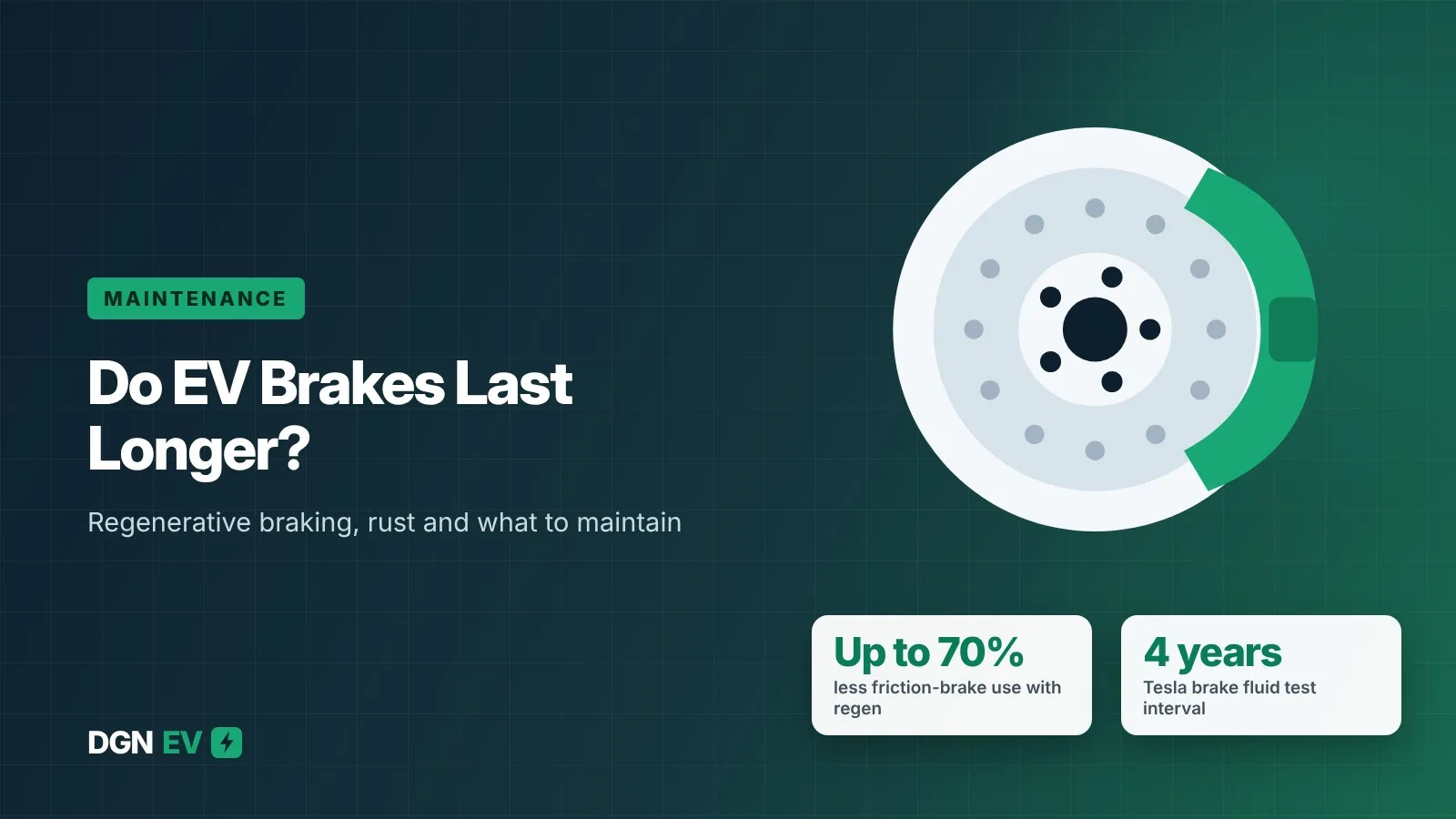
Do EV Brakes Last Longer? Brake Wear, Rust and What to Maintain
EV brake pads often last far longer than in gas cars because regenerative braking does most of the work. The catch is rust: brakes that are rarely…
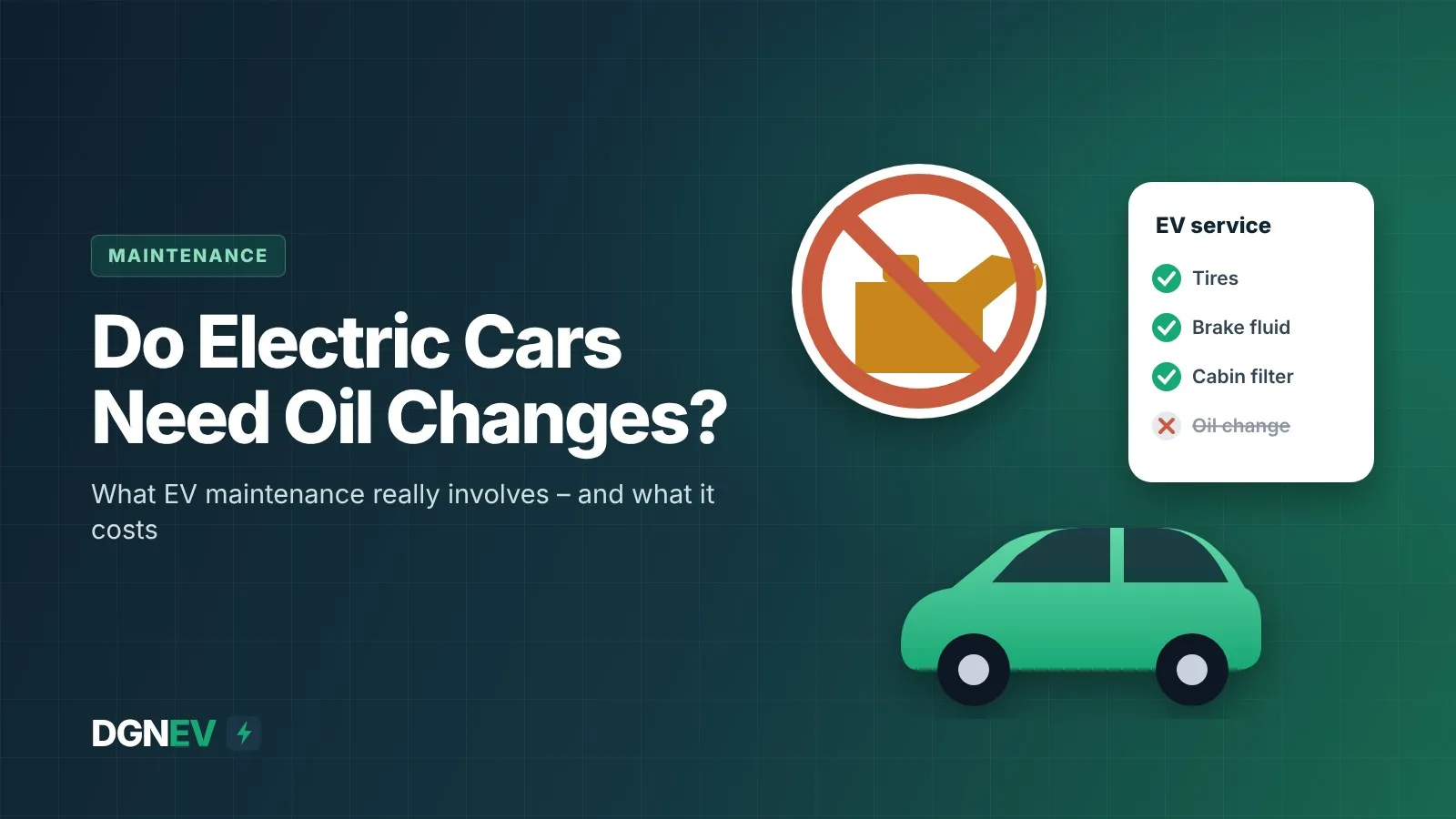
Do Electric Cars Need Oil Changes? What EV Maintenance Really Involves
Electric cars never need engine oil changes, but they are not maintenance-free. Here is what an EV still needs – from brake fluid and coolant to…

Electric Cars: Pros and Cons You Should Know
Electric cars are cheaper to run and maintain, but they cost more to buy and need more planning on long trips. Here are the real advantages and…
Comments
Be the first to comment
Questions and experiences are welcome. Comments are reviewed before publishing; links are not allowed. Your email is optional and never shown.