How this calculator works
The calculator takes the energy needed to go from your starting charge level to your target level, then adds charging losses – some electricity is lost as heat in the charger and battery. For home AC charging, losses are typically around 10%, so the default charging efficiency is 90%.
Energy from the grid = battery size × (target % − start %) ÷ charging efficiency
Cost per charge = energy from the grid × electricity price
Cost per mile (or km) is based on your car's efficiency, and the monthly cost on how far you drive each month. Public DC fast chargers usually cost several times more per kWh than home electricity, so try the calculator with both prices to compare.
Frequently asked questions
How much does it cost to fully charge an electric car?
It depends on the battery size and your electricity price. For example, adding 60 kWh to a battery at $0.17 per kWh with 90% charging efficiency costs about $11. At a public fast charger charging $0.50 per kWh, the same energy would cost around $33.
Is it cheaper to charge at home or at a public charger?
Home charging is almost always cheaper, especially on an off-peak or EV electricity tariff. Public DC fast charging is convenient on road trips but usually costs much more per kWh.
Why should I not charge from 0% to 100% every time?
You can, but many drivers charge from around 20% to 80% for daily use. It is quicker and, for nickel-based batteries, gentler on the battery. Check your owner's manual for the recommended daily limit.
Related guides
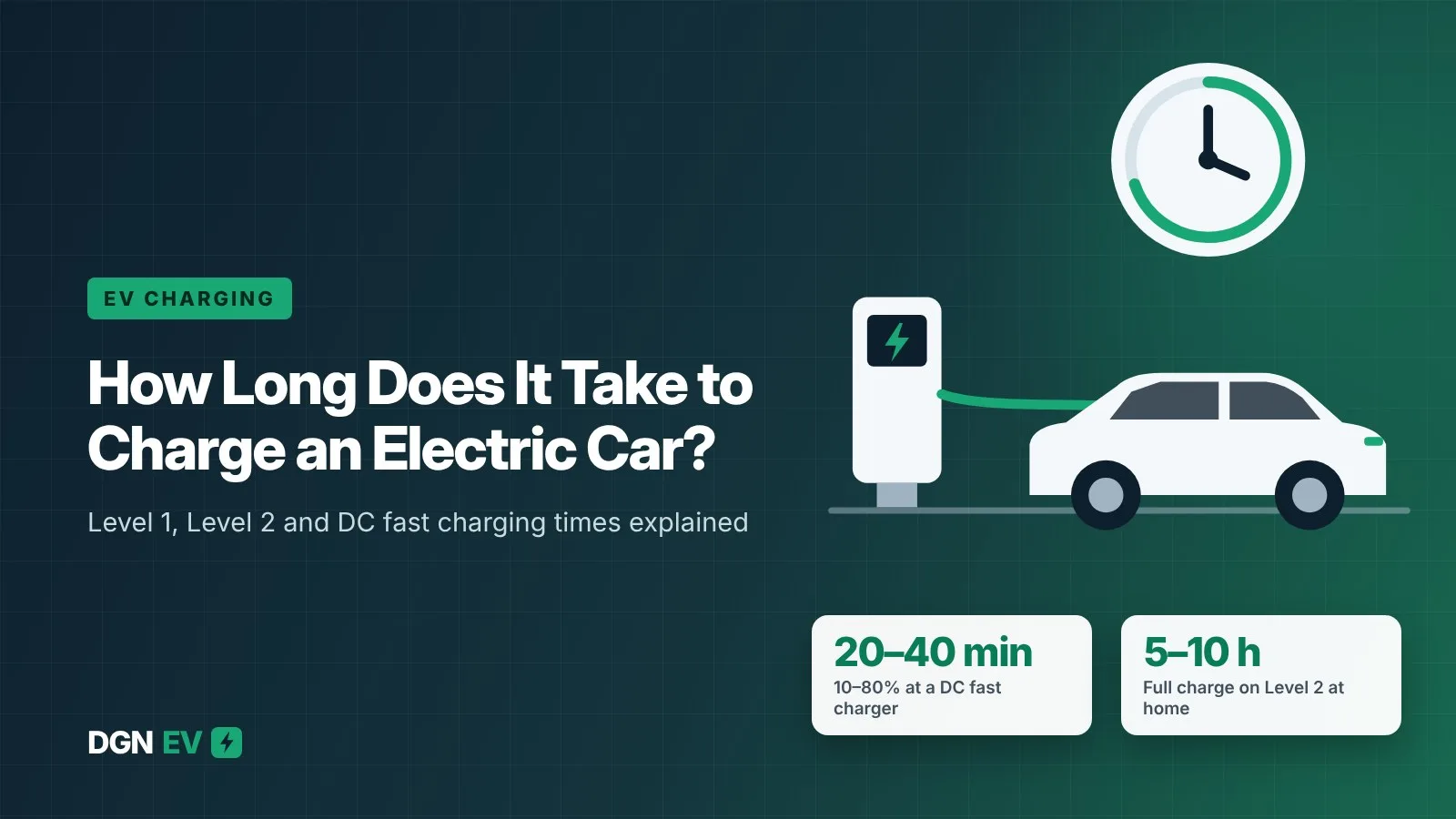
How Long Does It Take to Charge an Electric Car?
Charging an EV takes anywhere from about 20 minutes to more than 40 hours. It depends on the charger, the battery size and the car's own charging…
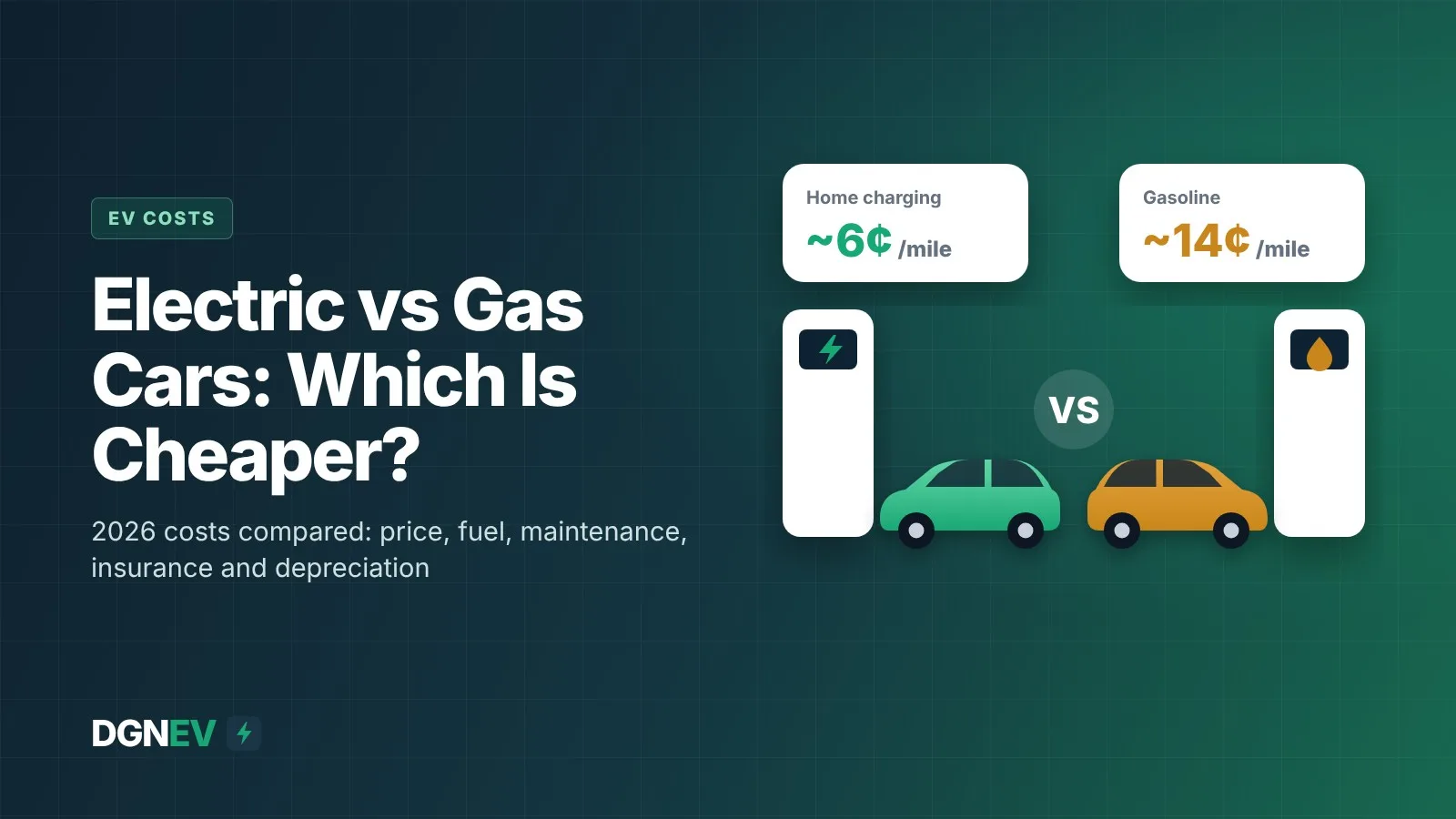
Electric vs Gas Cars: Which Is Cheaper to Own in 2026?
EVs cost far less to fuel and maintain, but usually more to buy and insure, and they lose value faster. We compare the real 2026 numbers – price…
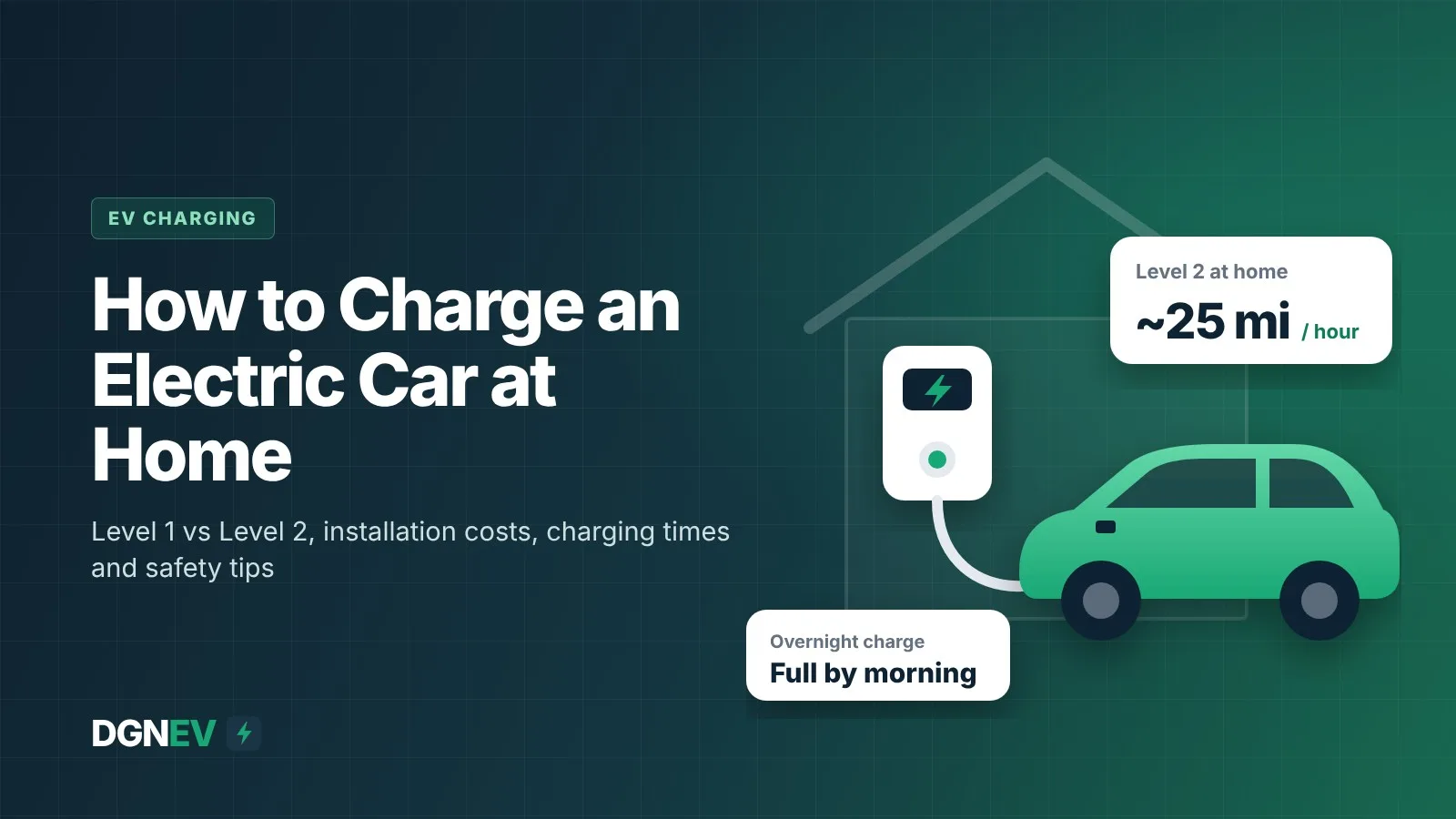
How to Charge an Electric Car at Home: A Complete Guide
Charging at home is the cheapest and easiest way to run an EV. Learn the difference between Level 1 and Level 2 charging, what a home charger costs…