What Are Solid-State Batteries? How They Work and When They're Coming
Solid-state batteries promise EVs with more range, faster charging and better safety. Here is how they differ from today's lithium-ion batteries, what "semi-solid-state" means, the real challenges and when you can actually buy a car with one.
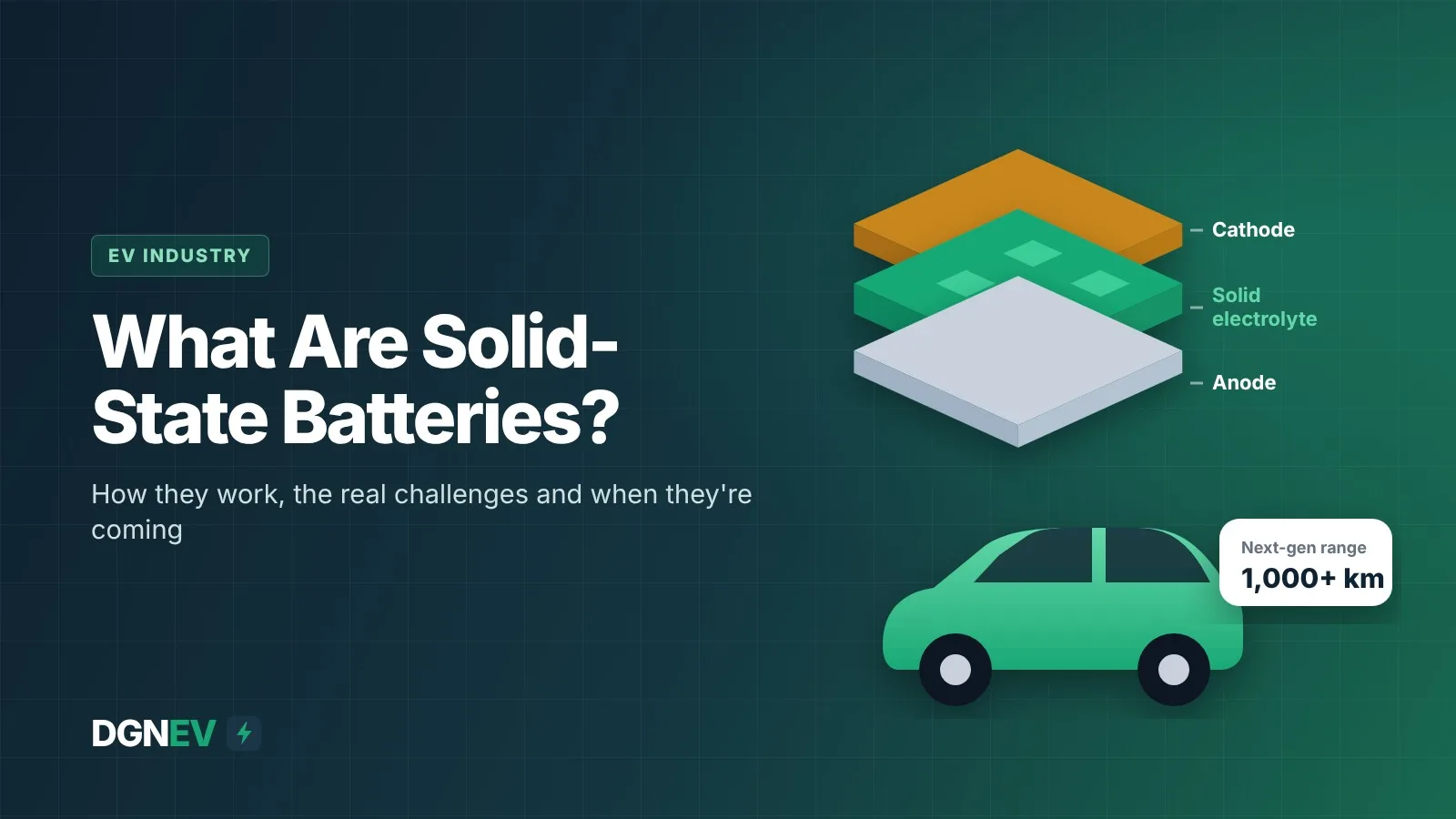
A solid-state battery is a battery that uses a solid electrolyte instead of the liquid electrolyte found in today's lithium-ion batteries. That one change could allow EV batteries that store more energy in the same space, charge faster and are less likely to catch fire.
Solid-state batteries are often called the "holy grail" of electric cars, and almost every major carmaker and battery maker is working on them. But they are not in mainstream cars yet. This guide explains how they work, what is real and what is hype, and when you can expect to see them.
If you want a refresher on today's batteries first, see our guide on how long EV batteries last.
How a lithium-ion battery works today
Every battery cell has three main parts: a cathode (positive side), an anode (negative side) and an electrolyte between them. When you charge the car, lithium ions move through the electrolyte from the cathode to the anode; when you drive, they flow back and release energy.
In a conventional EV battery, the electrolyte is a flammable liquid, and a thin plastic separator keeps the cathode and anode apart. The anode is usually made of graphite.
What makes a solid-state battery different
A solid-state battery replaces the liquid electrolyte and separator with a thin layer of solid material – usually a ceramic, a sulfide-based glass or a polymer. Lithium ions can still travel through it, but there is no flammable liquid inside the cell.
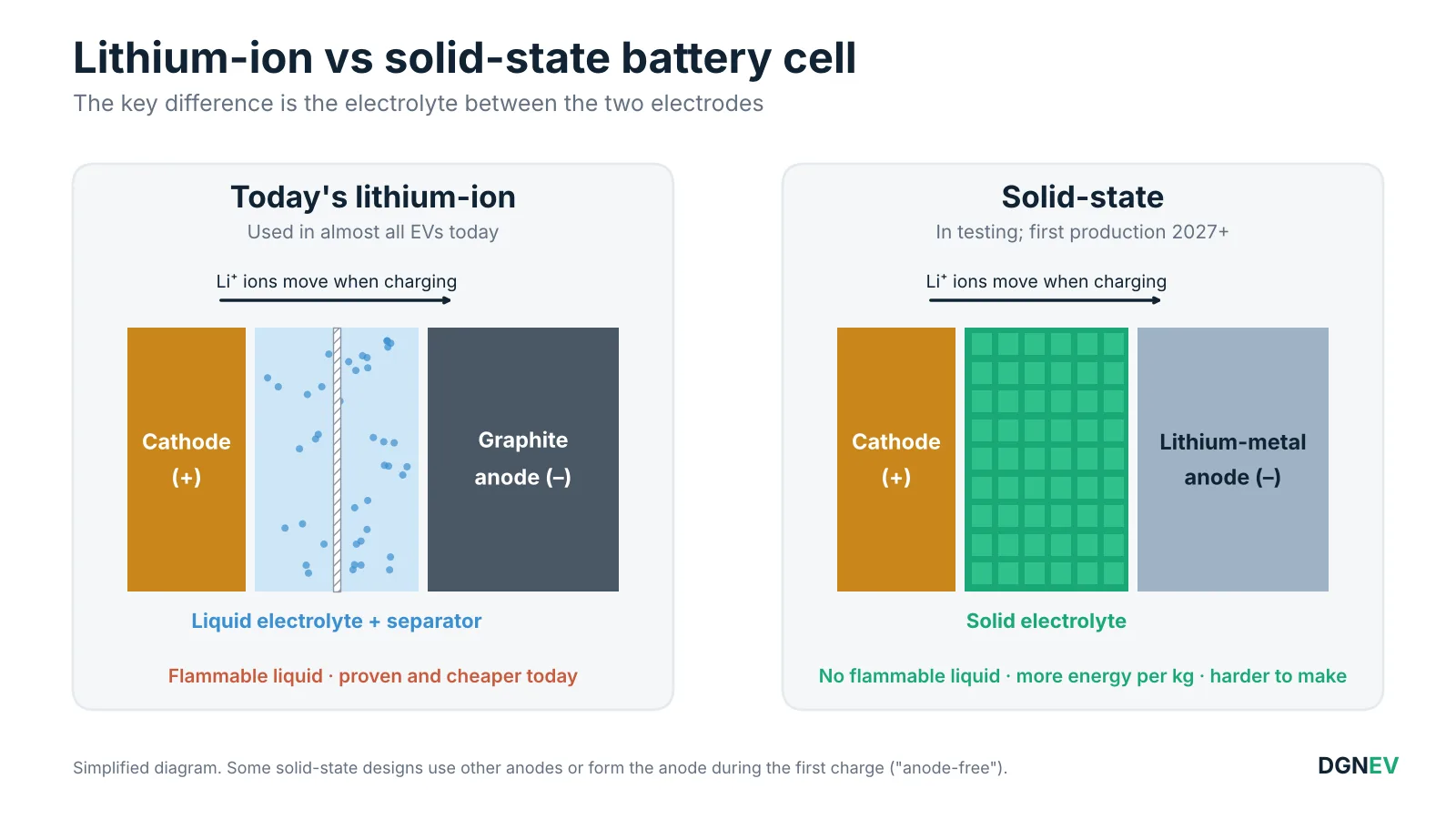
Many solid-state designs also use a lithium-metal anode instead of graphite, or form the anode during the first charge ("anode-free" designs). Lithium metal can store far more energy than graphite, which is where much of the extra range comes from.
The potential advantages
- More range: higher energy density means more kilowatt-hours in the same size and weight of battery. In September 2025, a Mercedes-Benz EQS test car with a Factorial Energy solid-state battery drove 1,205 km (749 miles) from Stuttgart to Malmö on a single charge – with about 137 km (85 miles) left. Mercedes says the pack holds about 25% more energy than the standard one at roughly the same size and weight.
- Faster charging: some designs can accept high charging power with less risk of damage. QuantumScape and Volkswagen's PowerCo say their cells can charge from 10% to 80% in just over 12 minutes.
- Better safety: without a flammable liquid, the risk of fire after damage or a fault is expected to be lower.
- Lighter, smaller packs: carmakers could fit the same range into a smaller, lighter battery – making EVs cheaper, more efficient or more spacious.
- Possibly longer life and better cold-weather performance, depending on the chemistry.
The challenges holding them back
- Manufacturing at scale: making thin, flawless layers of solid electrolyte by the million is much harder than filling cells with liquid. Many solid electrolytes are sensitive to moisture and need very dry factories.
- Keeping good contact: the electrodes swell and shrink as they charge and discharge. A liquid flows to fill gaps; a solid does not, so cells can lose contact and capacity. Many designs need pressure applied to the cells.
- Dendrites: with lithium-metal anodes, needle-like lithium growths called dendrites can form and short-circuit the cell if not controlled.
- Cost: new materials and processes are expensive at first, while today's lithium-ion batteries keep getting cheaper and better.
CATL, the world's largest EV battery maker, said in 2026 that its all-solid-state technology had reached about level 4 on a 1-to-9 maturity scale – a sign of how much work remains.
Semi-solid-state vs all-solid-state
You will often see "semi-solid-state" batteries in the news. These still contain some liquid or gel electrolyte, combined with solid electrolyte materials. They are easier to build with existing factories and offer some of the benefits, but they are not true solid-state batteries.
- Semi-solid-state – on sale now: available in some cars in China, such as the Nio ET7 (150 kWh pack) and the IM L6. MG has said it will bring its semi-solid-state battery to Europe by the end of 2026 in the MG4 EV Urban.
- All-solid-state – still in testing: prototypes such as the Mercedes EQS above and a BMW i7 test car with Solid Power cells are being driven on public roads, but no mass-market car uses them yet.
China is preparing a national standard that defines and classifies solid-state batteries, partly to stop marketing that calls semi-solid batteries "solid-state".
When will solid-state batteries be in EVs?
Announced plans change often, but this is where the main players stood in 2026:
| Company | Announced plan |
|---|---|
| Samsung SDI | Mass production of all-solid-state batteries targeted for 2027 |
| CATL | Small-scale production from 2027, mass production around 2030 |
| Toyota | First solid-state batteries expected in 2027–2028, possibly in a hybrid before an EV |
| Nissan | Commercialization targeted by the end of fiscal year 2028 |
| Mercedes-Benz (with Factorial) | Production cars expected by the end of the decade |
| BYD | Demonstration vehicles from 2027, mass production after 2030 |
| Hyundai-Kia | Commercialization not expected before 2030 |
Early production will likely be small and expensive, so the first all-solid-state batteries will probably appear in premium models, limited fleets or even motorcycles before reaching affordable cars. BloombergNEF expects solid-state batteries to make up only around 10% of global EV and energy storage battery demand by 2035.
Should you wait for solid-state batteries before buying an EV?
For most people, no. Mass-market cars with all-solid-state batteries are still several years away, and early versions will likely cost more. Today's lithium-ion batteries are already reliable: real-world data shows most lose only around 2% of capacity per year, and they come with long warranties.
Lithium-ion technology is also still improving quickly, with better range, faster charging and lower prices each year. If an EV fits your needs and budget today, waiting for a technology that may take years to become affordable means missing out on the savings now. Compare your own costs with our gas vs electric car cost calculator.
Frequently asked questions
Are there any cars with solid-state batteries today?
Not with all-solid-state batteries in mass production. Some cars sold in China use semi-solid-state batteries, which still contain some liquid electrolyte. All-solid-state batteries are being tested in prototypes from brands such as Mercedes-Benz and BMW.
How much range will solid-state EVs have?
It depends on the car. Carmakers talk about 1,000 km (620 miles) or more, and the Mercedes EQS prototype covered 1,205 km on one charge. In practice, many carmakers may use the extra energy density to make batteries smaller, lighter and cheaper rather than simply adding range.
Are solid-state batteries safer?
They are expected to be, because they do not contain a flammable liquid electrolyte. However, safety also depends on the materials, cell design and battery management, and large-scale real-world data does not exist yet.
Will solid-state batteries be expensive?
At first, yes. New materials and production processes cost more until factories scale up. Over time, costs are expected to fall, but lithium-ion batteries will keep getting cheaper too.
Can a solid-state battery be fitted to my current EV?
Almost certainly not. Battery packs are designed for each vehicle, and carmakers have not announced solid-state upgrades for existing models.
The bottom line
Solid-state batteries replace the liquid electrolyte in today's batteries with a solid one, promising more range, faster charging and better safety. Semi-solid versions are already on sale in some markets, and all-solid-state prototypes have shown impressive results, but mass production is only starting to take shape, with most large-scale plans pointing to 2027–2030 and beyond. They are worth following closely – but they are not a reason to delay buying a good EV today.
New to electric cars? Start with our guide on how electric cars work.
Work out your own numbers
Note: This guide is for general information only. Prices, specifications and regulations change over time and vary by country, so always check with the manufacturer or a qualified professional before making decisions. Read our disclaimer.
Keep reading
Electric Car Sales by Country: Who Leads the EV Transition in 2026?
More than 20 million electric cars were sold worldwide in 2025 – one in four new cars. See which countries lead in EV sales and market share, from…
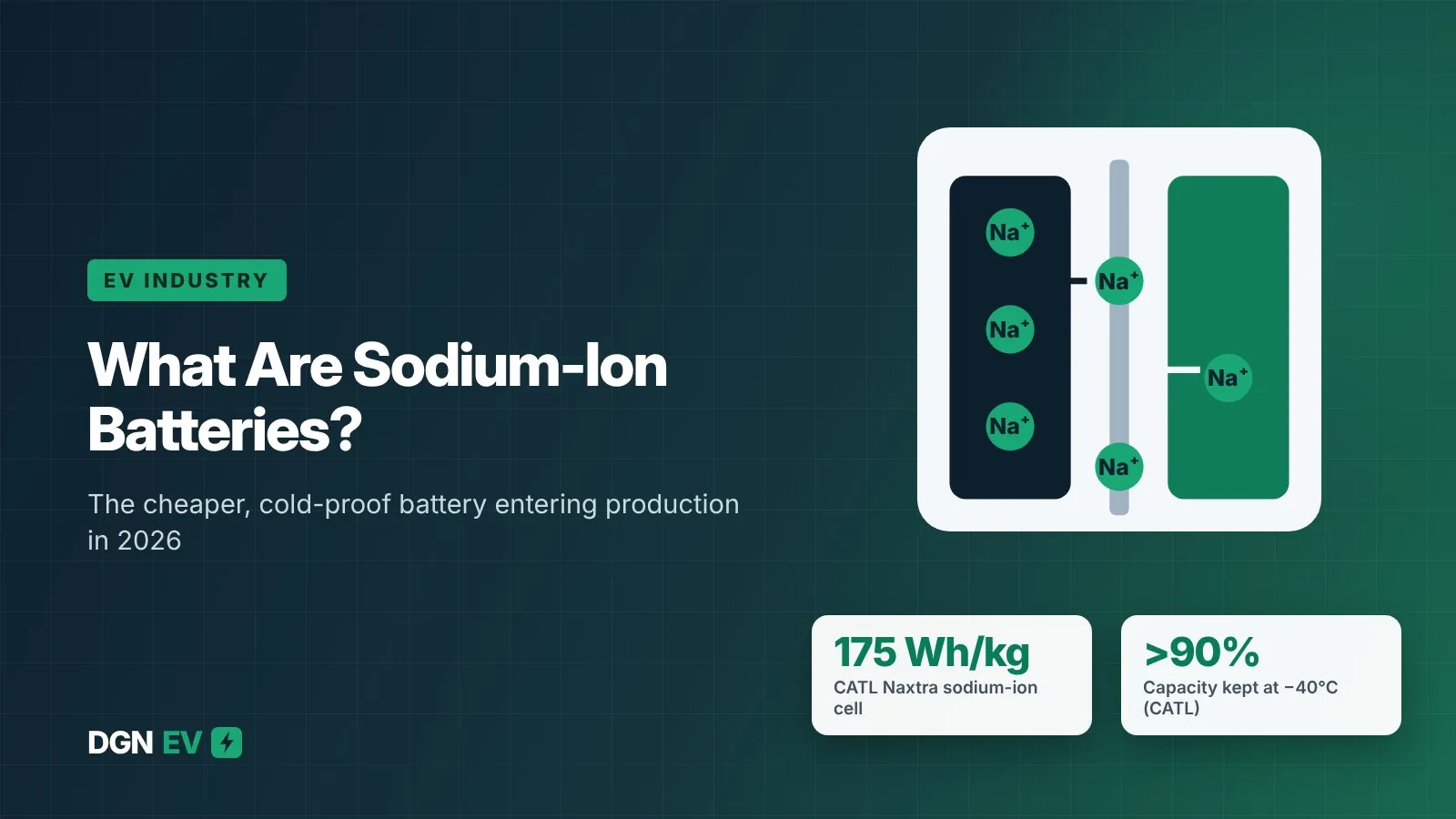
What Are Sodium-Ion Batteries? The Cheaper EV Battery Explained
Sodium-ion batteries replace lithium with sodium, a cheap and abundant element. They store less energy than the best lithium batteries but work far…

Electric Cars: Pros and Cons You Should Know
Electric cars are cheaper to run and maintain, but they cost more to buy and need more planning on long trips. Here are the real advantages and…
Comments
Be the first to comment
Questions and experiences are welcome. Comments are reviewed before publishing; links are not allowed. Your email is optional and never shown.