Do EV Brakes Last Longer? Brake Wear, Rust and What to Maintain
EV brake pads often last far longer than in gas cars because regenerative braking does most of the work. The catch is rust: brakes that are rarely used can corrode. Here is how long EV brakes last and how to look after them.
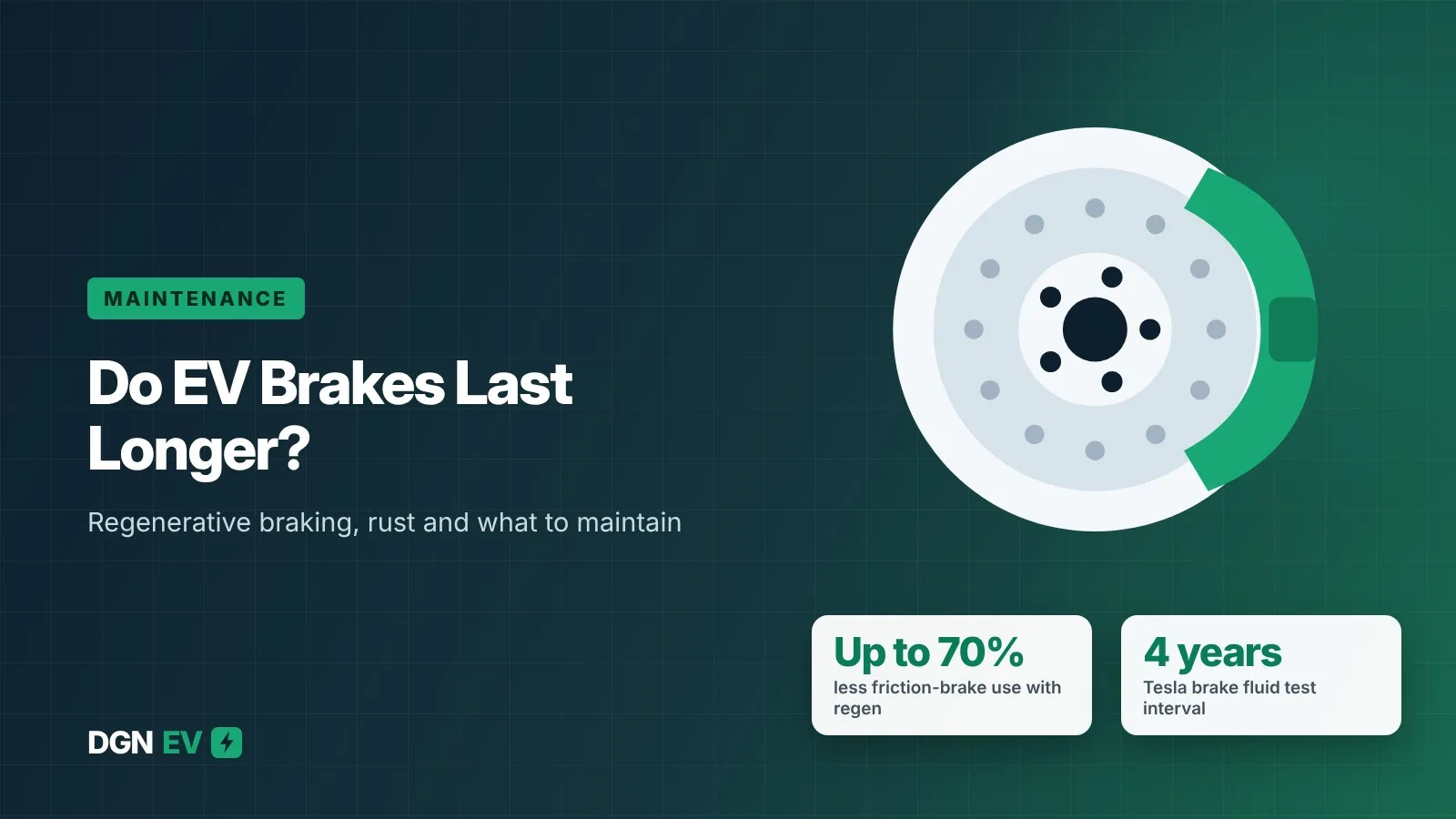
Yes, EV brakes usually last much longer than brakes on a gas car. Regenerative braking slows the car by turning the motor into a generator, so the friction brakes do far less work. Some owners report original pads lasting 70,000 to over 100,000 miles, compared with roughly 30,000 to 70,000 miles for a typical gas car. The flip side is that brakes that are rarely used can rust and seize, especially where roads are salted in winter, so EV brakes still need regular checks.
Why EV brakes wear more slowly
When you lift off the accelerator or press the brake pedal lightly in an EV, the electric motor resists the wheels and sends energy back to the battery. This is regenerative braking. In everyday driving it handles most slowing down, and the hydraulic friction brakes only step in for harder stops, at very low speeds or when the battery is full or cold and cannot accept much charge.
Industry estimates suggest regenerative braking can reduce friction-brake use by as much as 70%, and drivers who use one-pedal driving often use the friction brakes even less. That is why many EV owners go years without replacing pads. It is also one of the reasons EV maintenance costs less overall, as we explain in our guide to electric car pros and cons.
The real problem: rust and corrosion
Brakes are designed to be used. Every firm stop scrapes surface rust off the discs (rotors) and keeps the caliper slide pins moving. When brakes sit idle for long periods:
- Rotors rust, which can cause grinding noises, vibration and uneven pad wear.
- Caliper guide pins can seize, so pads drag or wear unevenly.
- Pads can rust to the backing plate or wear only on one side.
Owner reports collected by Jalopnik in 2025 included Teslas in salt-belt regions needing new rotors and pads around 65,000 miles, and some under 50,000 miles, because of rust rather than normal wear. In other words, where you live often matters more than how you drive.
Some carmakers design around this. Many versions of the Volkswagen ID.4, for example, use rear drum brakes, which are more enclosed and better protected from corrosion.
What carmakers recommend
Maintenance schedules vary by brand, so always follow your owner's manual. As an example, Tesla's maintenance page for the Model 3 and Model Y lists:
| Item | Tesla's recommended interval |
|---|---|
| Brake fluid | Test for contamination every 4 years; replace if needed |
| Brake caliper cleaning and lubrication | Every 12 months or 12,500 miles in areas where roads are salted (Model Y built after February 2025 does not need it) |
| Tire rotation | Every 6,250 miles, or when tread depth differs by 2/32 in. or more |
Brake fluid absorbs moisture over time regardless of how often you brake, so it still needs testing and replacement even if the pads look new.
How to keep EV brakes healthy
- Use the friction brakes now and then. A few firm stops from moderate speed, where it is safe, help clean the rotors and dry the pads. Tesla recommends occasionally pressing the brake pedal firmly for this reason.
- Get brakes inspected yearly, especially in snowy or coastal areas. Ask the shop to check caliper pins and rotor condition, not just pad thickness.
- Follow the brake fluid schedule in your manual.
- Wash the underside in winter to remove road salt.
- Do not ignore noises. Grinding or scraping after the car has been parked can be normal surface rust, but noise that does not go away needs a check.
How much do EV brakes cost to replace?
EV brake parts are similar to those on comparable gas cars, though larger and heavier EVs can need bigger, pricier components. Because replacements happen so rarely, total brake spending over the life of the car is usually lower than for a gas car. Labor and parts prices vary widely by model and region, so get a written quote that separates pads, rotors and caliper service.
Signs your EV brakes need attention
- Grinding, squealing or scraping noises that last more than a few stops
- Vibration or pulsing through the brake pedal or steering wheel
- The car pulling to one side when braking
- A soft or spongy pedal
- A brake warning light or message on the dashboard
FAQ
How long do EV brake pads last?
Often 70,000 miles or more, and some owners report over 100,000 miles. In salty or humid climates, rust can force a replacement sooner.
Does one-pedal driving damage the brakes?
No. It reduces pad wear. The only downside is that brakes used very rarely are more likely to corrode, so the occasional firm stop helps.
Do EVs need brake fluid changes?
Yes. Brake fluid absorbs water over time. Test and replace it at the interval in your owner's manual (every 4 years for testing on Tesla's Model 3 and Model Y, for example).
Are EV brakes different from gas car brakes?
The friction brakes are largely the same. The difference is the regenerative braking system working alongside them, plus electronic brake control that blends the two.
The bottom line
EV brakes wear slowly, which saves money, but they are not maintenance-free. Plan a yearly inspection, follow the brake fluid schedule, and use the brakes firmly once in a while. If you live where roads are salted, caliper cleaning and lubrication can prevent most expensive surprises. For the bigger picture on what EV upkeep involves, see our guide to how electric cars work.
Work out your own numbers
Note: This guide is for general information only. Prices, specifications and regulations change over time and vary by country, so always check with the manufacturer or a qualified professional before making decisions. Read our disclaimer.
Keep reading
Do EV Tires Wear Faster? How to Make Them Last Longer
Tires are often the biggest regular maintenance cost of an electric car – and they can wear out faster than on a gas car. Learn why, what makes EV…
Do Electric Cars Need Oil Changes? What EV Maintenance Really Involves
Electric cars never need engine oil changes, but they are not maintenance-free. Here is what an EV still needs – from brake fluid and coolant to…

Electric Cars: Pros and Cons You Should Know
Electric cars are cheaper to run and maintain, but they cost more to buy and need more planning on long trips. Here are the real advantages and…
Comments
Be the first to comment
Questions and experiences are welcome. Comments are reviewed before publishing; links are not allowed. Your email is optional and never shown.