Do Electric Cars Need Oil Changes? What EV Maintenance Really Involves
Electric cars never need engine oil changes, but they are not maintenance-free. Here is what an EV still needs – from brake fluid and coolant to tires and filters – how often, and how much you can save compared with a gas car.
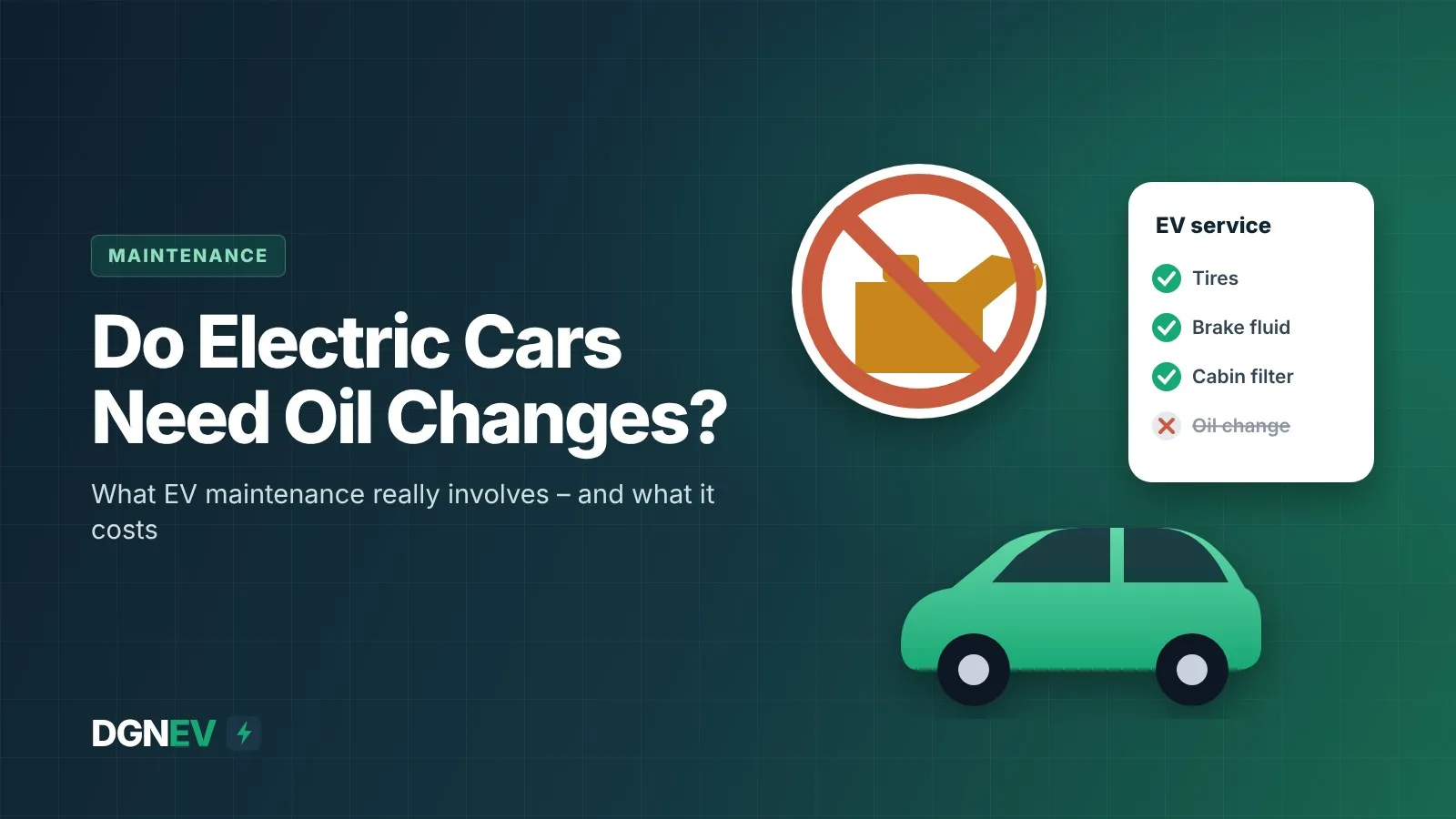
No – fully electric cars never need oil changes. They have no engine, so there is no engine oil to change, no oil filter, no spark plugs, no timing belt and no exhaust system. That removes the most frequent service most drivers are used to.
But "no oil changes" does not mean "no maintenance". An EV still has tires, brakes, suspension, filters and a few fluids that need attention. This guide explains exactly what an electric car needs, how often, and how much you can expect to save.
If you are new to EVs, our guide on how electric cars work explains why there are so few moving parts.
Why electric cars don't need oil changes
A gasoline engine has hundreds of moving parts – pistons, valves, camshafts – that rub against each other thousands of times a minute. Engine oil lubricates them, and it breaks down with heat and contamination, so it must be replaced regularly.
An electric motor works very differently. It has very few moving parts, and the main one, the rotor, spins on bearings without the combustion, soot and extreme heat that wear out engine oil. There is simply no engine oil system to service.
Note: plug-in hybrids (PHEVs) and regular hybrids still have a gasoline engine, so they do need oil changes – although sometimes less often because the engine runs less.
Fluids an electric car still has
EVs are not completely fluid-free. Most have:
- Reduction gear (gearbox) oil: EVs use a simple single-speed reduction gear with a small amount of oil. Many manufacturers only ask for inspection, with replacement in severe conditions or at long intervals – check your owner's manual.
- Coolant: the battery, motor and power electronics are kept at the right temperature by a liquid cooling system. Intervals vary widely: Hyundai, for example, lists the first high-voltage coolant replacement for the Ioniq 5 at 60,000 km (about 37,000 miles) in New Zealand, while Tesla does not list a routine coolant change for the Model 3.
- Brake fluid: it absorbs moisture over time, so it needs checking and replacing every few years, just like in a gas car.
- Windshield washer fluid – top it up as needed.
- A/C refrigerant: EVs use their air conditioning system to cool the battery as well as the cabin, so keep it in good working order.
What maintenance does an EV need?
Here is how the routine maintenance list compares with a typical gasoline car:
| Item | Gas car | Electric car |
|---|---|---|
| Engine oil and filter | Yes, regularly | Never |
| Spark plugs, timing belt, air filter (engine) | Yes | Never |
| Exhaust and catalytic converter | Can need repair | Not fitted |
| Transmission fluid | Yes, on many cars | Small reduction gear – inspect, rarely replace |
| Coolant | Yes | Yes, interval varies by model |
| Brake fluid | Every few years | Every few years |
| Brake pads and discs | Wear regularly | Wear much more slowly |
| Tires | Rotate and replace | Rotate and replace – may wear faster |
| Cabin air filter, wipers | Yes | Yes |
| 12-volt battery | Yes | Yes |
Example service schedules
Every model is different, so always follow your owner's manual. Two examples show how light EV schedules can be:
Tesla Model 3
- Rotate tires every 6,250 miles (10,000 km), or sooner if tread depth differs by 2/32 in (1.5 mm) or more.
- Replace the cabin air filter every 2 years.
- Check brake fluid every 4 years and replace if necessary.
- Replace wiper blades every year.
- Clean and lubricate brake calipers every year or 12,500 miles (20,000 km) where roads are salted in winter.
Hyundai Ioniq 5 (New Zealand schedule)
- Service every 30,000 km (about 18,600 miles) or 24 months, whichever comes first.
- Cabin filter and brake fluid replaced at each service.
- High-voltage system coolant replaced at set intervals, starting at 60,000 km.
- Reduction gear oil inspected for leaks at each service.
- Intervals are roughly halved for severe use, such as dusty roads, mountain driving or towing.
Brakes last much longer – but still need care
EVs use regenerative braking: when you lift off the accelerator, the motor works as a generator, slowing the car and sending energy back to the battery. Because the friction brakes do much less work, brake pads and discs often last far longer than on a gas car.
The flip side is that brakes used rarely can corrode or stick, especially in places that salt the roads in winter. That is why some manufacturers recommend cleaning and lubricating the brake calipers regularly. Using the brakes firmly now and then also helps keep the discs clean.
Tires: the biggest regular cost
EVs are usually heavier than comparable gas cars because of the battery, and they deliver strong torque instantly. Both can make tires wear faster, especially with an enthusiastic driving style. To get the most from them:
- Check tire pressure monthly – correct pressure also improves range.
- Rotate tires as recommended in your manual.
- Accelerate smoothly.
- When replacing, consider EV-specific tires designed for higher loads, low rolling resistance and less road noise.
What about the battery?
The high-voltage battery needs no routine maintenance – there is nothing to top up or replace on a schedule. The car's battery management system looks after it automatically, and most batteries come with a long warranty, typically 8 years or 100,000 miles in the U.S. Good charging habits help it last longer; read our guide on how long EV batteries last.
Do not forget the 12-volt battery. Like a gas car, an EV has a small low-voltage battery that powers the computers, locks and lights. If it fails, the car may not start even with a full main battery. Some newer EVs use a longer-lasting lithium-ion 12-volt battery.
How much cheaper is EV maintenance?
Fewer parts and fewer fluids mean lower costs. A U.S. Department of Energy study by Argonne National Laboratory estimated maintenance costs of about 6.1 cents per mile for battery-electric cars compared with 10.1 cents per mile for gasoline cars – around 40% less.
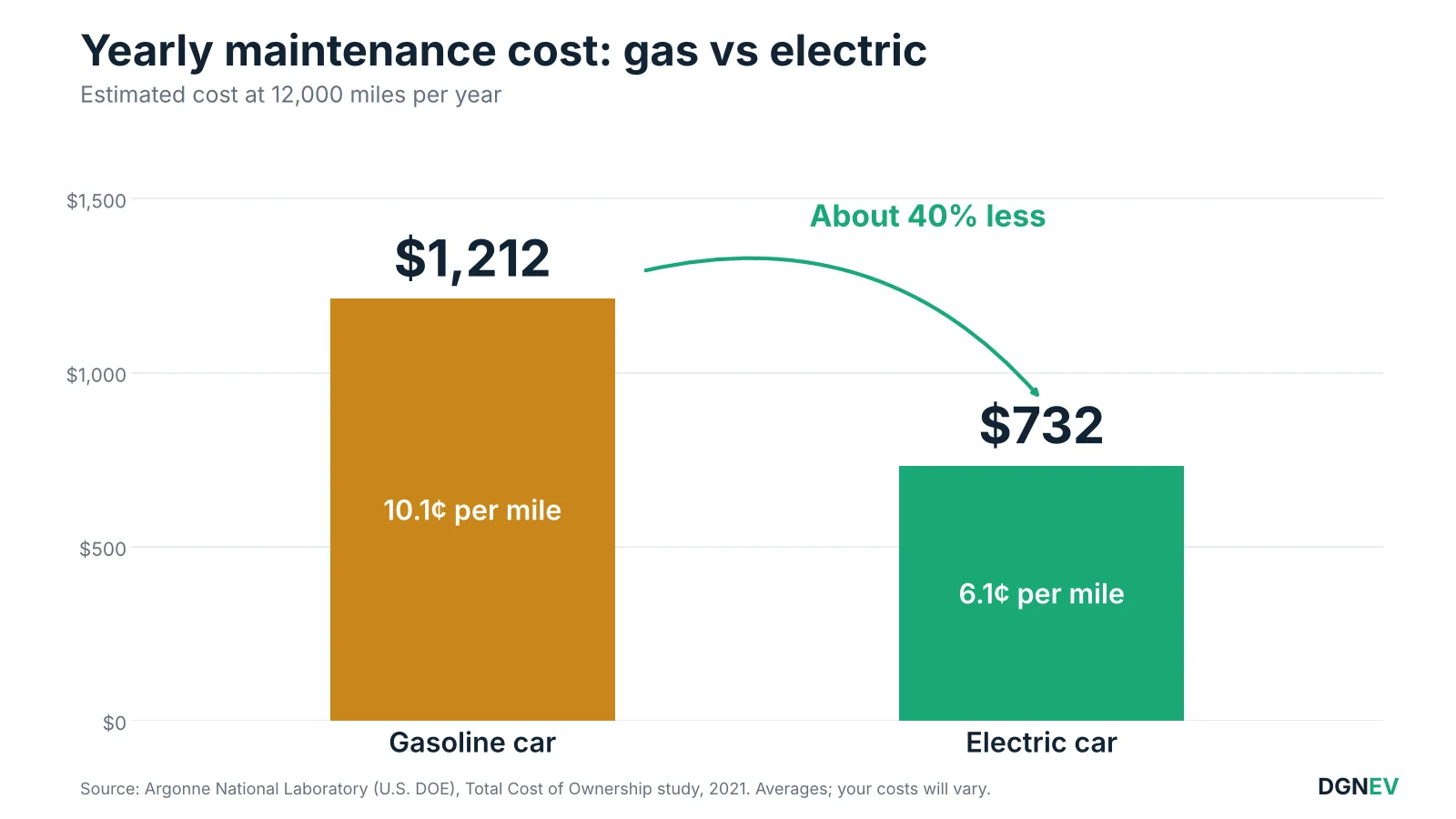
At 12,000 miles a year, that works out to roughly $730 for an EV versus about $1,210 for a gas car. Consumer Reports reached a similar conclusion in its 2020 analysis, finding that EV owners spend about half as much on repair and maintenance as owners of gas cars, saving an average of $4,600 over the life of the vehicle.
To compare your own fuel and maintenance costs, try our gas vs electric car cost calculator.
Frequently asked questions
Do Teslas need oil changes?
No. Tesla vehicles are fully electric and have no engine oil. Tesla's recommended maintenance covers items such as tire rotation, the cabin air filter, brake fluid checks and wiper blades.
Do electric cars have transmission fluid?
Most EVs have a single-speed reduction gear with a small amount of gear oil rather than a multi-speed transmission. It rarely needs changing, but some manufacturers specify inspection or replacement – check your manual.
How often should an electric car be serviced?
Many EVs need a check every 1–2 years. Some manufacturers set fixed intervals (for example every 24 months), while others list individual items such as tire rotation and cabin filter replacement.
Do EVs need coolant changes?
Most EVs have a liquid cooling system for the battery and electronics. Some models specify coolant replacement at set intervals; others do not list a routine change. Follow your manufacturer's schedule.
Can any mechanic service an electric car?
Tires, brakes, wipers, filters and suspension can be handled by most garages. Work on the high-voltage system must be done only by trained technicians with the right safety equipment.
The bottom line
Electric cars never need oil changes, spark plugs or exhaust repairs, which makes everyday ownership simpler and cheaper. They still need tire care, brake fluid, cabin filters, coolant on some models and the occasional check-up. Follow your owner's manual, keep an eye on your tires and 12-volt battery, and you can expect to spend noticeably less on maintenance than with a gas car.
Weighing up whether to switch? Read our honest look at the pros and cons of electric cars.
Work out your own numbers
Note: This guide is for general information only. Prices, specifications and regulations change over time and vary by country, so always check with the manufacturer or a qualified professional before making decisions. Read our disclaimer.
Keep reading
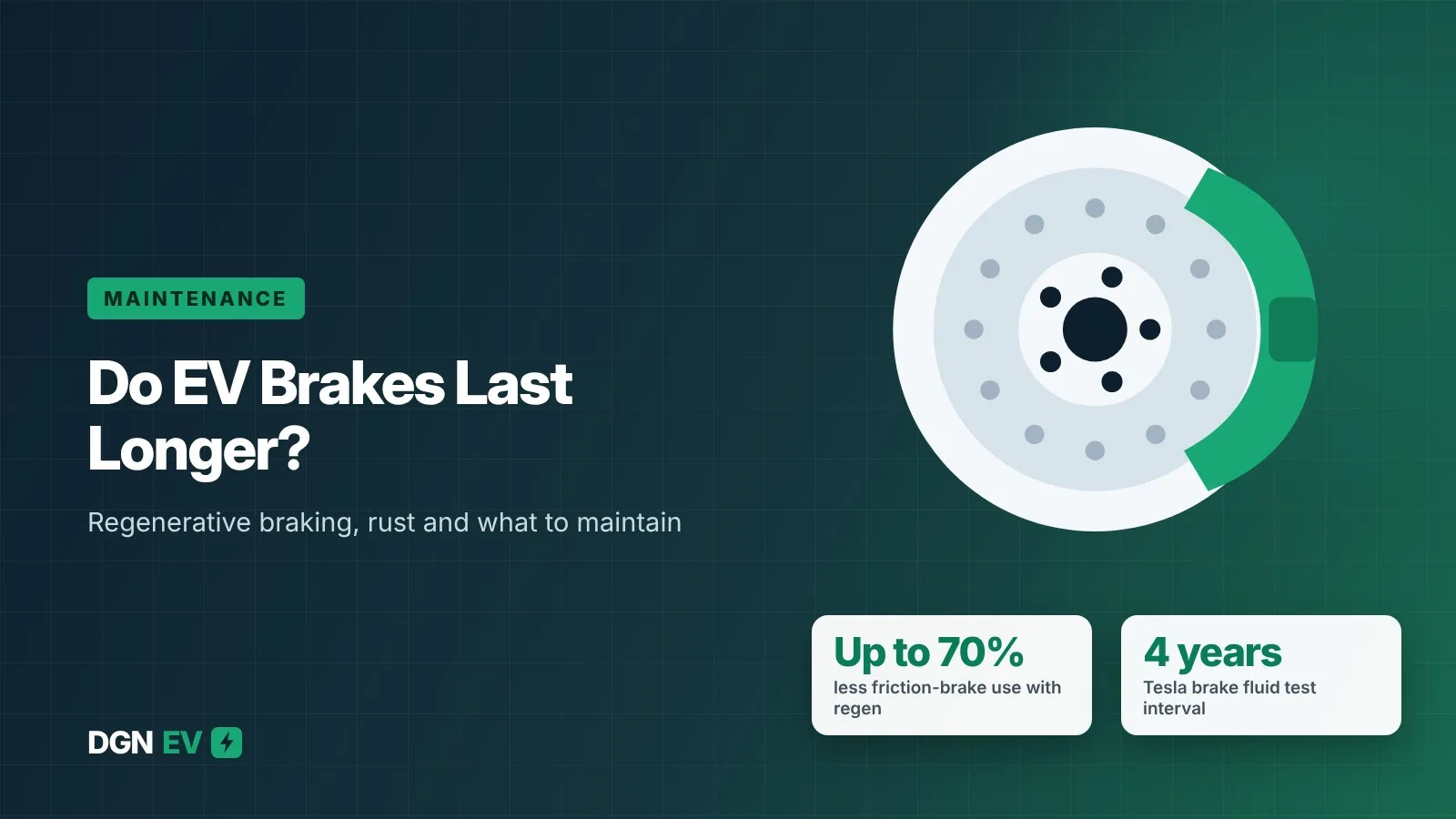
Do EV Brakes Last Longer? Brake Wear, Rust and What to Maintain
EV brake pads often last far longer than in gas cars because regenerative braking does most of the work. The catch is rust: brakes that are rarely…
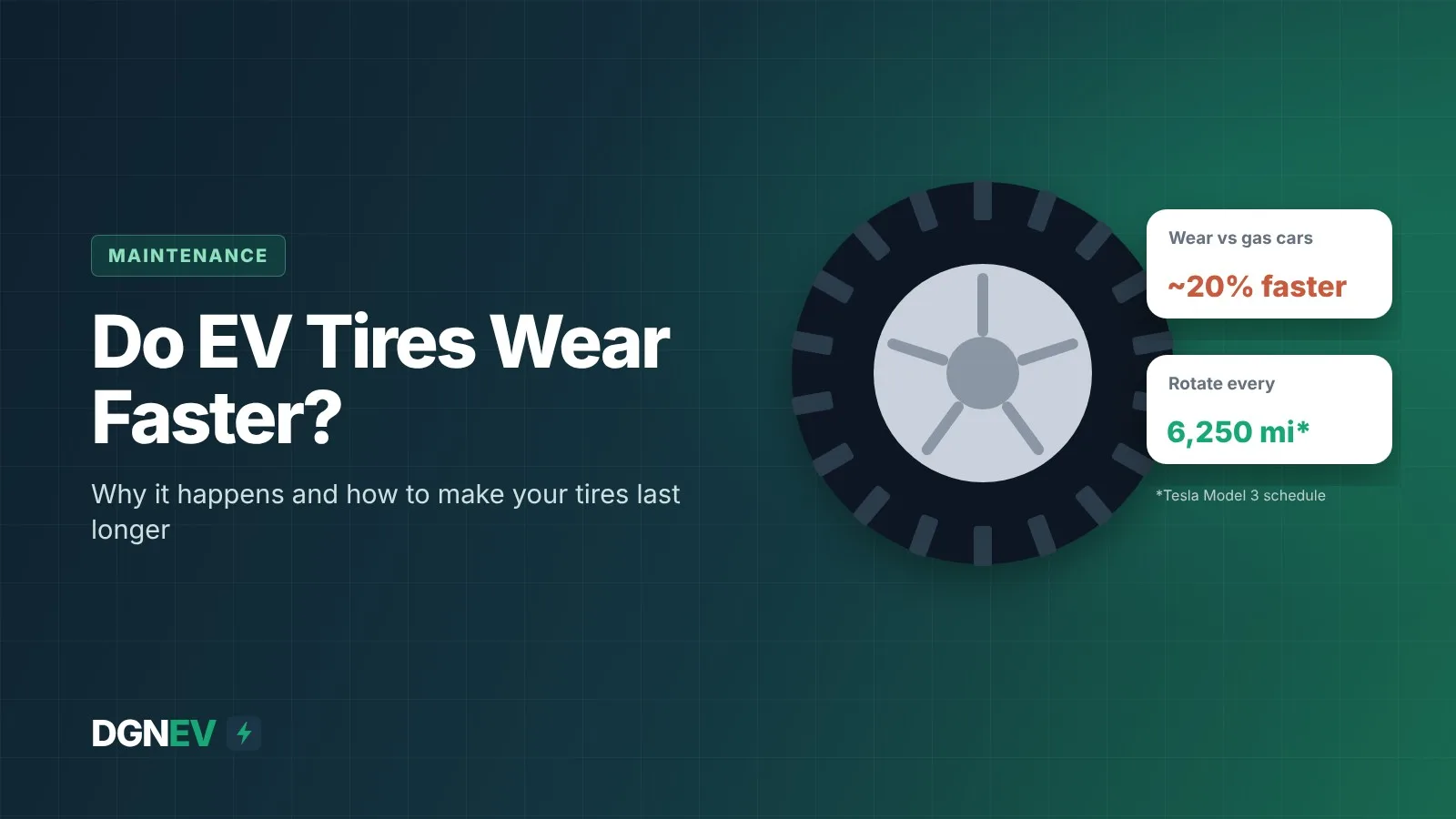
Do EV Tires Wear Faster? How to Make Them Last Longer
Tires are often the biggest regular maintenance cost of an electric car – and they can wear out faster than on a gas car. Learn why, what makes EV…

Electric Cars: Pros and Cons You Should Know
Electric cars are cheaper to run and maintain, but they cost more to buy and need more planning on long trips. Here are the real advantages and…
Comments
Be the first to comment
Questions and experiences are welcome. Comments are reviewed before publishing; links are not allowed. Your email is optional and never shown.