EPA vs WLTP vs Real-World EV Range: Why Your Range Is Different
Your EV's official range is a lab number. Learn how EPA, WLTP and CLTC ratings are measured, why real-world range can be higher in town but lower on the highway, and how to estimate the range you will actually get.
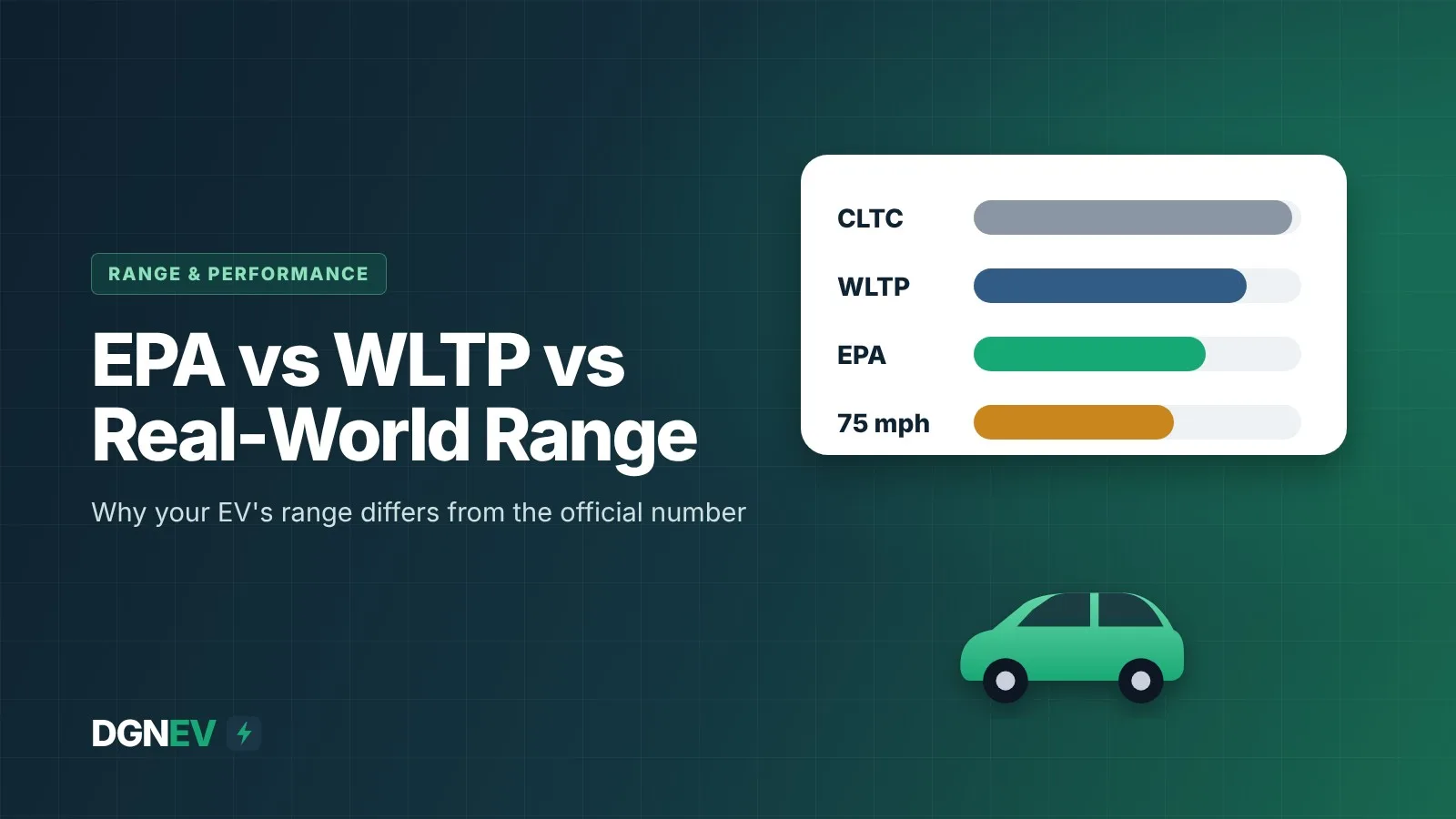
An electric car's advertised range comes from a standardized laboratory test, not from real driving. In the U.S., that is the EPA rating; in Europe and many other countries, it is WLTP; in China, it is CLTC. Each test uses a different driving cycle, so the same car gets three different range numbers – and your real-world range can be higher or lower than all of them.
In general, CLTC gives the highest numbers, WLTP is in the middle and EPA is the most conservative. Real-world range depends mostly on your speed, the temperature and how you drive. Independent tests show many EVs beat their EPA rating in mixed driving but fall short at sustained highway speeds.
How each range rating is measured
| Rating | Used in | How it works | How realistic? |
|---|---|---|---|
| EPA | United States | Lab tests on a dynamometer simulating city and highway driving, then adjusted downward to reflect real-world conditions | Most conservative of the three |
| WLTP | Europe, UK, many other countries | Worldwide Harmonised Light Vehicle Test Procedure: a 30-minute lab cycle with low, medium, high and extra-high speed phases | Usually more optimistic than EPA, especially for highway driving |
| CLTC | China | China Light-Duty Vehicle Test Cycle, with lower average speeds and more stop-and-go driving | The most optimistic |
As a rough rule of thumb, a car's WLTP range is often around 10–20% higher than its EPA range, and its CLTC figure higher still. The exact gap varies by car.
The EPA test
For the EPA rating, the car is run on rollers in a lab through standardized city and highway cycles until the battery is empty. Because lab tests are gentler than real life, the result is reduced – typically by about 30% – to reflect factors such as higher speeds, climate control and cold weather. Some manufacturers run extra test cycles that allow a smaller reduction, which is one reason ratings vary in how realistic they are.
The WLTP test
WLTP replaced the older and very optimistic NEDC cycle in Europe from 2017 onward. It is more realistic than NEDC, but its average speed is modest and the test is done at mild temperatures, so many drivers find their real range somewhat below the WLTP figure, especially on fast roads and in winter.
What real-world tests show
Two well-known U.S. testing programs show how much driving style matters:
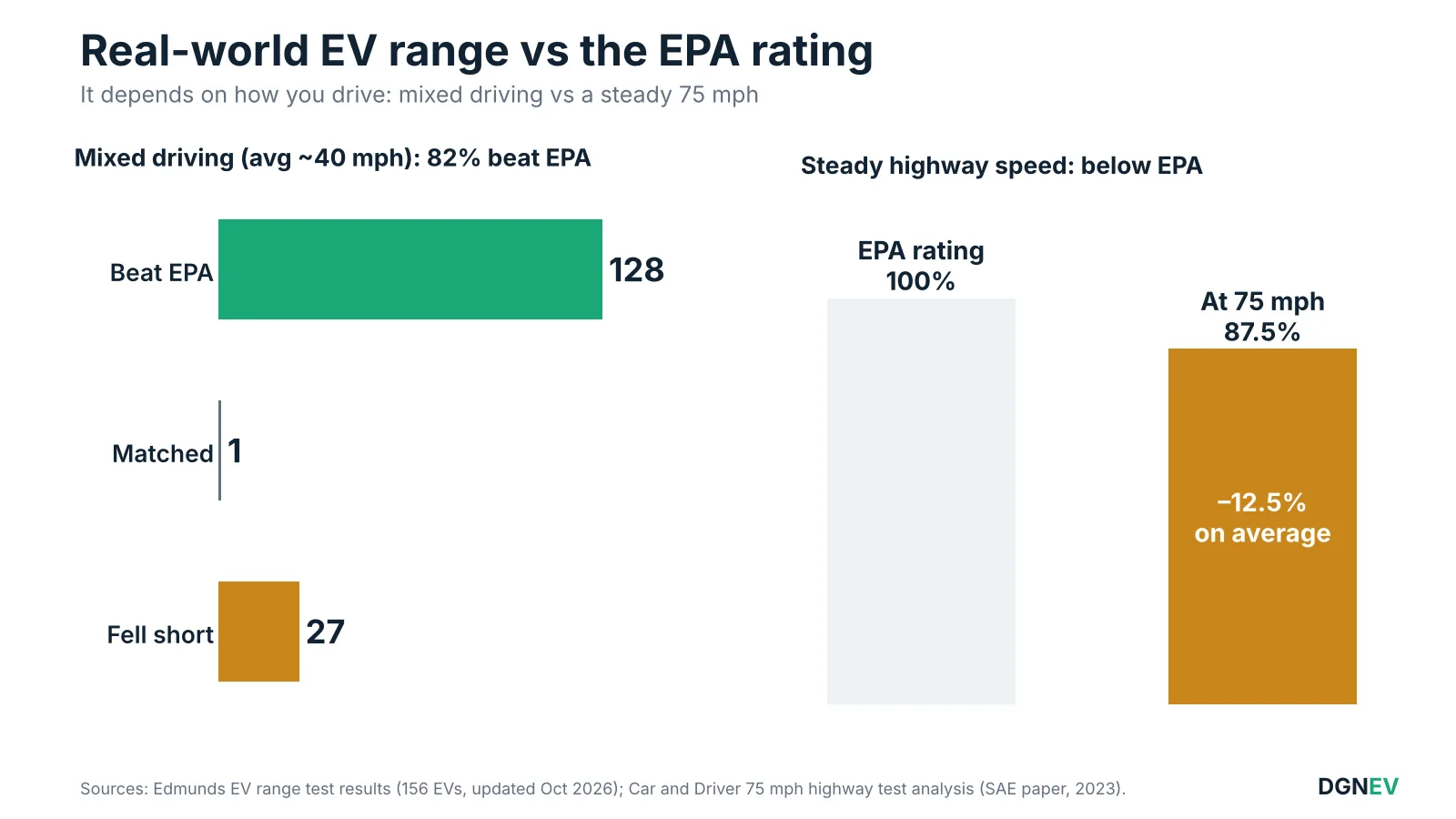
- Edmunds' range test uses a mix of about 60% city and 40% highway driving, at an average of around 40 mph (64 km/h). Of 156 EVs in its results table (updated October 2026), about 82% went farther than their EPA rating. For example, the 2026 Mercedes-Benz CLA 350 4Matic covered 385 miles against an EPA rating of 312.
- Car and Driver's highway test drives at a steady 75 mph (121 km/h). In an analysis of its results presented to SAE International in 2023, EVs averaged 12.5% less range than their EPA ratings, while gas cars tended to meet or beat their highway fuel economy labels.
In cold weather, the gap can be much larger. In Norway's El Prix winter test in 2026, with temperatures as low as –31°C (–24°F), all 25 cars fell 29–46% short of their WLTP range. Read more in why EV range decreases in winter.
Why real-world range differs from the rating
Speed
Air resistance rises sharply with speed. Electric motors are very efficient at low and medium speeds, and EVs recover energy when slowing down in town, so city driving is where EVs shine. At constant highway speeds, there is little braking energy to recover and drag dominates, so range drops. Unlike gas cars, many EVs get better range in the city than on the highway.
Temperature and climate control
Cold batteries are less efficient and heating the cabin uses energy. Very hot weather also reduces range when the air conditioning works hard.
Wheels, tires and load
Larger wheels, winter or off-road tires, roof boxes, towing and heavy loads all increase energy use. Ratings are often based on the most efficient wheel and tire combination.
Terrain and wind
Climbing hills uses extra energy (some of which is recovered going down), and strong headwinds increase drag.
Battery age and charging habits
Batteries slowly lose capacity over time, and many drivers charge to 80% rather than 100% for daily use, so the usable range on a typical day is lower than the full-charge figure.
How to estimate your real-world range
- Start with the EPA figure if you are in North America, or reduce the WLTP figure by about 10–20% for a rough EPA-like number.
- For mostly highway driving at 70–75 mph, expect around 10–20% less than the EPA rating.
- For freezing weather, expect a further 20–30% drop, more in extreme cold.
- Check the car's efficiency (miles per kWh or kWh per 100 km) in its trip computer – multiplying it by the usable battery capacity gives your personal range.
Our EV range calculator does this for you: enter your battery size and efficiency, then choose the temperature and driving speed.
Tips to get closer to (or beat) the rated range
- Drive a little slower on the highway – dropping from 75 to 65 mph makes a noticeable difference.
- Accelerate smoothly and use regenerative braking or one-pedal driving.
- Keep tires inflated to the recommended pressure.
- Precondition the cabin and battery while plugged in.
- Remove roof racks and unnecessary weight.
- Use eco driving modes and seat heaters instead of cabin heat where possible.
Frequently asked questions
Why is WLTP range higher than EPA range?
WLTP uses a driving cycle with modest average speeds and, unlike the EPA process, does not apply a large downward adjustment for real-world conditions. So the same car usually shows a higher WLTP figure.
Is EPA range accurate?
It is a useful benchmark for comparing cars. In mixed driving, many EVs beat it; at sustained highway speeds or in the cold, many fall short.
Why do EVs get better range in the city?
At low speeds, air resistance is small and the car recovers energy through regenerative braking every time it slows down. That is the opposite of gas cars, which are least efficient in stop-and-go traffic.
What is CLTC range?
CLTC is the Chinese test cycle. It has low average speeds and gives the most optimistic range figures, so CLTC numbers for Chinese EVs are usually much higher than their WLTP or EPA ratings.
How much range do EVs lose at 75 mph?
It varies by car, but in Car and Driver's 75 mph highway testing, EVs averaged about 12.5% below their EPA range. Aerodynamic cars lose less; boxy SUVs and trucks lose more.
The bottom line
Official range figures come from lab tests: CLTC is the most generous, WLTP sits in the middle and EPA is the most conservative. Real-world range depends mainly on speed, temperature and how you drive – many EVs beat their EPA rating in mixed driving but fall short on fast highways and in winter. Use the rating to compare cars, then adjust it for your own driving.
Work out your own numbers
Note: This guide is for general information only. Prices, specifications and regulations change over time and vary by country, so always check with the manufacturer or a qualified professional before making decisions. Read our disclaimer.
Keep reading
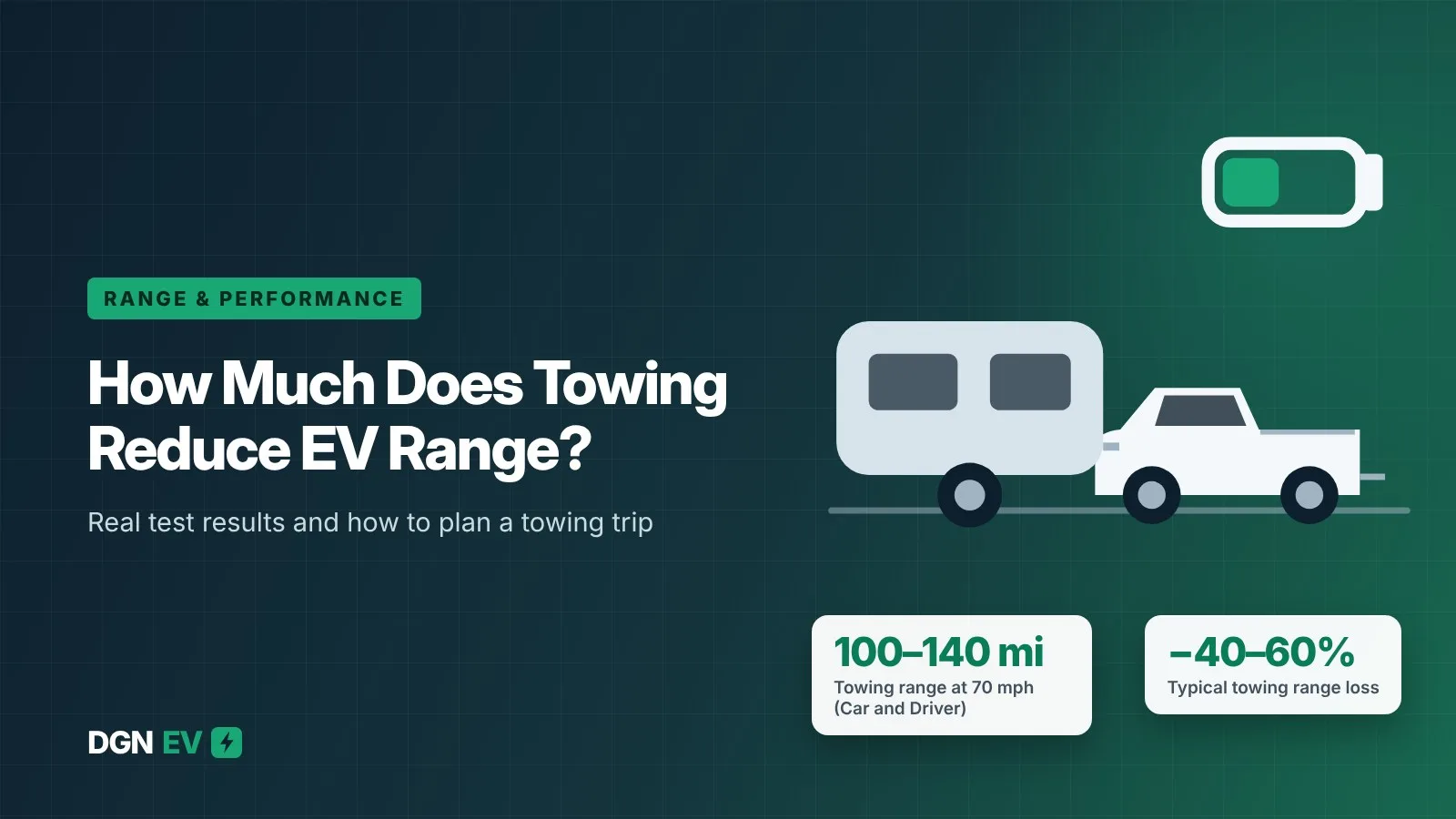
How Much Does Towing Reduce EV Range? Real Test Results
Towing a trailer typically cuts an electric truck or SUV's range by 40% to 60%, and sometimes more with heavy or tall trailers at highway speed…
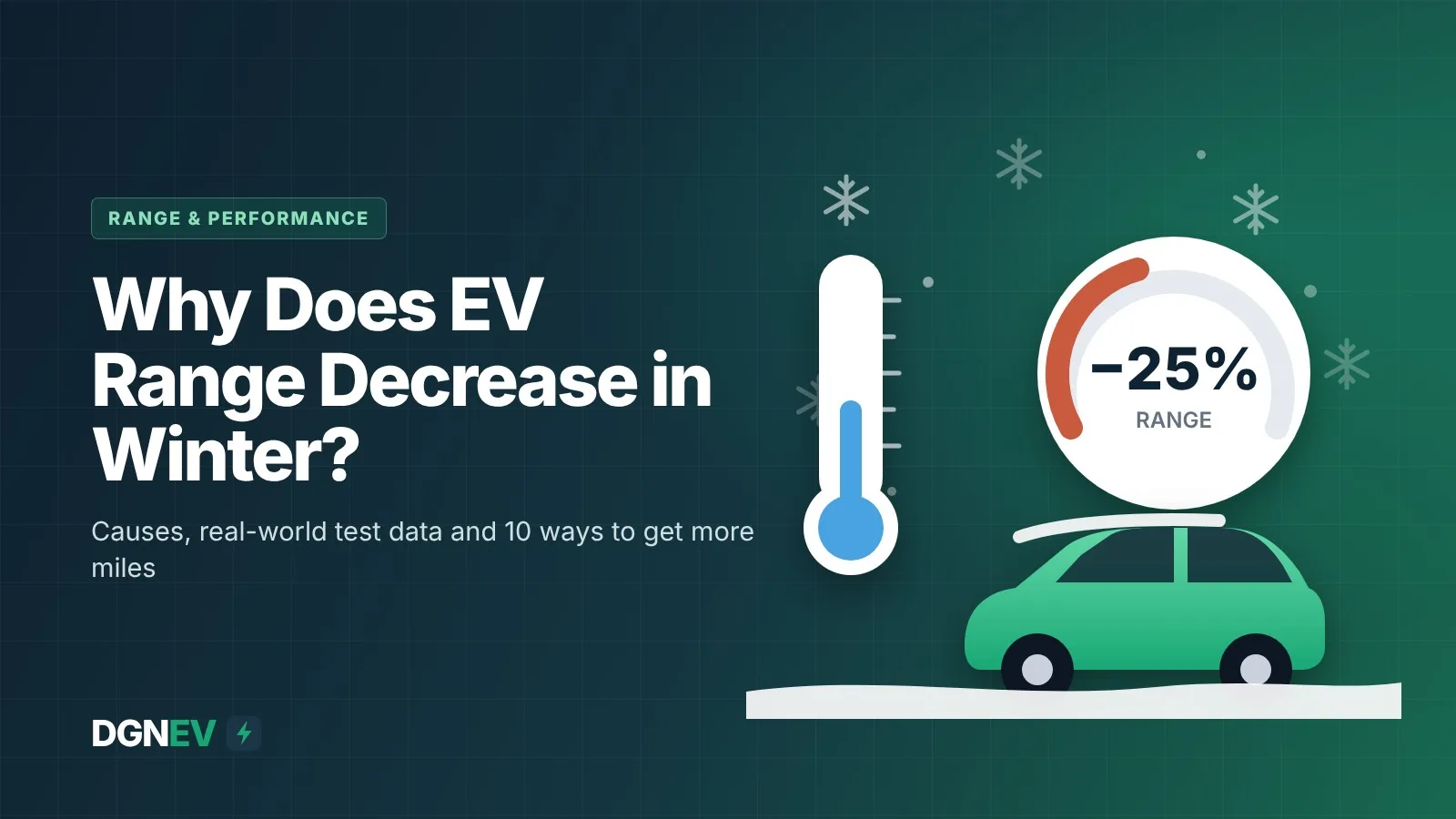
Why Does EV Range Decrease in Winter? (And How to Get More)
Electric cars typically lose 20–30% of their range in freezing weather – and more in extreme cold. Here is why it happens, how much range different…

Electric Cars: Pros and Cons You Should Know
Electric cars are cheaper to run and maintain, but they cost more to buy and need more planning on long trips. Here are the real advantages and…
Comments
Be the first to comment
Questions and experiences are welcome. Comments are reviewed before publishing; links are not allowed. Your email is optional and never shown.