How this calculator works
Range starts with a simple formula: usable battery energy × efficiency. A 75 kWh battery in a car that averages 3.5 miles per kWh gives about 262 miles on a full charge.
Real-world range then depends heavily on conditions. Cold batteries are less efficient and heating the cabin uses energy; high speeds increase air resistance sharply. The calculator applies typical adjustment factors for temperature and speed and shows a likely range window rather than a single exact number.
The adjustment factors are general estimates based on published testing and owner data. Cars with heat pumps, preconditioning and efficient designs often do better in the cold; heavy loads, roof boxes, strong headwinds and steep hills can reduce range further.
Frequently asked questions
How much range do EVs lose in winter?
It varies by car and temperature. In AAA testing in 2019, average range fell by 41% at 20°F (–7°C) with the heater on. Newer models with heat pumps and better battery heating usually lose less, often around 20–30% in typical winter driving.
Why is my range lower on the highway?
Air resistance grows quickly with speed, and EVs recover little energy through regenerative braking at constant highway speeds. Driving at 75 mph (120 km/h) instead of 65 mph (105 km/h) can noticeably reduce range.
What is a good EV efficiency figure?
Many efficient sedans and small SUVs achieve around 3.5–4.5 miles per kWh (about 14–18 kWh/100 km) in mild weather. Large SUVs and pickups often use 2–3 miles per kWh (about 21–31 kWh/100 km).
Related guides
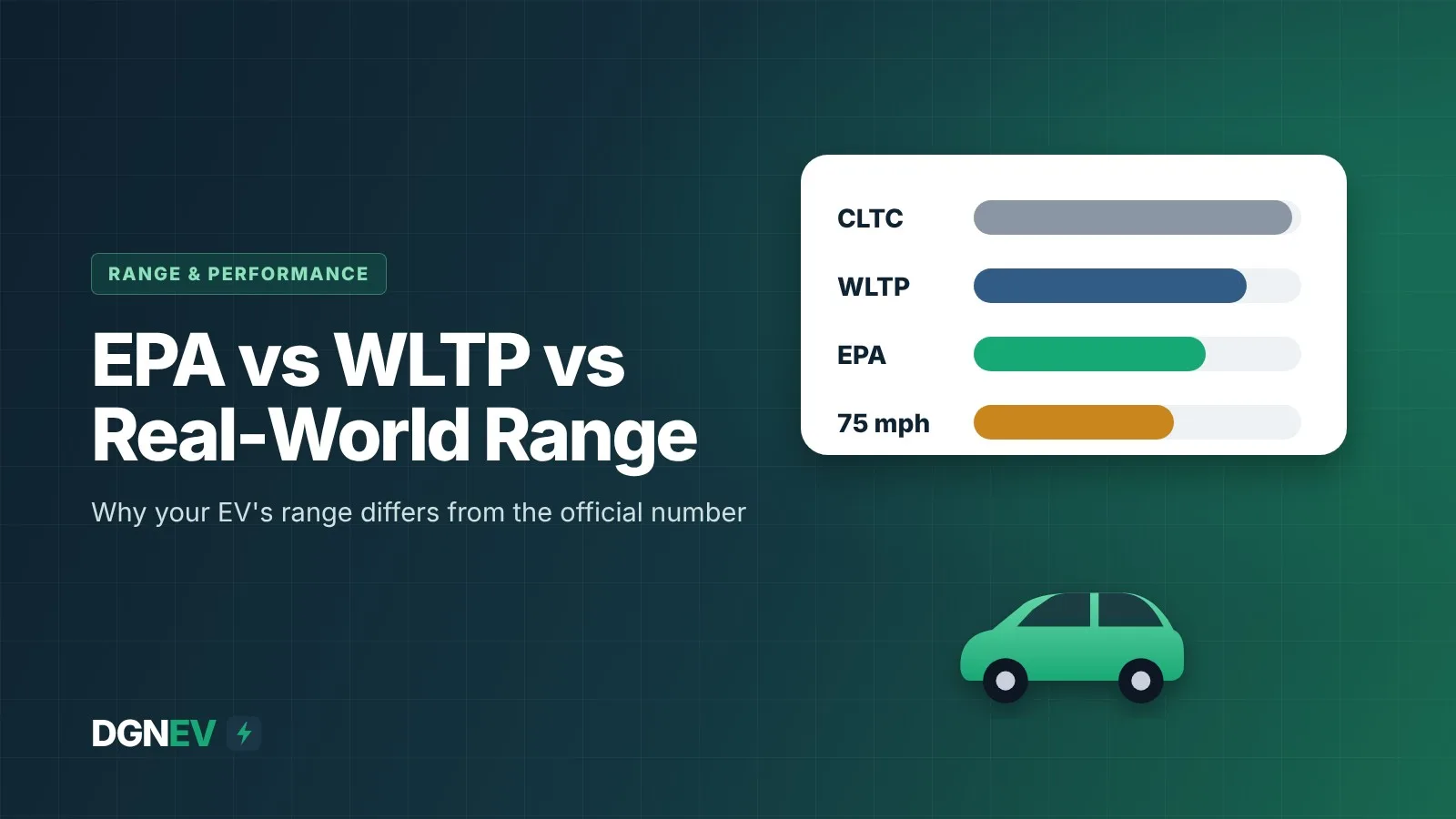
EPA vs WLTP vs Real-World EV Range: Why Your Range Is Different
Your EV's official range is a lab number. Learn how EPA, WLTP and CLTC ratings are measured, why real-world range can be higher in town but lower on…
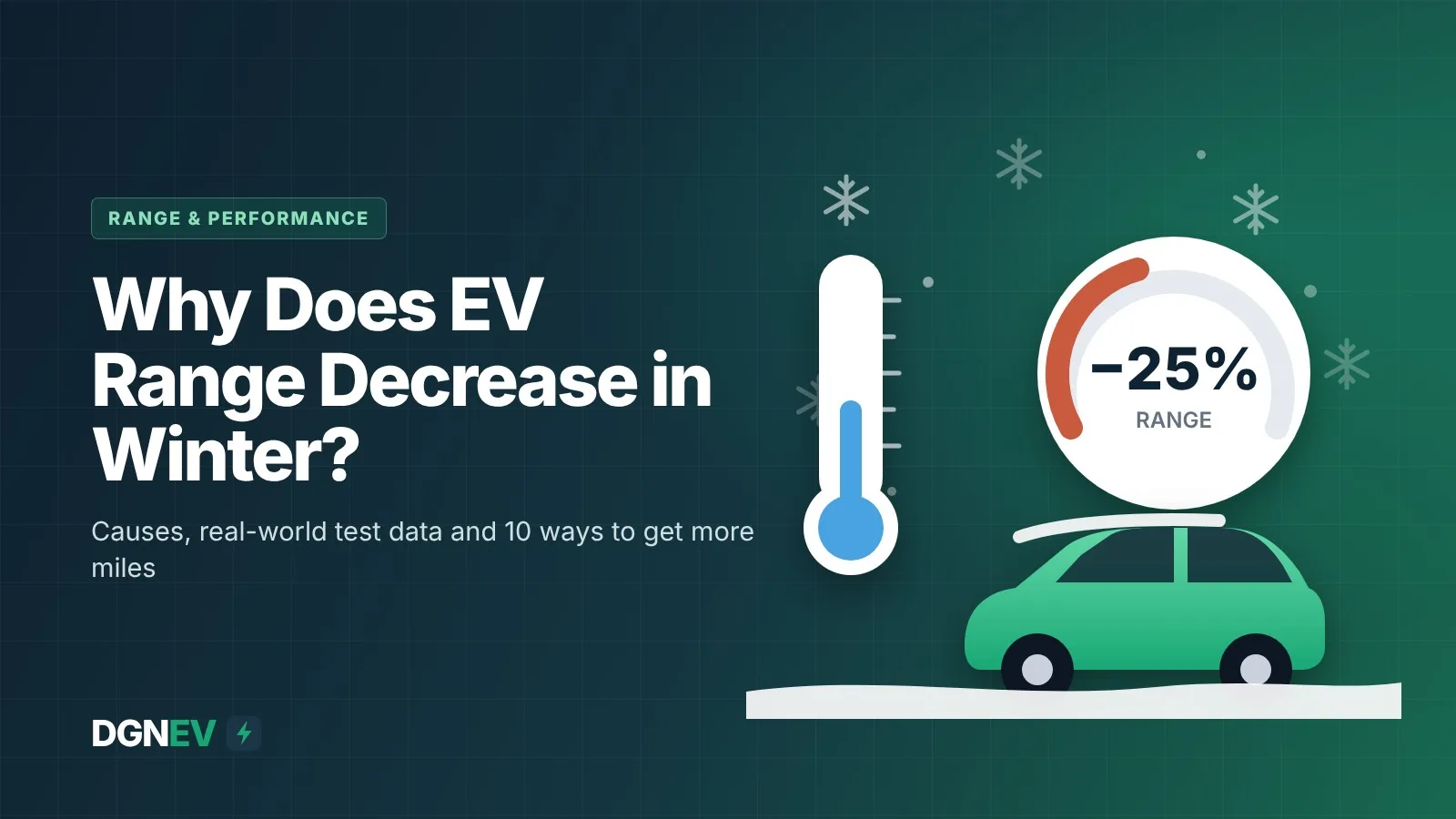
Why Does EV Range Decrease in Winter? (And How to Get More)
Electric cars typically lose 20–30% of their range in freezing weather – and more in extreme cold. Here is why it happens, how much range different…
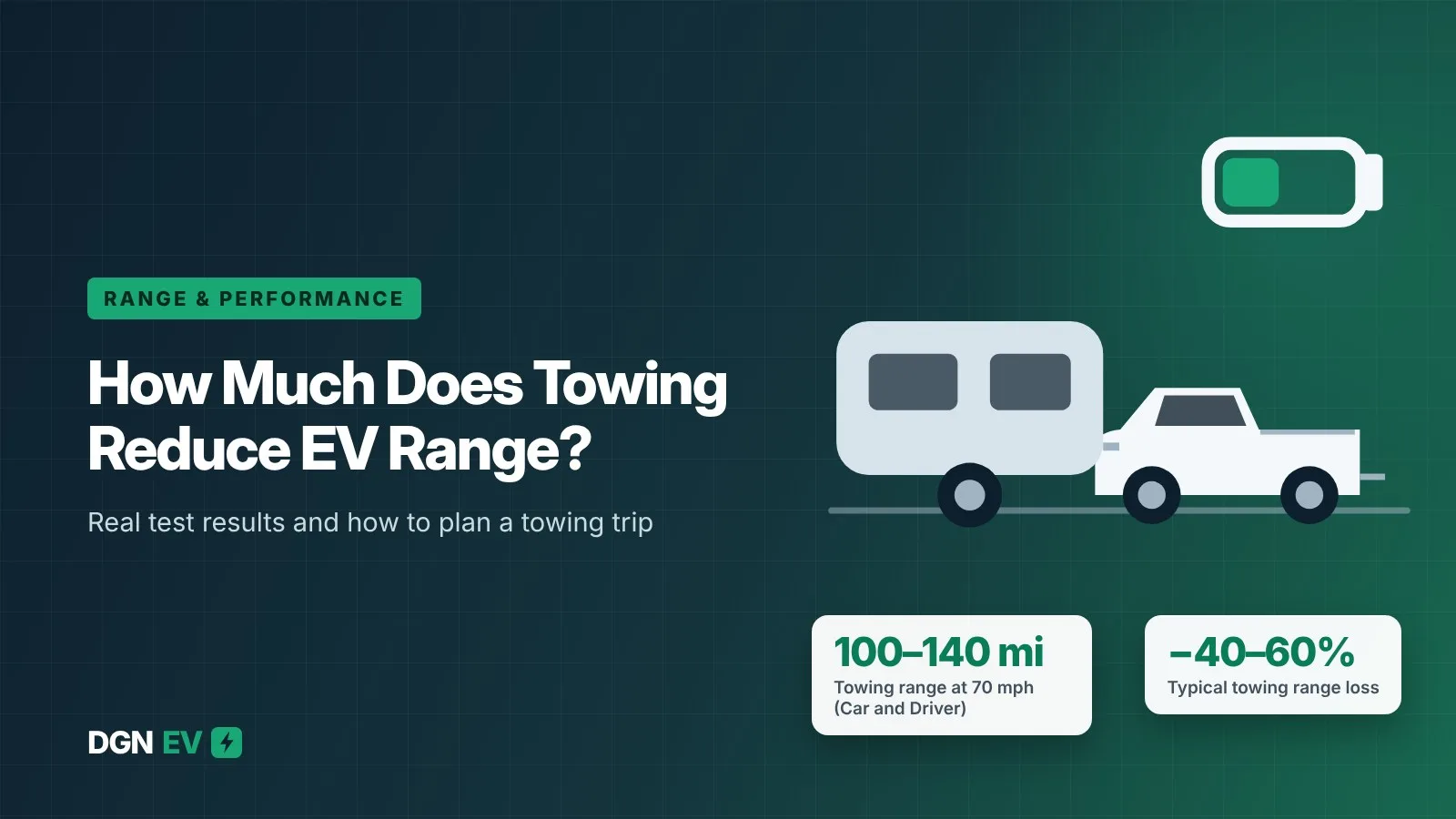
How Much Does Towing Reduce EV Range? Real Test Results
Towing a trailer typically cuts an electric truck or SUV's range by 40% to 60%, and sometimes more with heavy or tall trailers at highway speed…