How this calculator works
The planner starts with the charge you leave home with and drives until the battery reaches your chosen arrival level. At each stop it charges up to your target level – except at the last stop, where it adds only what you need to reach your destination with the same buffer left.
Charging time uses the same model as our charging time calculator: on a DC fast charger the car averages about 70% of its peak power up to 80% charge and about a third of its peak power above 80%. That is why stopping more often and charging to around 80% is usually faster than charging to 100%.
Highway driving uses more energy than mixed driving, so enter your car's highway efficiency if you know it. Cold weather, headwinds, roof boxes and speeds above 70 mph (113 km/h) can reduce range further – the planner cannot see them, so keep a sensible buffer. Use a route planner app or your car's navigation to find the actual chargers along your route.
Frequently asked questions
How often do you need to stop on an EV road trip?
It depends on your car's highway range and how much buffer you keep. Many current EVs can drive about 150–250 miles (240–400 km) between fast-charging stops when charging from about 10% to 80%.
Is it faster to charge to 80% or 100% on a road trip?
Usually to 80%. Charging slows down sharply above 80%, so the last 20% can take as long as the first 60%. It is normally quicker to stop again than to wait for a full battery.
How much does fast charging cost on a road trip?
Public DC fast charging in the U.S. often costs around $0.40–$0.60 per kWh, and some networks charge by the minute instead. Membership plans can lower the price, so check the rates in your charging apps before you leave.
Related guides
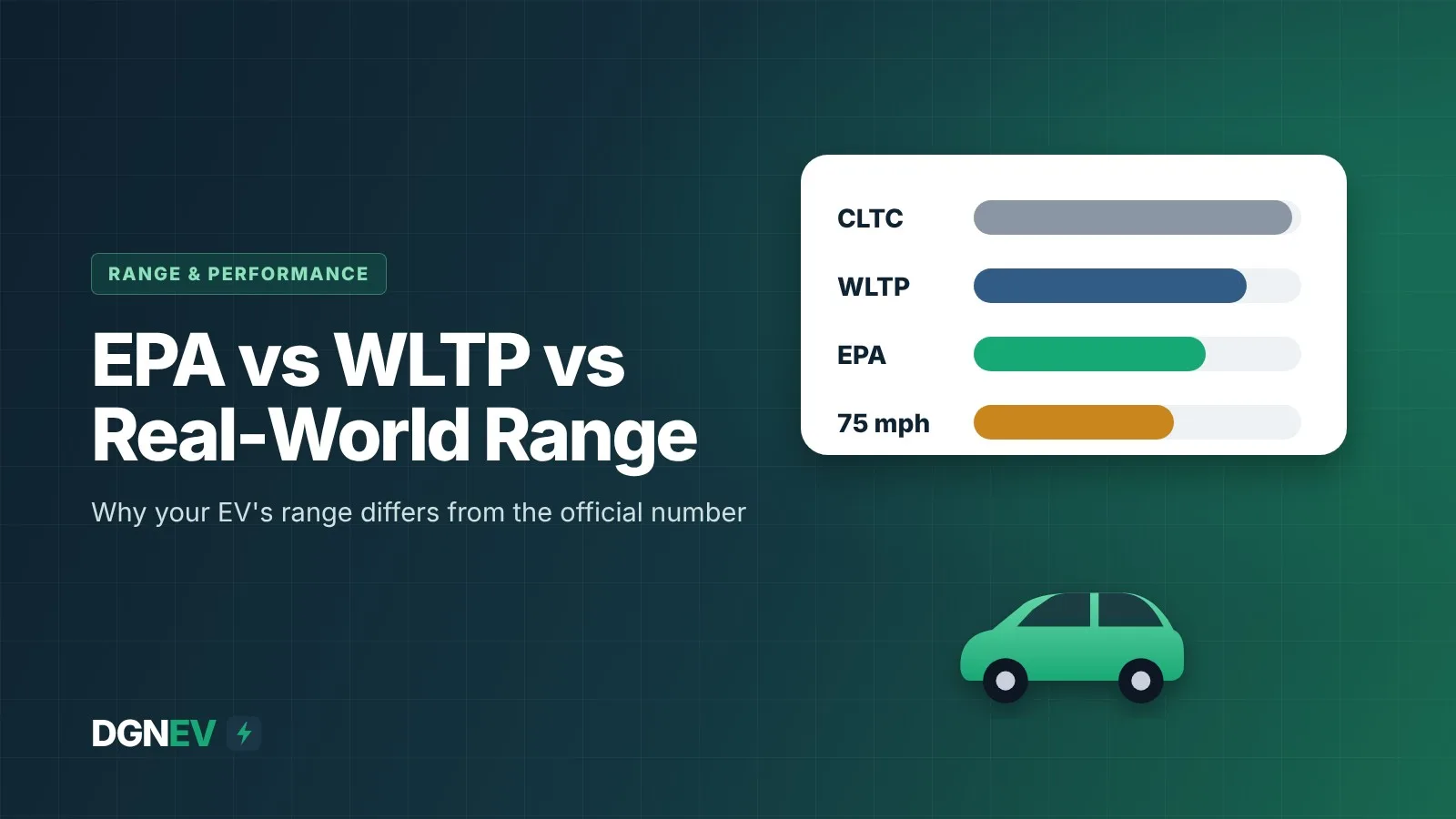
EPA vs WLTP vs Real-World EV Range: Why Your Range Is Different
Your EV's official range is a lab number. Learn how EPA, WLTP and CLTC ratings are measured, why real-world range can be higher in town but lower on…
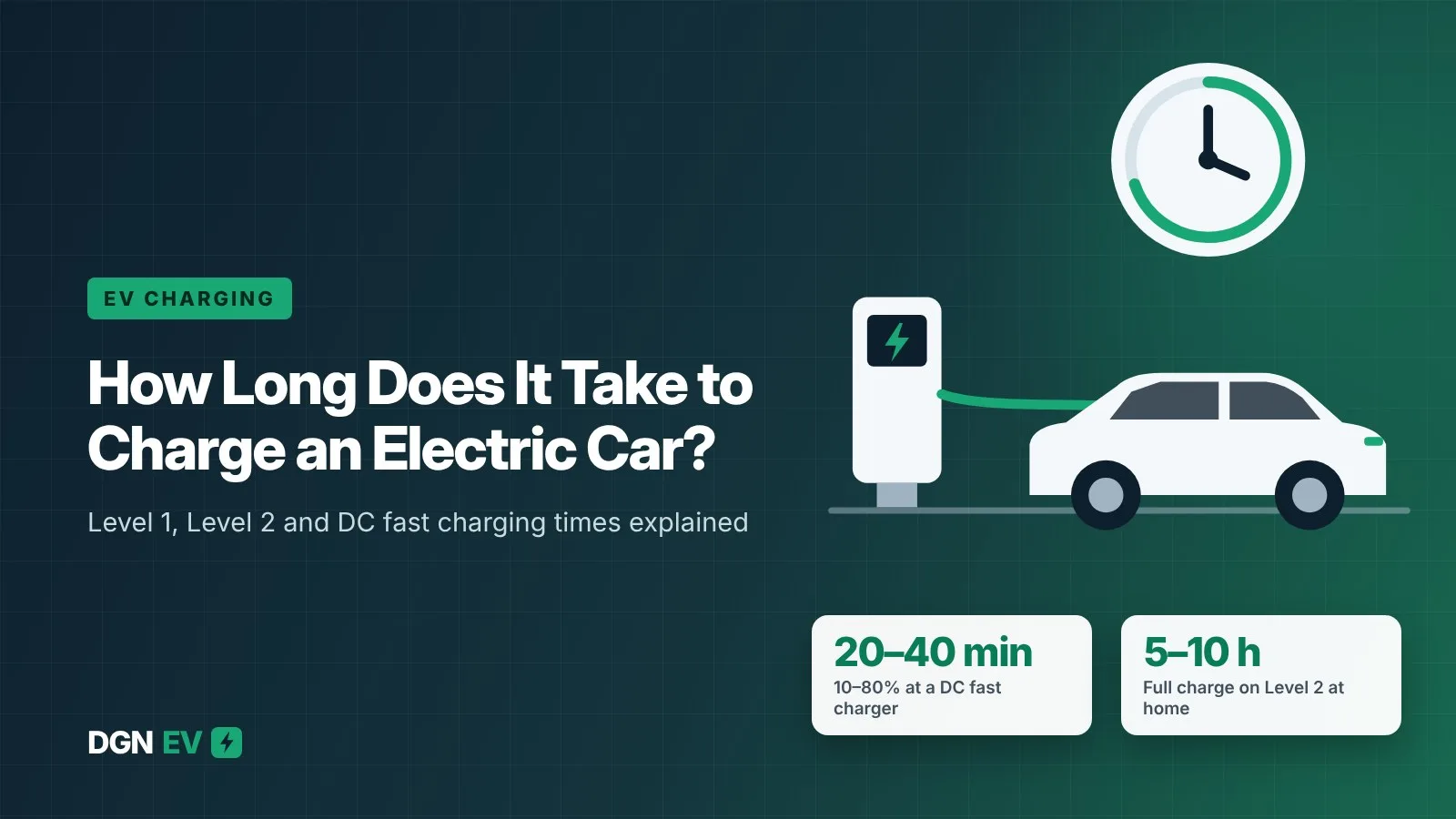
How Long Does It Take to Charge an Electric Car?
Charging an EV takes anywhere from about 20 minutes to more than 40 hours. It depends on the charger, the battery size and the car's own charging…
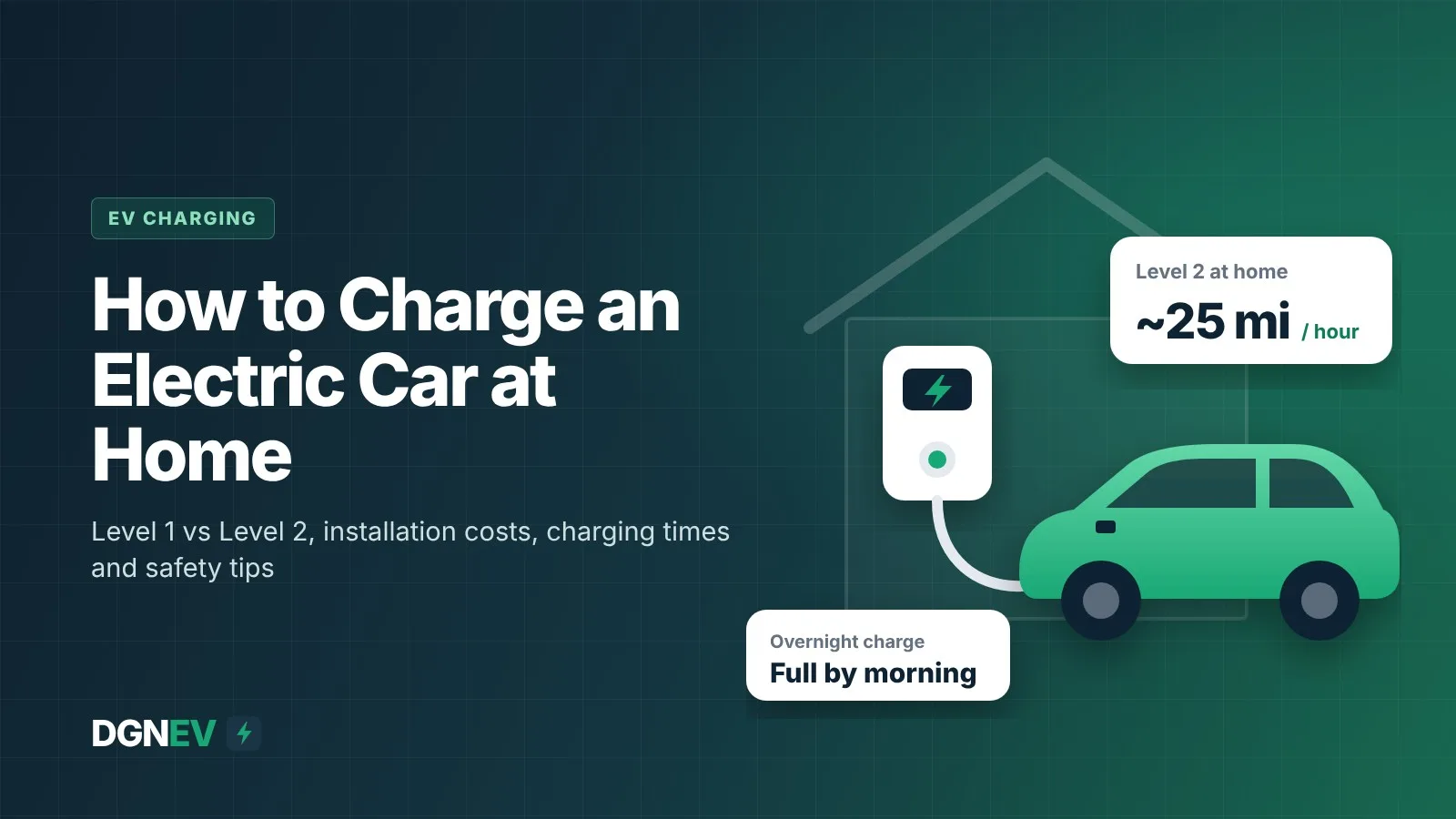
How to Charge an Electric Car at Home: A Complete Guide
Charging at home is the cheapest and easiest way to run an EV. Learn the difference between Level 1 and Level 2 charging, what a home charger costs…