Why Does EV Range Decrease in Winter? (And How to Get More)
Electric cars typically lose 20–30% of their range in freezing weather – and more in extreme cold. Here is why it happens, how much range different conditions cost, and practical ways to get more miles out of your EV in winter.
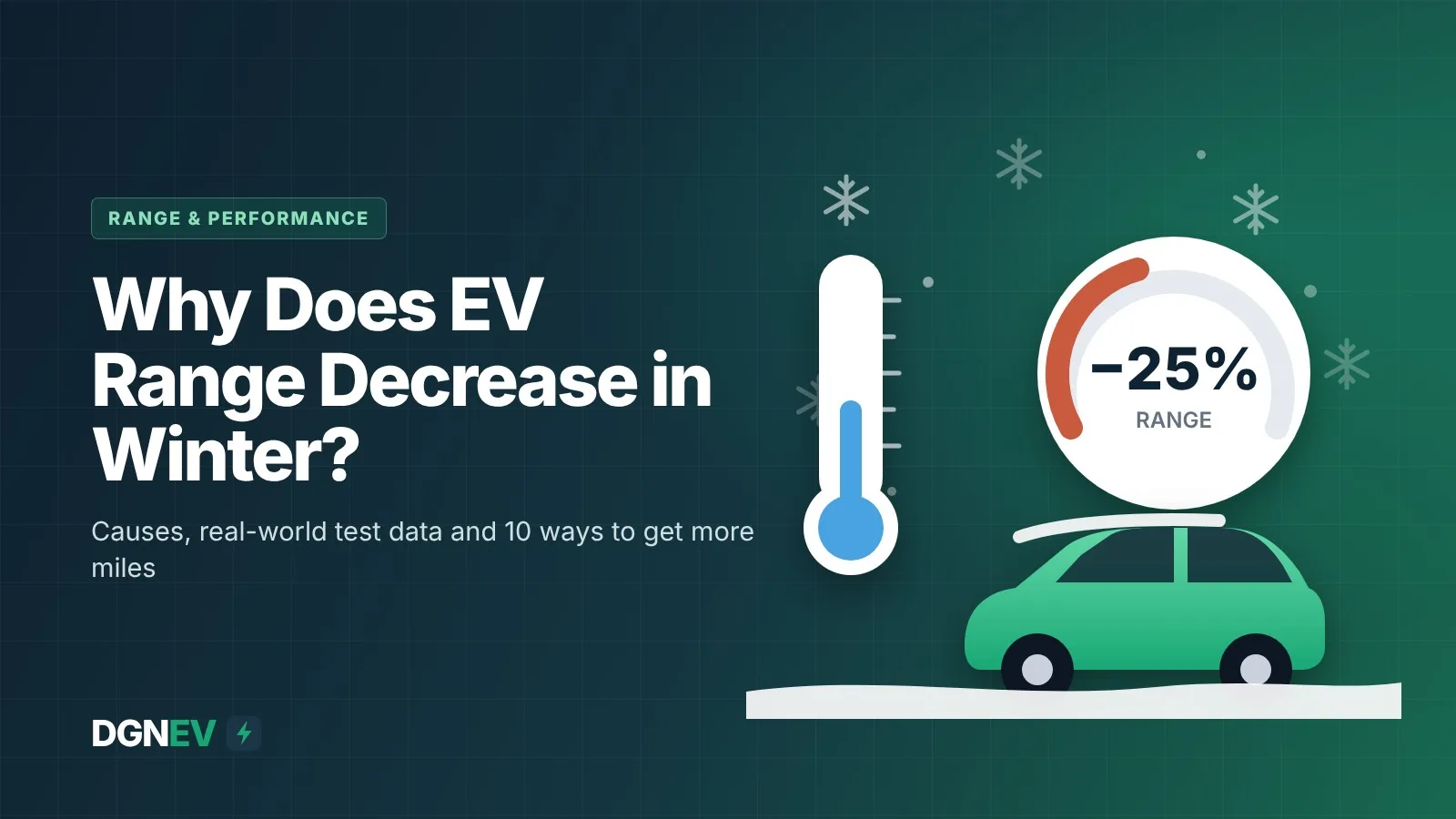
Electric cars lose range in winter because cold batteries work less efficiently and because heating the cabin and battery uses energy that would otherwise drive the car. In typical freezing weather, most EVs lose around 20–30% of their range; in very cold conditions with the heater running, the drop can reach 40% or more.
The good news: the loss is temporary, it is smaller in newer cars with heat pumps, and a few simple habits can win back a lot of it. Below we explain what is happening, show real-world test data and share practical tips for winter driving.
Want to estimate your own winter range? Try our EV range calculator.
How much range do EVs lose in the cold?
The answer depends on the temperature, whether you use the heater and what car you drive. These are some of the most-cited real-world figures:
- Recurrent (2025, 18,000+ cars): at freezing (32°F / 0°C), EVs with a heat pump kept about 83% of their normal real-world range on average, while EVs without one kept about 75%.
- AAA (2019 lab tests): at 20°F (–7°C), range fell by 12% with the cabin heater off and by 41% with the heater on.
- El Prix winter test (2026): in extreme cold that reached –31°C (–24°F) in Norway, all 25 cars tested fell short of their official WLTP range, with shortfalls between 29% and 46%.
The chart below compares the share of normal range that EVs kept in different cold-weather tests.
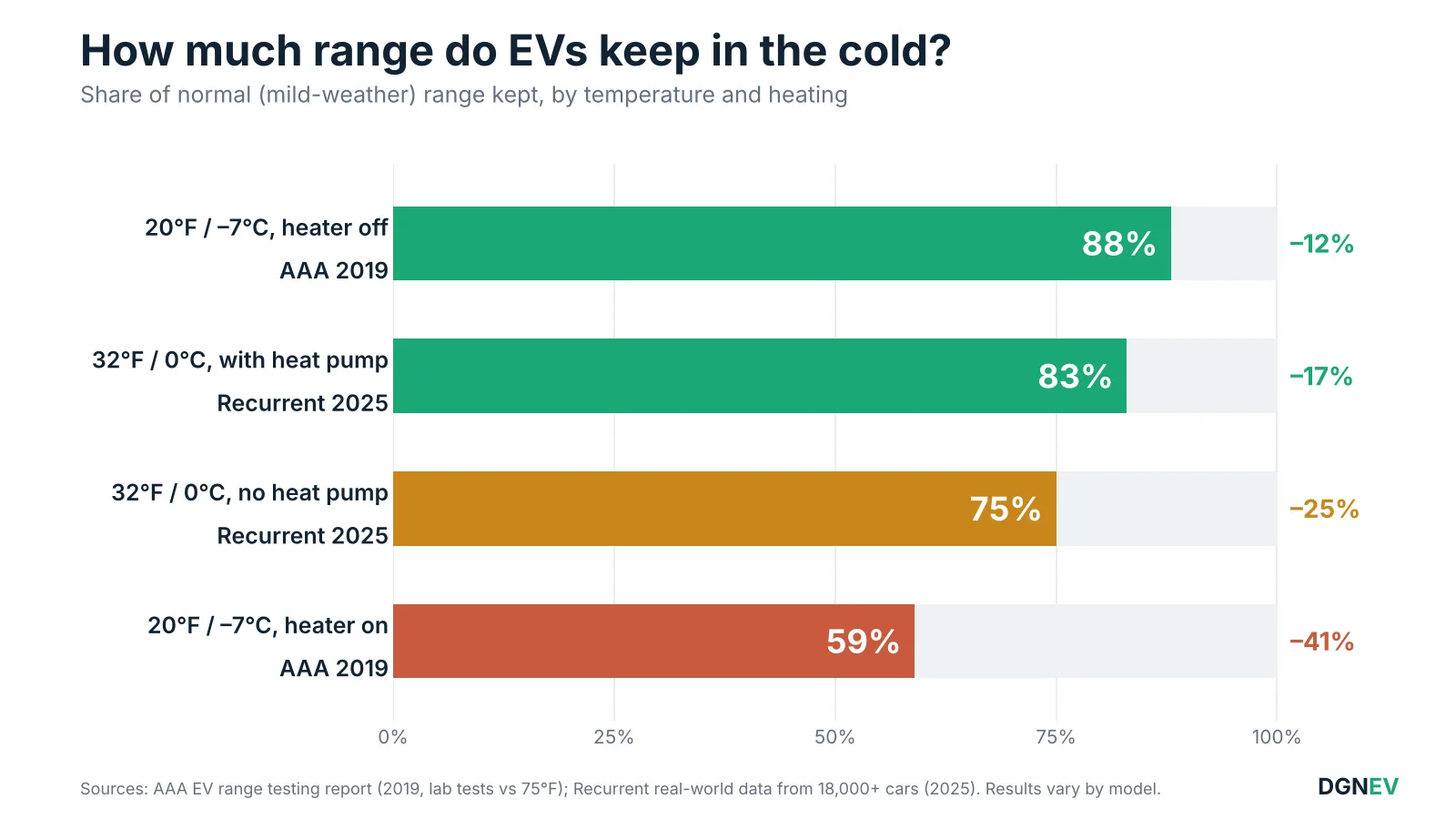
Notice the gap between AAA's "heater off" and "heater on" results: at 20°F, keeping the cabin warm cost far more range than the cold battery itself. That is the single biggest reason EVs lose range in winter.
Why cold weather reduces EV range
1. Heating the cabin takes a lot of energy
A gasoline engine produces plenty of waste heat that warms the cabin for free. An electric motor is so efficient that it makes very little heat, so the car has to use battery power to keep you warm. On short trips, warming up a cold cabin from scratch uses a large share of the energy.
2. Cold batteries are less efficient
The chemical reactions inside lithium-ion cells slow down in the cold. A cold battery cannot deliver or accept energy as easily, so less of its stored energy is available for driving until it warms up.
3. The battery needs heating too
To protect the cells and allow normal charging and driving, many EVs warm the battery itself in cold weather. That heating also draws energy from the battery.
4. Less regenerative braking
A cold battery cannot accept charge as quickly, so many EVs limit regenerative braking until the battery warms up. You recover less energy when slowing down, especially at the start of a trip.
5. Winter conditions add resistance
Cold air is denser, which increases aerodynamic drag. Snow and slush on the road, winter tires, lower tire pressure in the cold and running the defroster, lights and seat heaters all add to energy use.
Heat pumps: why they make a big difference
A heat pump moves heat from the outside air (and from the car's motor and electronics) into the cabin instead of creating heat directly with an electric resistance heater. It can deliver much more heat per kilowatt-hour of electricity.
In Recurrent's data, cars with heat pumps lost noticeably less range at freezing temperatures – for example, a Tesla Model 3 with a heat pump lost about 13% of its range compared with 21% for the earlier version without one. Heat pumps are most effective in moderate cold and become less efficient in extreme cold, but they are one of the best features to look for if you live somewhere with long winters.
Is the lost range gone for good?
No. Winter range loss is temporary. When temperatures rise, your range returns to normal. Cold weather does not permanently damage a healthy battery during normal use; long-term battery wear is driven far more by heat, frequent fast charging and age. Read more in our guide on how long EV batteries last.
10 ways to get more range in winter
- Precondition while plugged in. Use your car's app or scheduled departure to warm the cabin and battery before you leave. The energy comes from the grid, not your battery.
- Use seat and steering wheel heaters. Heating your body directly uses far less energy than heating all the air in the cabin.
- Lower the cabin temperature a few degrees. Even a small reduction saves noticeable energy on longer drives.
- Park in a garage if you can. A warmer battery is more efficient and charges faster.
- Keep the car plugged in at home. Many EVs use grid power to keep the battery warm in very cold weather.
- Check tire pressure regularly. Pressure drops in the cold, and underinflated tires increase rolling resistance.
- Drive smoothly and a little slower. High speeds and hard acceleration use much more energy, especially in dense cold air.
- Use eco or winter driving modes. They limit power and heating energy to stretch your range.
- Precondition the battery before fast charging. Navigating to a fast charger in the car's built-in navigation often warms the battery on the way, so it charges much faster.
- Keep a bigger buffer. Plan to arrive with more charge than usual – around 20% – in case conditions are worse than expected.
Charging in winter: what to expect
Cold batteries also charge more slowly, especially on DC fast chargers. If the battery is cold, the car limits charging power until the cells warm up. Arriving at a fast charger with a preconditioned battery, or charging right after a longer drive when the battery is already warm, makes a big difference. Home charging overnight is much less affected, and the car can use that time to keep the battery warm. See our guide on how to charge an electric car at home.
Choosing an EV for a cold climate
- Look for a heat pump – it is one of the biggest factors in winter efficiency.
- Choose a range buffer. If your longest regular winter trip is 150 miles, pick a car with comfortably more real-world range than that.
- Check real-world winter tests such as Norway's El Prix, not just official range figures – results vary a lot between models.
- Check for battery preconditioning and scheduled departure features in the car and its app.
Frequently asked questions
How much range does an EV lose at 0°F (–18°C)?
It varies widely by model, but losses of 30–40% or more compared with mild-weather range are common at very low temperatures with the heater in use. In the 2026 El Prix test in temperatures down to –31°C, the cars fell 29–46% short of their official WLTP range.
Does cold weather damage EV batteries?
Normal winter use does not damage a healthy battery. The car's battery management system protects the cells, limiting charging and power when it is very cold. The range loss you see is temporary.
Do EVs lose charge when parked in the cold?
A little. Parked EVs use some energy to keep systems running and, in some models, to protect the battery in extreme cold. Losses are usually small, but keeping the car plugged in during long cold spells is a good idea.
Is it better to use the heater or seat heaters?
Seat and steering wheel heaters are far more efficient because they warm you directly. Combining them with a slightly lower cabin temperature is one of the easiest ways to save range.
Do EVs lose range in hot weather too?
Yes, but less. In AAA's tests at 95°F (35°C), range fell by 17% with the air conditioning on and by 4% without it.
The bottom line
EV range drops in winter mainly because the car must use battery energy to heat the cabin and the battery, and because cold cells are less efficient. Expect around 20–30% less range in typical freezing weather and more in extreme cold. Preconditioning while plugged in, using seat heaters, keeping tires inflated and planning a bigger charge buffer will keep winter driving stress-free – and the lost range comes back as soon as it warms up.
Work out your own numbers
Note: This guide is for general information only. Prices, specifications and regulations change over time and vary by country, so always check with the manufacturer or a qualified professional before making decisions. Read our disclaimer.
Keep reading
EPA vs WLTP vs Real-World EV Range: Why Your Range Is Different
Your EV's official range is a lab number. Learn how EPA, WLTP and CLTC ratings are measured, why real-world range can be higher in town but lower on…
How Much Does Towing Reduce EV Range? Real Test Results
Towing a trailer typically cuts an electric truck or SUV's range by 40% to 60%, and sometimes more with heavy or tall trailers at highway speed…

Electric Cars: Pros and Cons You Should Know
Electric cars are cheaper to run and maintain, but they cost more to buy and need more planning on long trips. Here are the real advantages and…
Comments
Be the first to comment
Questions and experiences are welcome. Comments are reviewed before publishing; links are not allowed. Your email is optional and never shown.