How Much Does It Cost to Charge an Electric Car? (2026 Prices)
Charging an EV at home in the U.S. costs about $5–6 per 100 miles at average electricity prices, versus about $14 in fuel for a 30-mpg gas car. Public fast charging costs two to three times more than home. Here are 2026 prices for the U.S. and UK.
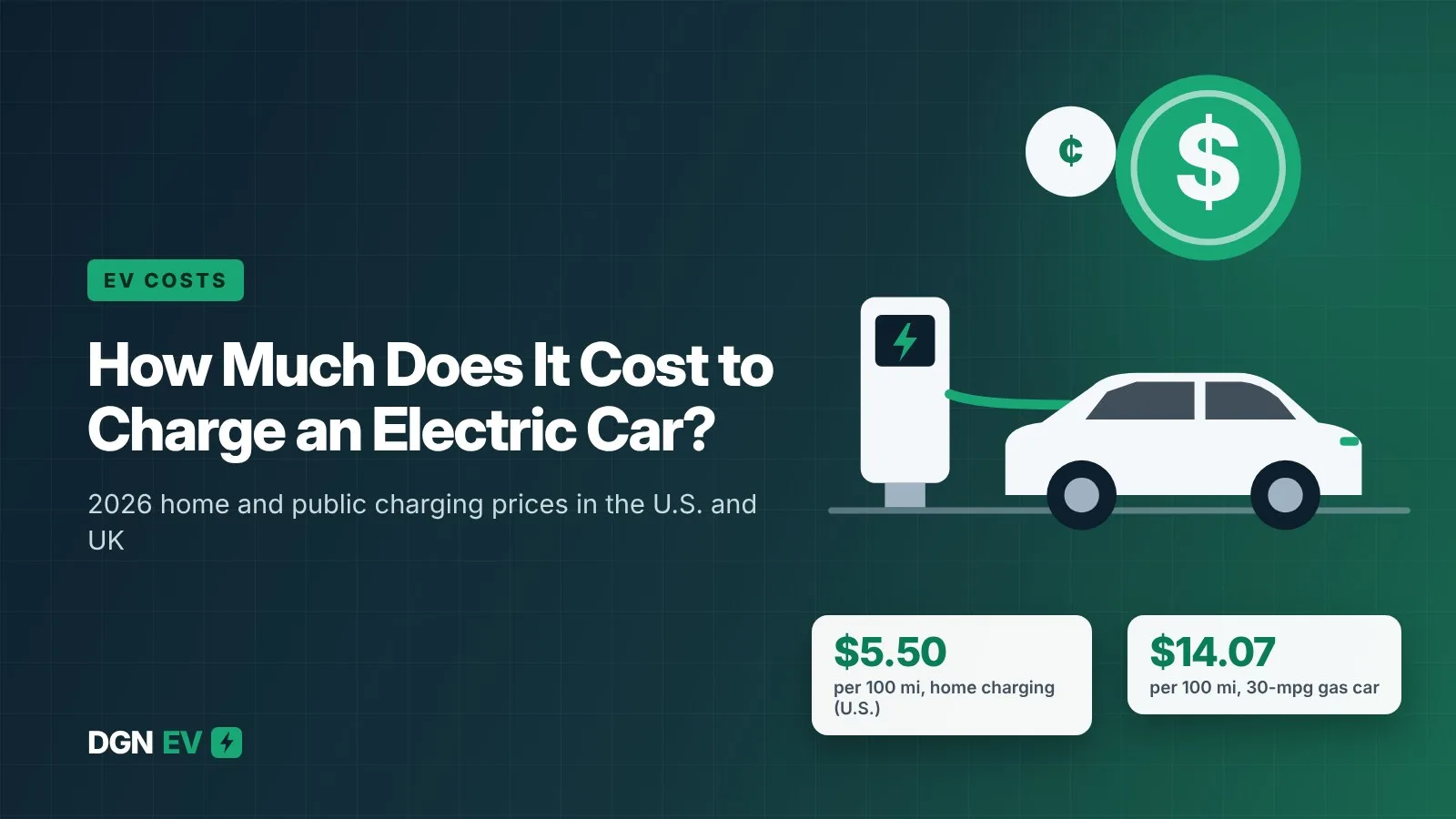
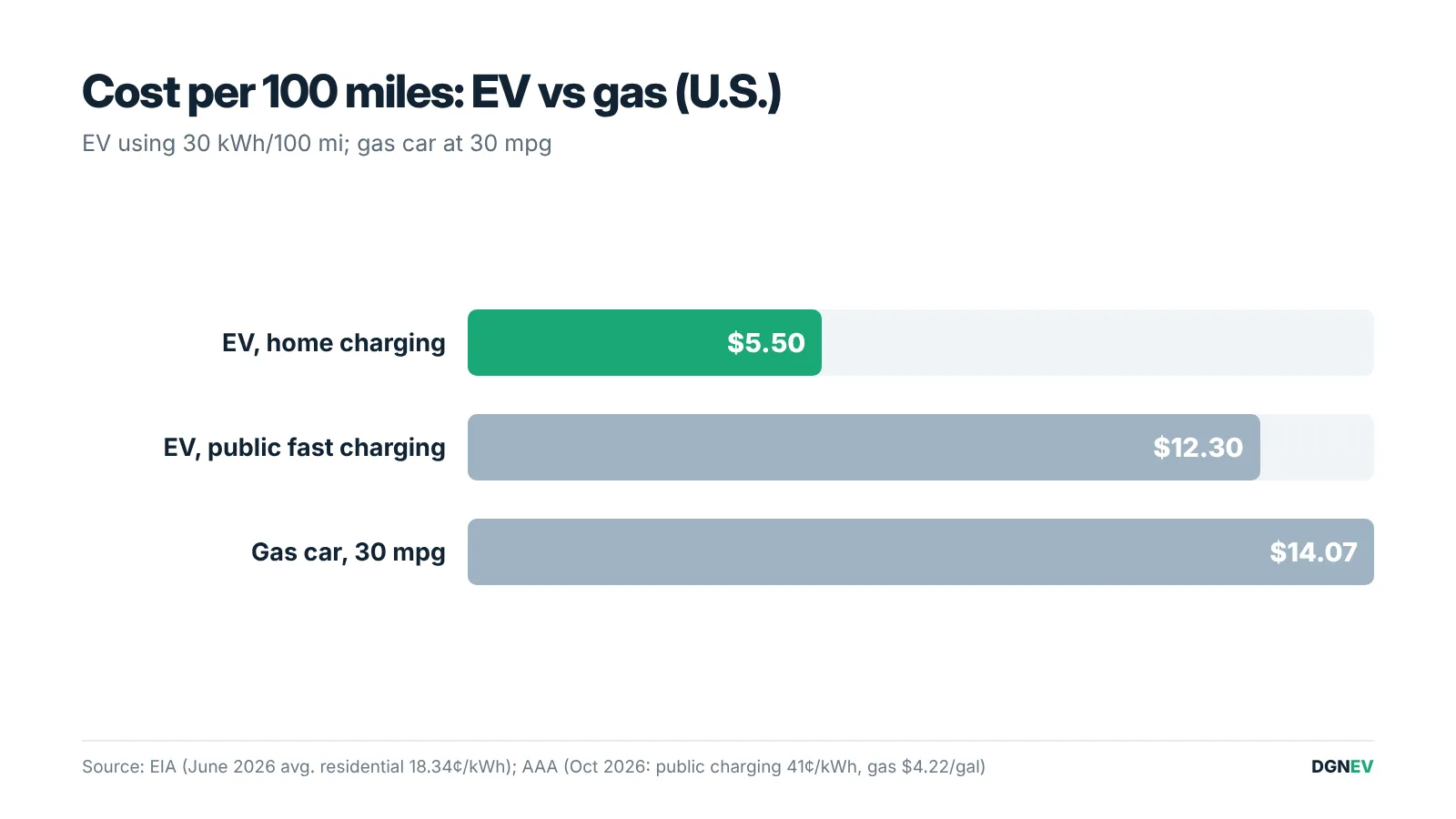
Charging an electric car at home in the U.S. costs about $5.50 per 100 miles at the average residential electricity price, compared with about $14 in gasoline for a car that gets 30 mpg. A full charge of a typical 60 kWh battery at home costs around $12. Public fast charging is much pricier, at roughly $12 per 100 miles, which is close to the cost of gas. The cheapest way to run an EV is to charge at home, ideally overnight on an off-peak rate.
How to calculate your charging cost
You only need two numbers: your electricity price and your car's efficiency.
Cost per 100 miles = kWh per 100 miles × price per kWh
Most EVs use between 25 and 35 kWh per 100 miles. Smaller, efficient cars sit at the low end; big SUVs and trucks at the high end. For a full charge, multiply your usable battery size by your price and add about 10% for charging losses.
Example: a car using 30 kWh per 100 miles, charged at 18.3 cents per kWh, costs 30 × $0.183 = $5.50 per 100 miles. Our EV charging cost calculator works this out for any car, currency and distance unit.
U.S. charging prices in 2026
| Where you charge | Typical price | Cost per 100 miles* | Full charge, 60 kWh** |
|---|---|---|---|
| Home, average rate | 18.3¢/kWh | About $5.50 | About $12 |
| Home, off-peak EV rate | Often 8–15¢/kWh | About $2.40–$4.50 | About $5–$10 |
| Public DC fast charging | About 41¢/kWh | About $12.30 | About $17 (10–80%) |
| Gas car, 30 mpg | $4.22/gallon | About $14.07 | – |
*Assumes 30 kWh per 100 miles. **Includes about 10% charging losses for home charging. The home price is the U.S. average residential rate for June 2026 from the U.S. Energy Information Administration (EIA); public charging and gas prices are AAA national averages from late October 2026. Off-peak rates vary by utility.
State matters a lot. EIA data shows residential electricity costing several times more in Hawaii than in the cheapest states, so check the price per kWh on your own bill.
UK charging prices in 2026
| Where you charge | Typical price | Cost per 100 miles* |
|---|---|---|
| Home, price cap rate (Oct–Dec 2026) | 26.32p/kWh | About £7.50 |
| Home, EV off-peak tariff | About 9p/kWh | About £2.55 |
| Public slow/fast (3–49 kW), pay as you go | About 54p/kWh | About £15.40 |
| Public rapid/ultra-rapid (50 kW+), pay as you go | About 79p/kWh | About £22.60 |
*Assumes 3.5 miles per kWh. Home cap rate from Ofgem (Direct Debit average for England, Scotland and Wales); public prices and the off-peak example are from Zapmap's September 2026 price index. Subscriptions and membership plans can cut public prices.
The UK numbers show the gap clearly: rapid charging costs around nine times more than charging overnight on a good EV tariff.
How much does it cost per month?
If you drive 12,000 miles a year (1,000 a month) in the U.S. and charge mostly at home:
- EV at home, average rate: about $55 per month, or roughly $660 per year
- 30-mpg gas car: about $140 per month, or roughly $1,690 per year
That is a saving of about $1,000 a year in energy, which grows with higher gas prices or a cheaper electricity plan. If you mostly use fast chargers, the saving can shrink to almost nothing. For the full picture including insurance and depreciation, see our comparison of electric car pros and cons, or try our gas vs electric calculator.
Why public charging costs more
- Expensive equipment: DC fast chargers cost tens of thousands of dollars each to buy and install.
- Demand charges: utilities often bill charging sites for their peak power draw, not just energy used.
- Convenience premium: like gas stations on highways, operators price for speed and location.
- Idle fees and session fees can add to the bill at some networks.
Some public chargers, especially slower Level 2 units at workplaces, hotels or stores, are cheap or free. They are worth using when you are parked there anyway.
7 ways to pay less
- Charge at home whenever possible. See our guide to home charging.
- Switch to a time-of-use or EV tariff and schedule charging overnight.
- Use the car's or charger's scheduling feature so you never forget off-peak hours.
- Join the networks you use most. Memberships often lower the price per kWh.
- Charge only to what you need at fast chargers; the last 20% is slow and sometimes billed by time.
- Drive efficiently: steady speeds, correct tire pressures and preconditioning while plugged in.
- Check utility rebates for home chargers and special EV rates.
FAQ
How much does it cost to fully charge a Tesla?
It depends on the model and your rate, but a Model Y at the U.S. average home rate typically costs around $12–$17 for a full charge. See our Tesla Model Y guide for details.
Is it cheaper to charge an EV than to buy gas?
At home, almost always, often by half or more. With public fast charging only, the cost can be close to gas.
Will charging my EV raise my electric bill a lot?
Driving 1,000 miles a month adds about 300 kWh of electricity. At 18.3 cents per kWh, that is roughly $55 a month in the U.S.
Does it cost more to charge an EV in winter?
Yes, a little. Cold weather increases energy use for heating and reduces efficiency, so you need more kWh per mile.
The bottom line
Home charging is the key to cheap EV driving: about $5–6 per 100 miles in the U.S. at average rates, and even less on an off-peak plan. Public fast charging is convenient for trips but costs two to three times as much. Check the price per kWh on your electricity bill and run the numbers for your own driving.
Work out your own numbers
Note: This guide is for general information only. Prices, specifications and regulations change over time and vary by country, so always check with the manufacturer or a qualified professional before making decisions. Read our disclaimer.
Keep reading
How Much Does It Cost to Replace an EV Battery? (2026 Guide)
An EV battery replacement can cost from around $5,000 for a small pack to $20,000 or more for a large one – but very few owners ever pay for one…
Electric vs Gas Cars: Which Is Cheaper to Own in 2026?
EVs cost far less to fuel and maintain, but usually more to buy and insure, and they lose value faster. We compare the real 2026 numbers – price…

Electric Cars: Pros and Cons You Should Know
Electric cars are cheaper to run and maintain, but they cost more to buy and need more planning on long trips. Here are the real advantages and…
Comments
Be the first to comment
Questions and experiences are welcome. Comments are reviewed before publishing; links are not allowed. Your email is optional and never shown.