How this calculator works
The calculator compares both options over the length of the lease.
Leasing costs what you pay at signing, plus every monthly payment, plus the fee charged when you hand the car back, plus any charge for driving over the mileage allowance.
Buying costs your down payment plus the loan payments made during that period – minus the equity you have at the end, which is the car's value minus the loan you still owe. The car's future value is the biggest unknown. In a 2026 analysis of real resale prices, three-year-old EVs had kept about 57% of their value on average, with individual models ranging from about 42% to 75% (The Charge Port). The default interest rate of 6.35% is the average new-car loan APR in the U.S. in the second quarter of 2026 (Experian).
Insurance, charging and maintenance are left out because they are usually similar either way. Sales tax is treated differently in different places, so include it in the price or the lease payment as it appears on your offer.
Frequently asked questions
Is it better to lease or buy an electric car?
Leasing often makes sense for EVs because battery and charging technology improve quickly and resale values can be hard to predict – with a lease, the leasing company takes that risk. Buying usually costs less if you keep the car for many years after the loan is paid off.
Why do EVs lose value faster than some gas cars?
Rapid price cuts on new models, quickly improving range and the end of some purchase incentives have all pushed used EV prices down. Depreciation varies a lot by model, so check recent used prices for the car you are considering.
What does "due at signing" include?
Usually a down payment (sometimes called a capitalized cost reduction), an acquisition fee, taxes and registration. Some offers include the first monthly payment too – this calculator expects it to be left out, because it counts every monthly payment separately.
Related guides
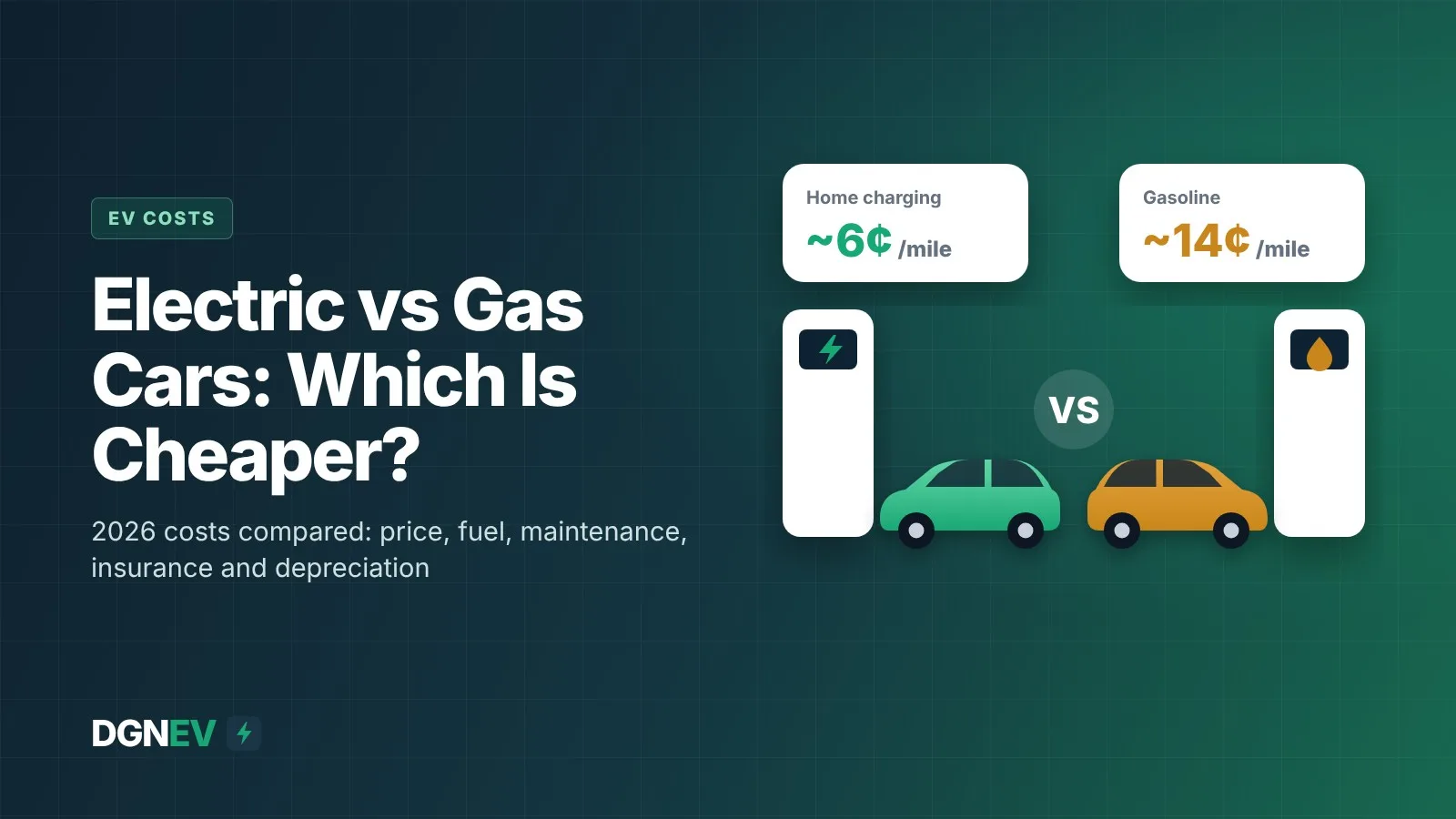
Electric vs Gas Cars: Which Is Cheaper to Own in 2026?
EVs cost far less to fuel and maintain, but usually more to buy and insure, and they lose value faster. We compare the real 2026 numbers – price…
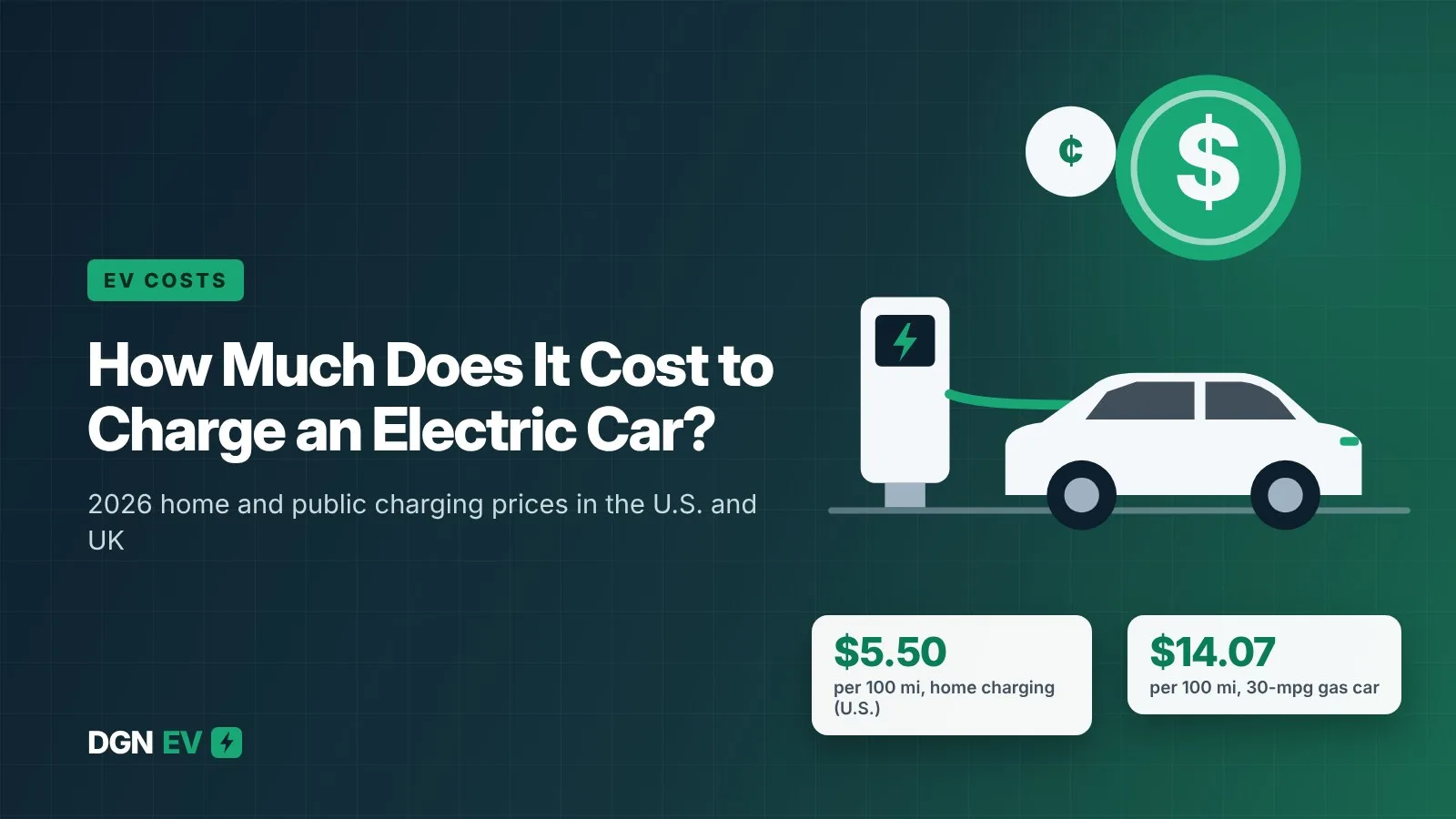
How Much Does It Cost to Charge an Electric Car? (2026 Prices)
Charging an EV at home in the U.S. costs about $5–6 per 100 miles at average electricity prices, versus about $14 in fuel for a 30-mpg gas car…
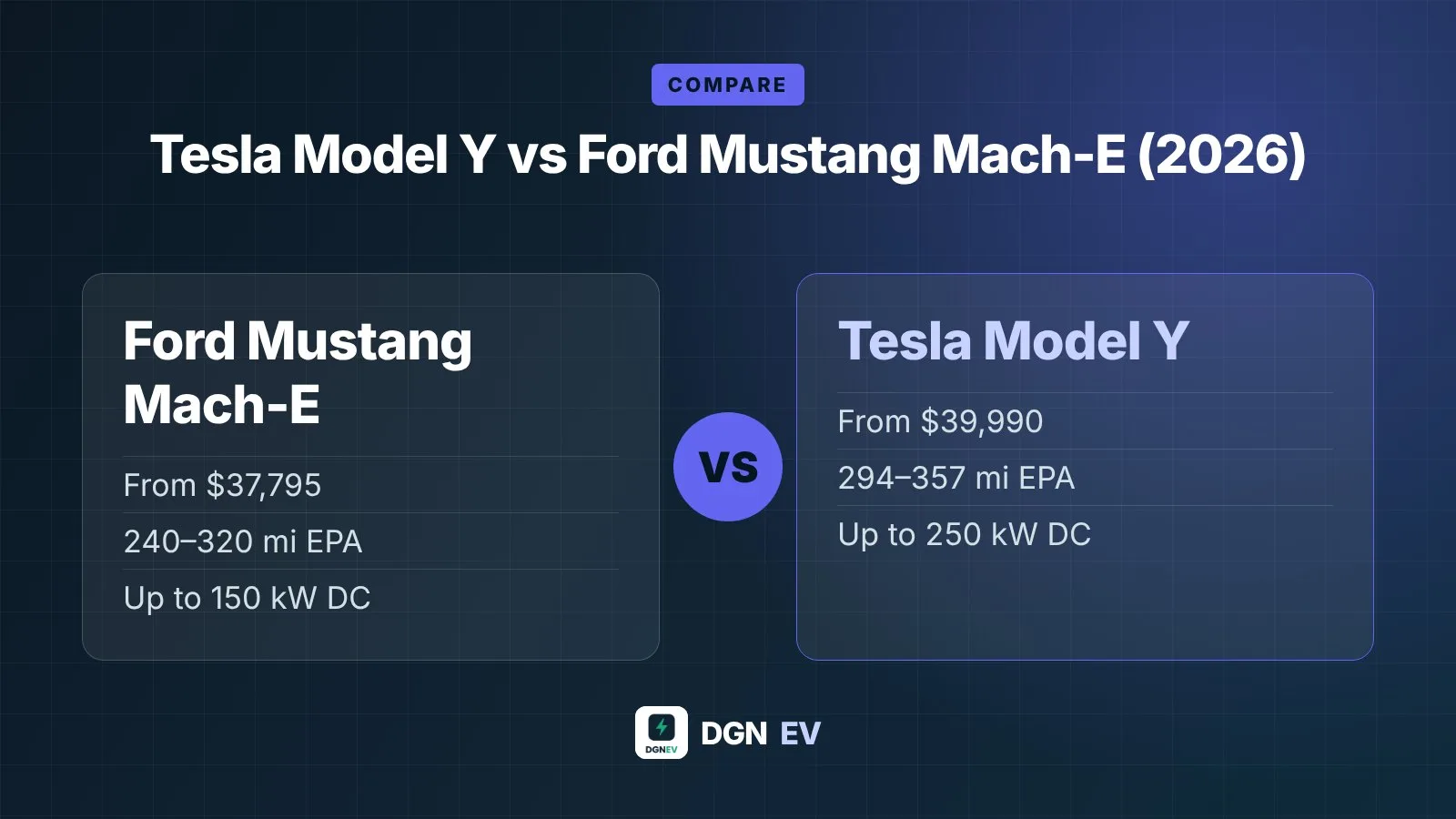
Tesla Model Y vs Ford Mustang Mach-E (2026): Price, Range and Charging Compared
The Mach-E costs less to start, but the Model Y goes farther, charges faster and costs less to run. Here is how the 2026 Tesla Model Y and Ford…