Electric vs Gas Cars: Which Is Cheaper to Own in 2026?
EVs cost far less to fuel and maintain, but usually more to buy and insure, and they lose value faster. We compare the real 2026 numbers – price, fuel, maintenance, insurance and depreciation – to show which is cheaper for you.
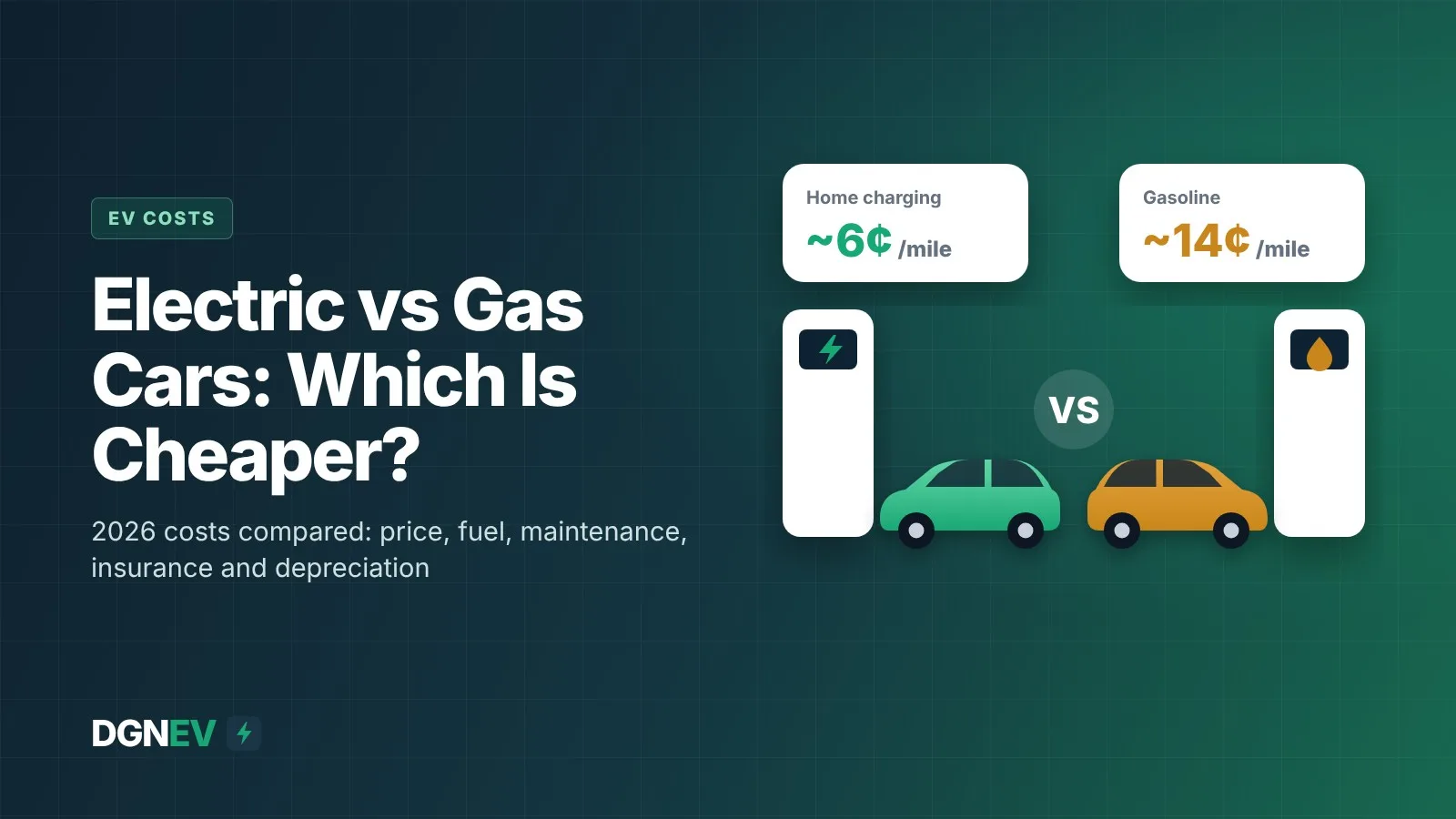
Electric cars are almost always cheaper to run than gas cars, but not always cheaper to own. Charging at home costs much less than buying gasoline, and EVs need less maintenance. But EVs usually have a higher purchase price, can cost more to insure and have been losing value faster – which can cancel out the savings.
In AAA's 2026 study of new-car ownership costs, EVs came out cheaper than gas cars in one of four vehicle classes, close in two, and noticeably more expensive in one. Whether an EV saves you money depends mainly on how much you drive, where you charge and the price you pay for the car. Below we break down each cost with the latest 2026 figures.
The short answer
- Fuel: EVs win clearly – often 60–70% cheaper per mile when charging at home.
- Maintenance: EVs win – no oil changes and less brake wear.
- Purchase price: gas cars usually win, although the gap is shrinking.
- Insurance: often higher for EVs, depending on the model.
- Depreciation: EVs have been losing value faster in recent years.
- Overall: close – EVs tend to come out ahead for drivers who cover many miles and charge at home.
Total cost of ownership: what AAA found in 2026
AAA's annual Your Driving Costs study adds up depreciation, fuel, maintenance, insurance, financing, taxes and fees for new cars driven 15,000 miles a year over five years. The 2026 edition assumed gasoline at $4.15 a gallon and home electricity at 18 cents per kWh.
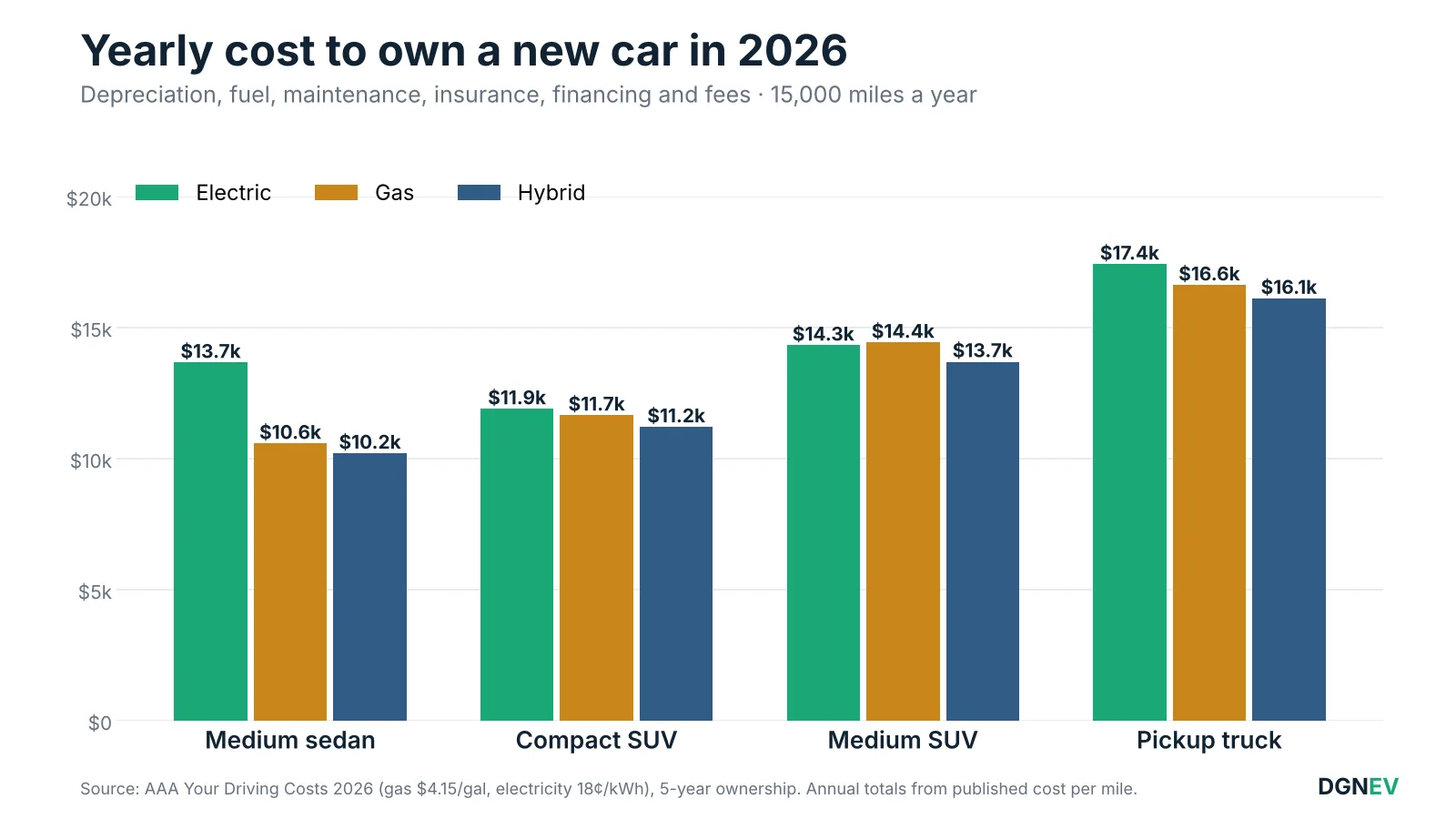
- Medium SUVs: the EV was slightly cheaper than the gas version ($14,325 vs $14,430 a year).
- Compact SUVs: the EV cost about $240 a year more than gas ($11,895 vs $11,655).
- Pickup trucks: the EV cost about $800 a year more ($17,415 vs $16,620).
- Medium sedans: the EV cost about 29% more ($13,665 vs $10,575) – the biggest gap.
AAA found that charging an EV cost 66–70% less than fueling a gas car, but faster depreciation, higher financing costs and fees cancelled out most of that saving. Hybrids had the lowest ownership cost in all four classes.
These are national averages for new cars bought in 2026. Your own result can be very different – especially if you buy used, drive more than 15,000 miles a year or have cheap electricity.
Purchase price
According to Kelley Blue Book, the average transaction price of a new EV in the U.S. was $55,879 in September 2026, compared with $50,562 for all new vehicles. Kelley Blue Book estimates EVs carried about an 11% premium over comparable gas models, although EV prices were 3% lower than a year earlier and carried larger discounts – incentives averaged 11% of the price.
In the U.S., the federal EV tax credit of up to $7,500 ended for vehicles acquired after September 30, 2025. Some states, utilities and other countries still offer incentives, so check what applies where you live.
Used EVs are a different story. Because EVs have lost value quickly, used models are often much cheaper than comparable used gas cars – good news if you buy used, but bad news if you buy new and sell after a few years.
Fuel costs: where EVs win
Fuel is the biggest everyday difference. Here is a simple example for 12,000 miles a year, using late-October 2026 prices:
| Price | Cost per mile | Cost per year (12,000 mi) | |
|---|---|---|---|
| Gas car (30 mpg) | $4.22 per gallon | 14.1¢ | about $1,690 |
| EV charged at home (3.5 mi/kWh) | 18.6¢ per kWh | 5.9¢ | about $710 |
| EV using only public chargers | 41¢ per kWh | 13.0¢ | about $1,560 |
Gas price: AAA national average for regular, October 29, 2026. Home electricity: U.S. average residential price, March 2026 (EIA). Public charging: AAA's national average for public EV charging, October 2026. EV figures include about 10% charging losses.
The lesson: home charging is the key to big fuel savings. An EV that relies only on public fast charging can cost almost as much per mile as an efficient gas car. Electricity prices also vary a lot – from about 12 cents per kWh in North Dakota to over 42 cents in Hawaii. For more on charging at home, see our guide on how to charge an electric car at home.
Remember that winter can raise an EV's energy use noticeably. Read why EV range drops in winter.
Maintenance and repairs
EVs have no engine oil, spark plugs or exhaust system, and regenerative braking reduces brake wear. In AAA's 2026 study, maintenance, repairs and tires for a compact SUV cost about $1,402 a year for the EV, compared with $1,954 for the gas model. A U.S. Department of Energy study by Argonne National Laboratory estimated about 6.1 cents per mile for EVs versus 10.1 cents for gas cars. Read more in our guide: do electric cars need oil changes?
The flip side is that EV tires can wear faster, and repairs after an accident can be expensive, especially if the battery pack is damaged. Battery replacement outside warranty is rare but costly – see how long EV batteries last.
Insurance
Insurance costs depend heavily on the model, your location and your driving record. Insurify's June 2026 report found that full-coverage insurance for EVs averaged $3,159 a year versus $2,218 for gas cars – about 42% more – mainly because EVs cost more to buy and repair. However, AAA's 2026 study found EV insurance roughly on par with gas models in the compact SUV class. Always get quotes for the exact models you are considering.
Depreciation
Depreciation – the value your car loses over time – is the largest cost of owning any new car, and it is where EVs have struggled. AAA's study found that faster depreciation was the main reason EVs did not come out cheaper overall, partly linked to the end of the federal tax credit and rapid improvements in newer models. In the compact SUV class, the EV lost about $5,300 a year in value versus about $3,600 for the gas model.
If you keep your car for many years, depreciation matters less, because the fuel and maintenance savings keep adding up while the value loss slows.
When an EV is likely to save you money
- You can charge at home, ideally on an off-peak or EV electricity tariff.
- You drive a lot – the more miles you cover, the more the fuel and maintenance savings add up.
- Gasoline is expensive where you live, or electricity is cheap.
- You buy used or get a good discount or local incentive on a new EV.
- You plan to keep the car for a long time.
When a gas car or hybrid may be cheaper
- You cannot charge at home and would rely on public fast charging.
- You drive relatively few miles each year.
- You plan to sell the car after only two or three years.
- The EV you want costs much more than a comparable gas or hybrid model.
For a quick estimate with your own numbers, use our gas vs electric car cost calculator and EV charging cost calculator.
Frequently asked questions
Is it cheaper to charge an EV than to buy gas?
Usually, yes. With home charging at average U.S. electricity prices, an efficient EV costs around 6 cents per mile for energy, compared with about 14 cents for a 30 mpg gas car at $4.22 a gallon. Public fast charging narrows the gap considerably.
How long does it take for an EV to pay for itself?
It depends on the price difference, how far you drive and your energy prices. In AAA's 2026 compact SUV example (15,000 miles a year, home charging), the EV saved about $1,600 a year on energy and about $550 on maintenance. At that rate, a $5,000 price difference would be recovered in under three years – before considering insurance and resale value.
Are EVs cheaper than hybrids?
Not always. In AAA's 2026 study, hybrids had the lowest total ownership cost in all four vehicle classes compared. EVs still have the lowest fuel and maintenance costs, so high-mileage drivers who charge at home can do better with an EV.
Do EVs cost more to insure?
Often, but not always. Industry data suggests EV premiums average around 40% higher, mostly because of higher purchase and repair costs, but the gap varies widely by model and is narrowing for newer vehicles.
Will high gas prices make EVs cheaper overall?
Higher gas prices increase an EV's fuel savings. In AAA's 2026 study, gasoline prices that were about 32% higher than the year before brought EVs close to gas cars in total cost in several vehicle classes.
The bottom line
EVs are clearly cheaper to fuel and maintain, especially if you charge at home. But a higher purchase price, insurance costs and faster depreciation mean they are not automatically cheaper to own. In 2026, the total cost is close: an EV is likely to save you money if you drive a lot, charge at home and keep the car for years, while a hybrid can be the cheapest choice for many other drivers. Run your own numbers before you buy.
Still deciding? Read our balanced guide to the pros and cons of electric cars.
Work out your own numbers
Note: This guide is for general information only. Prices, specifications and regulations change over time and vary by country, so always check with the manufacturer or a qualified professional before making decisions. Read our disclaimer.
Keep reading
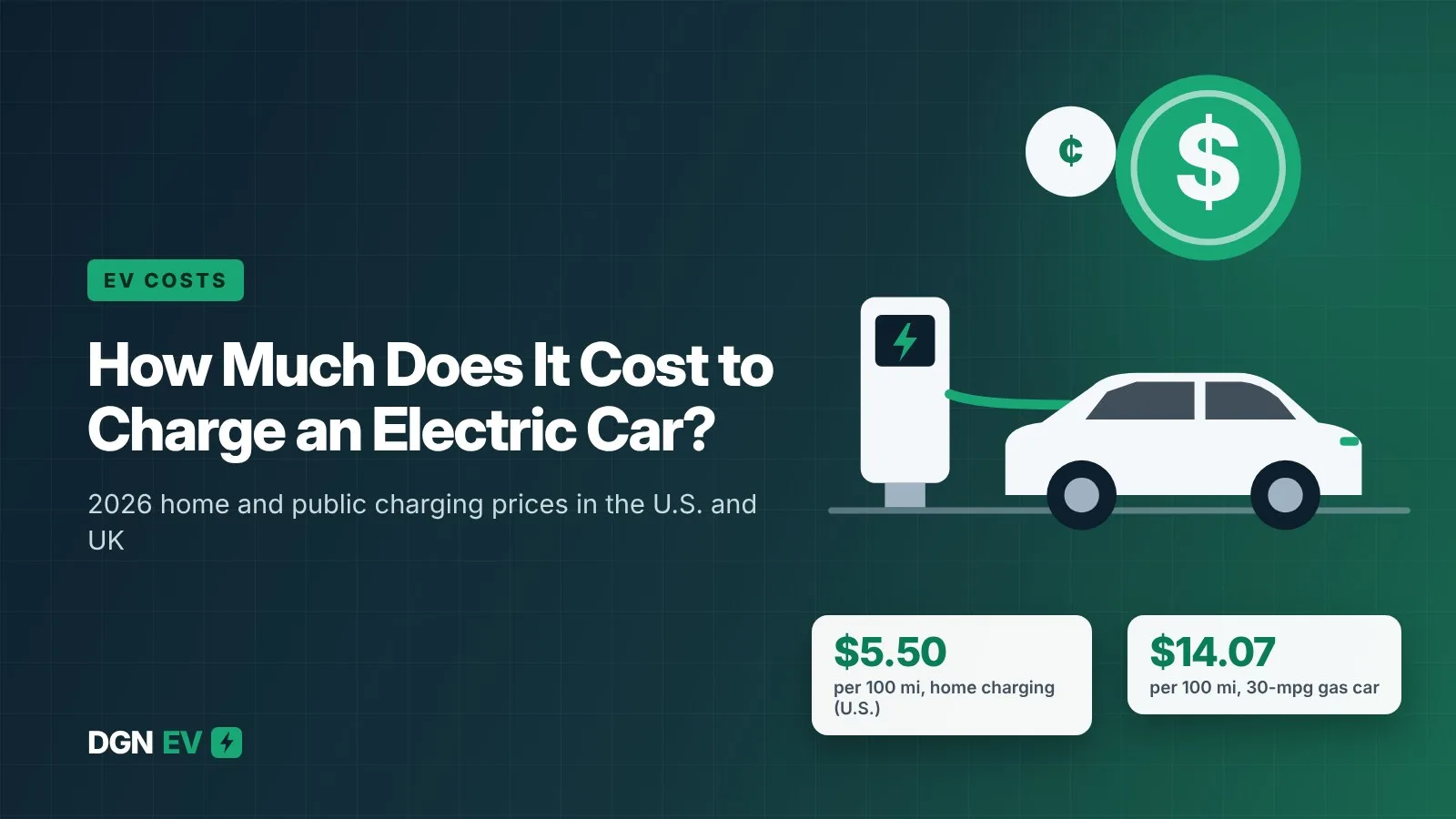
How Much Does It Cost to Charge an Electric Car? (2026 Prices)
Charging an EV at home in the U.S. costs about $5–6 per 100 miles at average electricity prices, versus about $14 in fuel for a 30-mpg gas car…

Electric Cars: Pros and Cons You Should Know
Electric cars are cheaper to run and maintain, but they cost more to buy and need more planning on long trips. Here are the real advantages and…
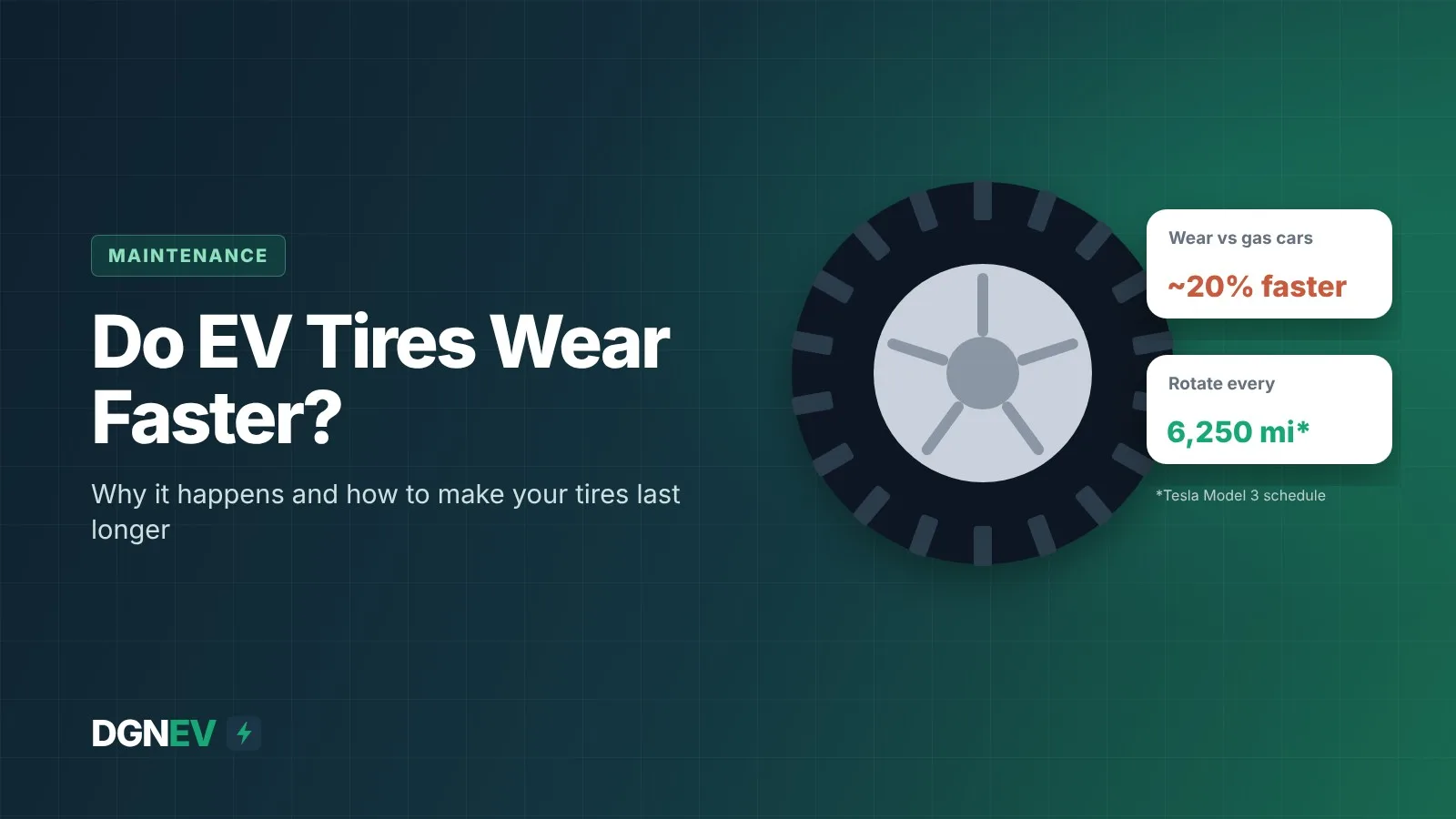
Do EV Tires Wear Faster? How to Make Them Last Longer
Tires are often the biggest regular maintenance cost of an electric car – and they can wear out faster than on a gas car. Learn why, what makes EV…
Comments
Be the first to comment
Questions and experiences are welcome. Comments are reviewed before publishing; links are not allowed. Your email is optional and never shown.