How this calculator works
Charging speed is limited by whichever is lower: the charger's power or the maximum power your car can accept. Many EVs accept 7–11 kW on AC and anywhere from 50 kW to over 250 kW on DC.
On AC (Level 1 and Level 2), charging is fairly steady, with around 10% of the energy lost along the way. On DC fast chargers, power is highest when the battery is low and then tapers off. The calculator assumes an average of about 70% of the peak rate up to 80%, and roughly a third of the peak rate above 80%, which is why the last 20% can take as long as the first 60%.
Cold batteries, a busy shared charging station or a hot battery can make real charging slower than the estimate.
Frequently asked questions
How long does it take to charge an EV at home?
On a Level 2 home charger (around 7 kW), adding 40 kWh takes roughly six hours, so most EVs can recover a typical day of driving overnight. A standard household outlet is much slower.
How long does DC fast charging take?
Many modern EVs can charge from about 10% to 80% in 20–40 minutes at a high-power DC fast charger, depending on the car's peak charging rate and battery temperature.
Why does charging slow down after 80%?
To protect the battery, the car reduces charging power as the cells fill up. On road trips it is usually faster to charge to around 80% and stop again later than to wait for 100%.
Related guides
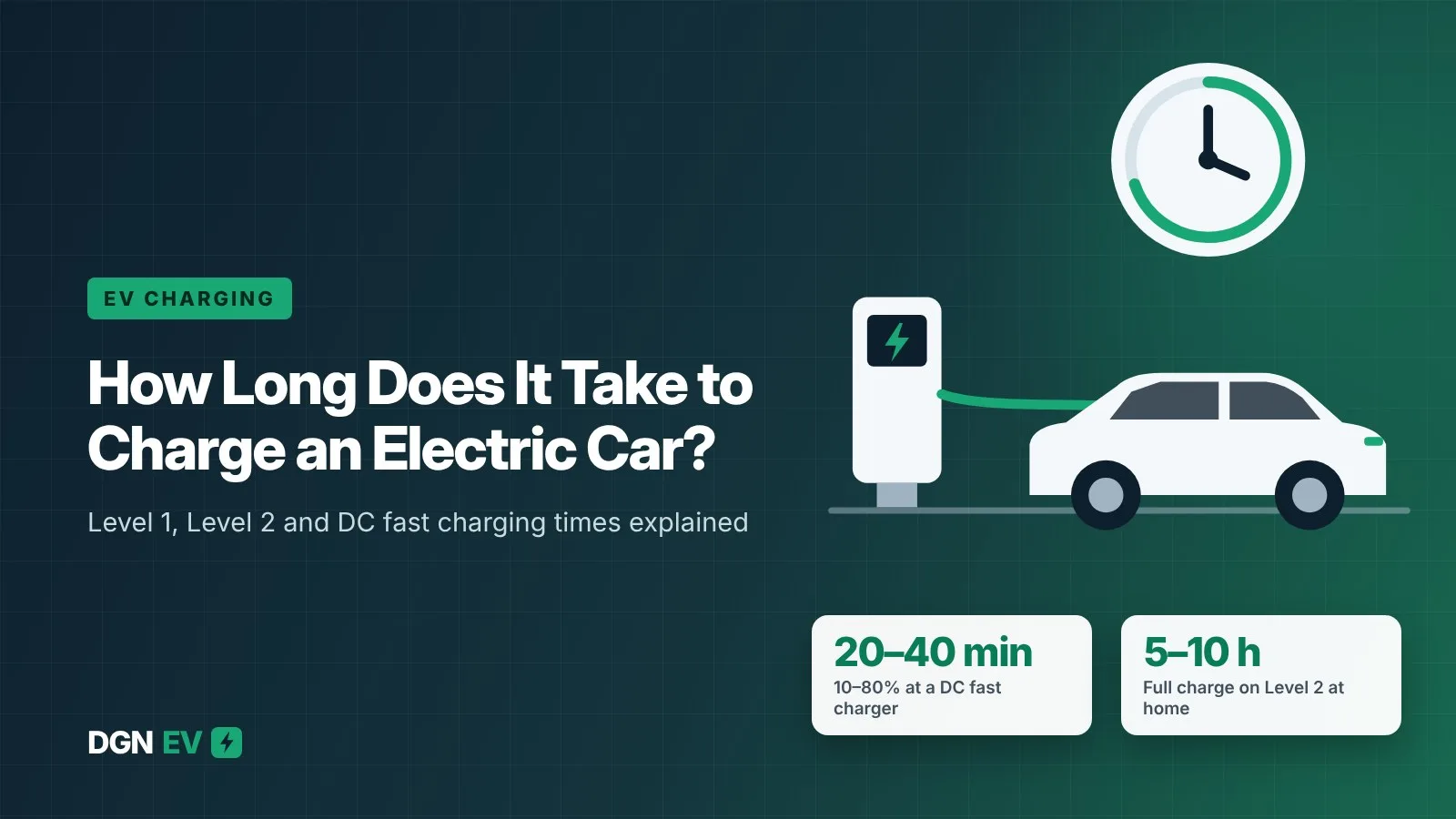
How Long Does It Take to Charge an Electric Car?
Charging an EV takes anywhere from about 20 minutes to more than 40 hours. It depends on the charger, the battery size and the car's own charging…
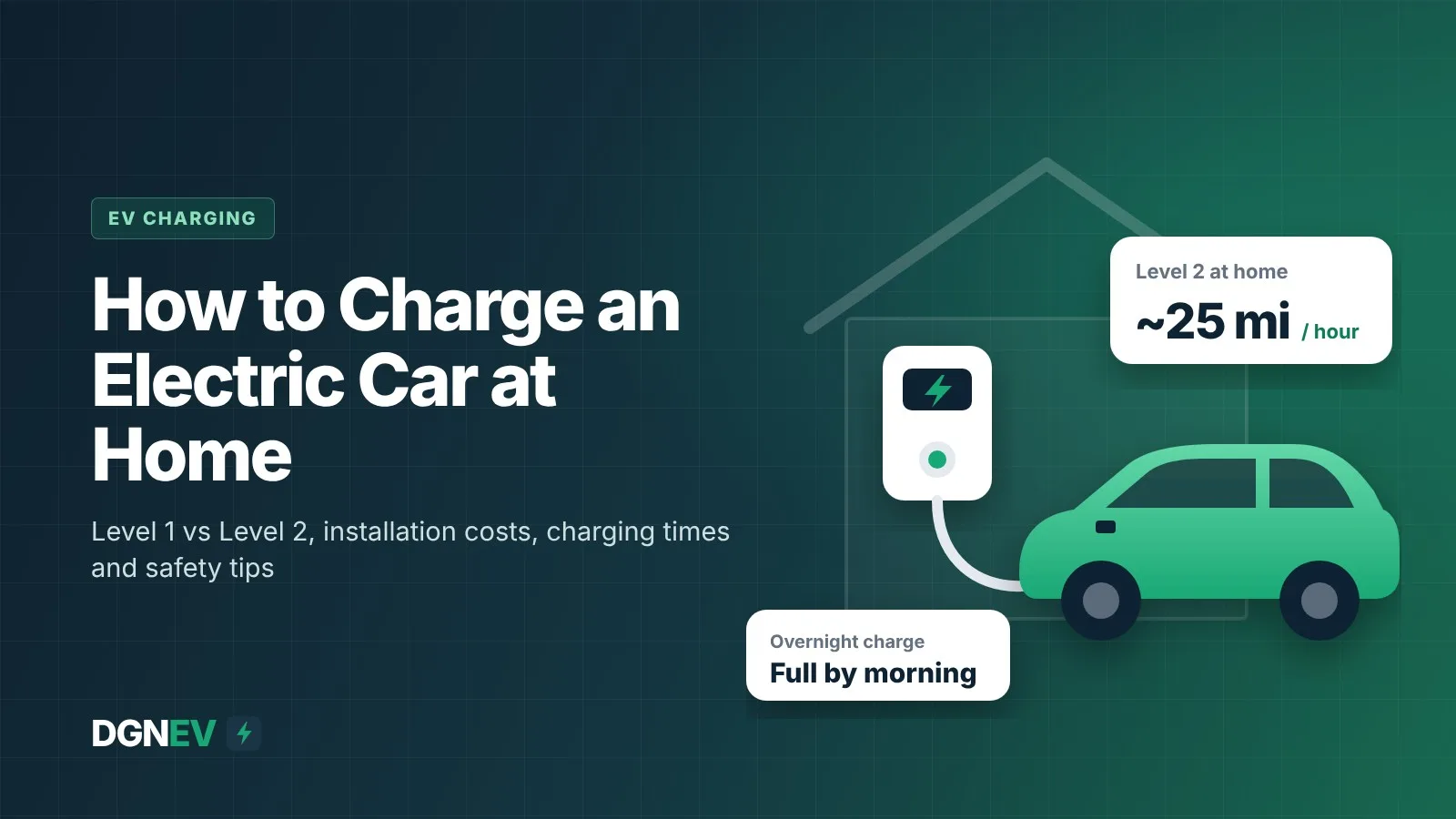
How to Charge an Electric Car at Home: A Complete Guide
Charging at home is the cheapest and easiest way to run an EV. Learn the difference between Level 1 and Level 2 charging, what a home charger costs…
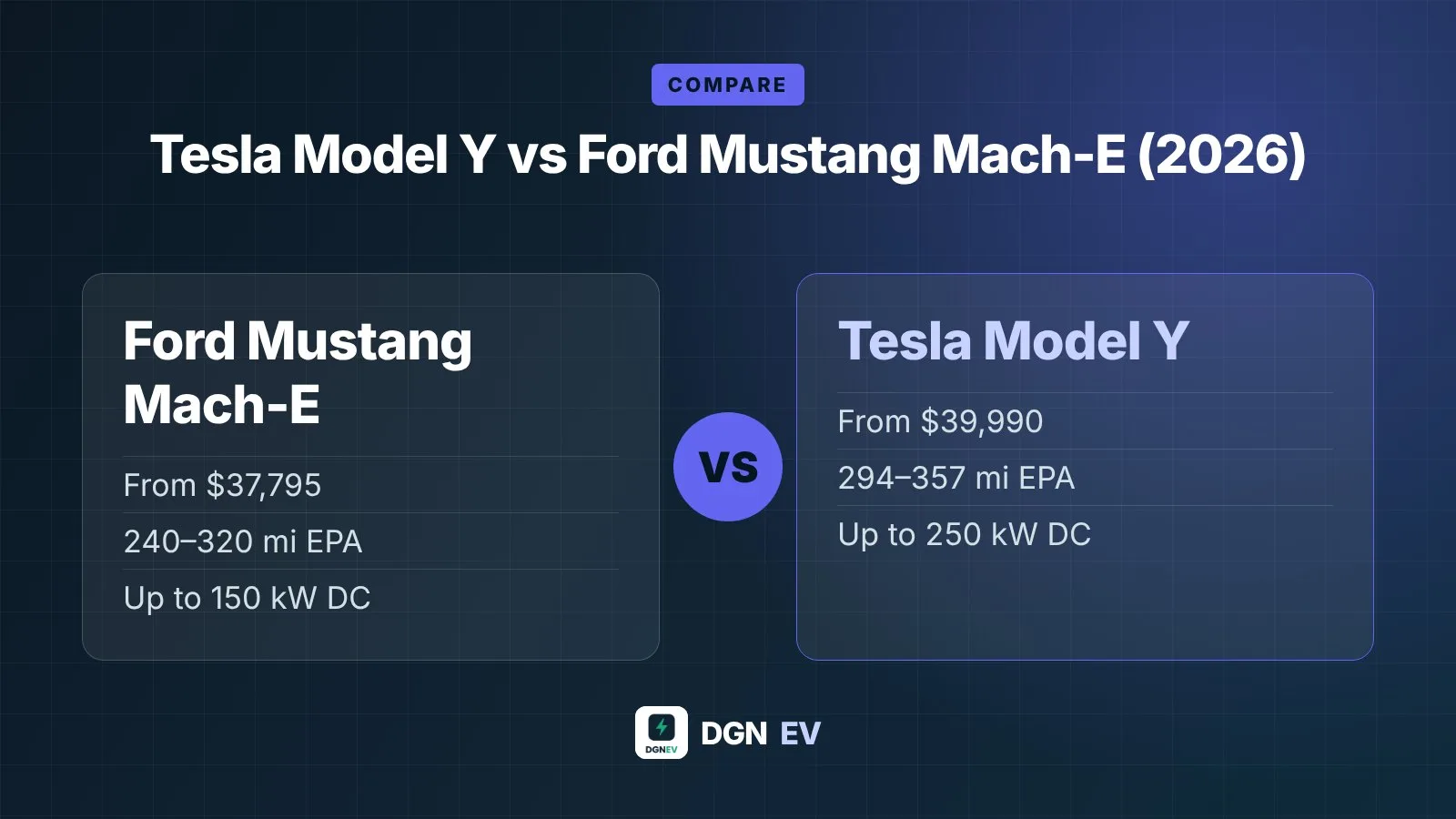
Tesla Model Y vs Ford Mustang Mach-E (2026): Price, Range and Charging Compared
The Mach-E costs less to start, but the Model Y goes farther, charges faster and costs less to run. Here is how the 2026 Tesla Model Y and Ford…