How this calculator works
First the calculator works out how much electricity your car uses in a year: your yearly distance divided by your car's efficiency, plus charging losses.
Then it estimates how much one kilowatt of solar panels produces where you live: peak sun hours × 365 days × system efficiency. Dividing the car's yearly need by that figure gives the system size, and the panel size gives the number of panels (about 2 m² or 21 sq ft each).
Cost uses an installed price per watt – about $2.60 per watt on average in the U.S. in 2026 (EnergySage). The savings assume every kWh of solar replaces a kWh you would otherwise buy. In practice that depends on whether you charge during the day, have a home battery, or receive credit for power you send to the grid.
Frequently asked questions
How many solar panels does it take to charge an electric car?
For a typical driver covering about 12,000 miles (19,000 km) a year, it usually takes roughly 5–12 modern panels, depending on how sunny it is where you live and how efficient the car is.
Can I charge my EV directly from solar panels?
Yes, if you charge while the sun is shining. Some smart chargers can follow your solar output. If your car charges overnight, the solar power is either stored in a home battery or exported to the grid and credited, depending on your utility.
Is solar worth it just for an EV?
Solar is usually sized for the whole home, not just the car. Adding an EV increases how much of the solar power you use yourself, which often improves the payback of a home solar system.
Related guides
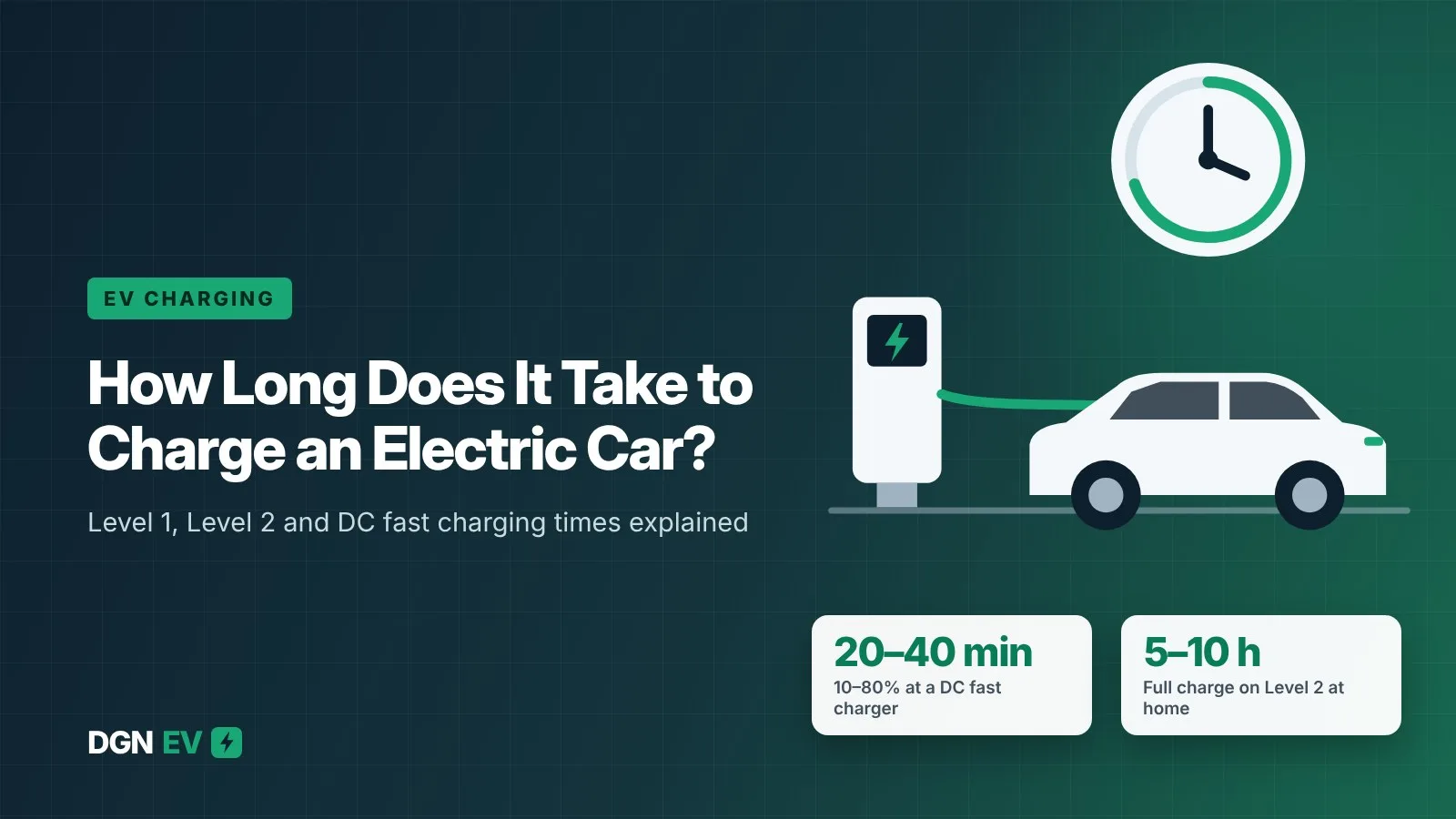
How Long Does It Take to Charge an Electric Car?
Charging an EV takes anywhere from about 20 minutes to more than 40 hours. It depends on the charger, the battery size and the car's own charging…
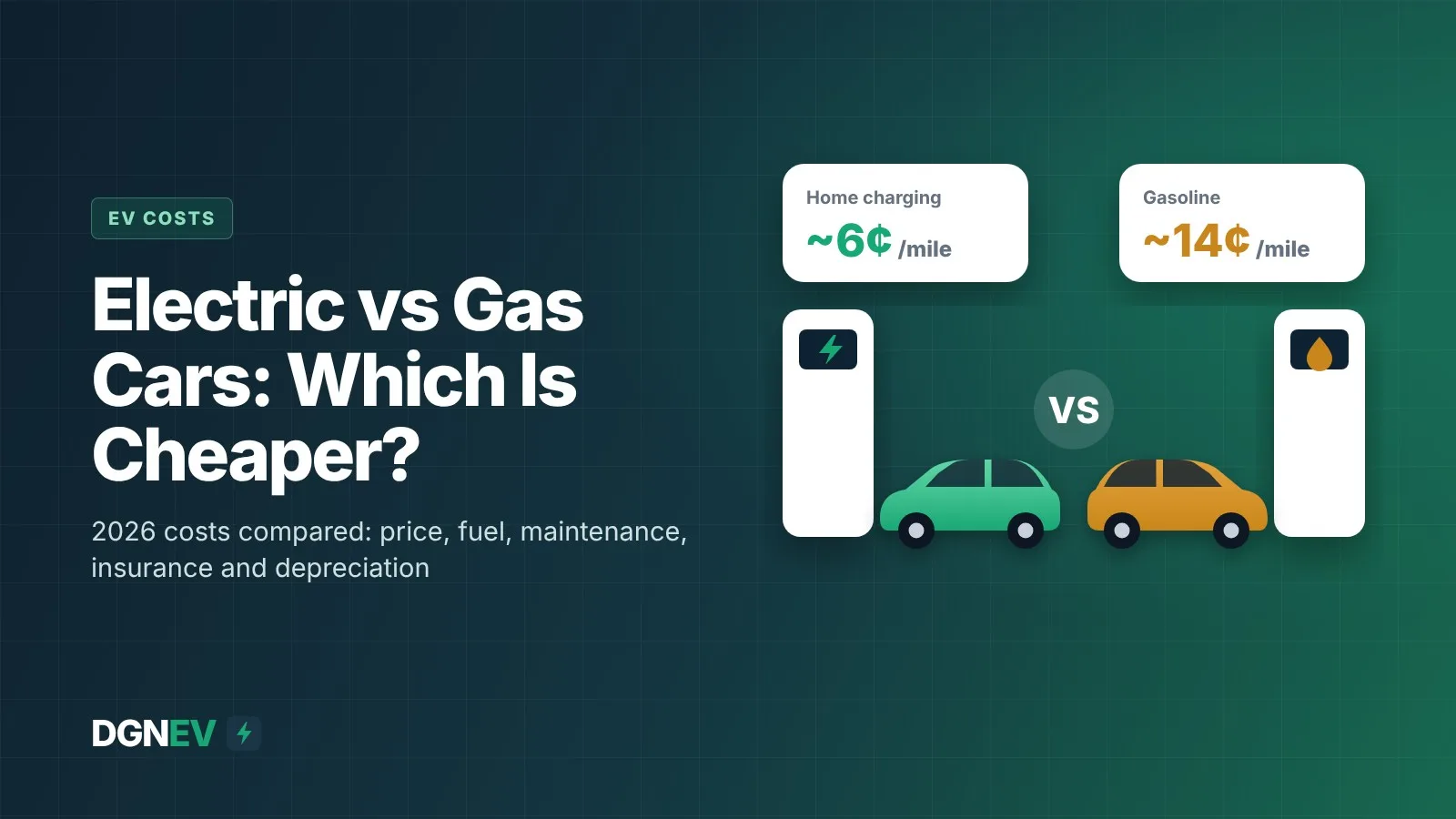
Electric vs Gas Cars: Which Is Cheaper to Own in 2026?
EVs cost far less to fuel and maintain, but usually more to buy and insure, and they lose value faster. We compare the real 2026 numbers – price…
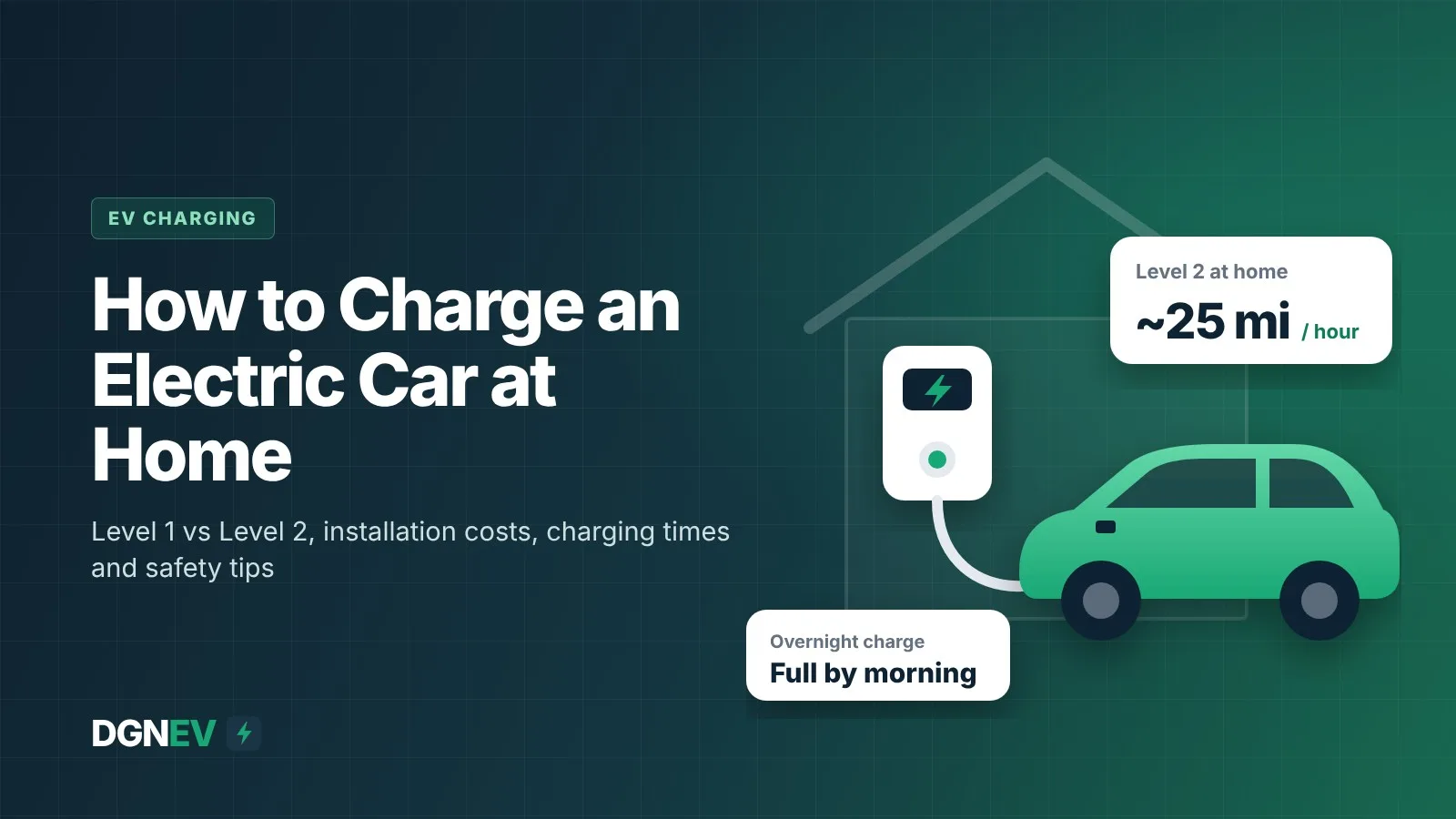
How to Charge an Electric Car at Home: A Complete Guide
Charging at home is the cheapest and easiest way to run an EV. Learn the difference between Level 1 and Level 2 charging, what a home charger costs…